I have a busy weekend ahead, announcing a football game tonight and a football game Saturday afternoon, both here.
It is possible that those might be the last two football games I announce, because of this apocalyptic news the Washington Post reports, which of course requires music first:
A few years ago, NASA senior space scientist David Morrison debunked an apocalyptic claim as a hoax.
No, there’s no such thing as a planet called Nibiru, he said. No, it’s not a brown dwarf surrounded by planets, as iterations of the claim suggest. No, it’s not on a collision course toward Earth. And yes, people should “get over it.”
But the claim has been getting renewed attention recently. Added to it is the precise date of the astronomical event leading to Earth’s destruction. And that, according to David Meade, is in six days — Sept. 23, 2017. Unsealed, an evangelical Christian publication, foretells the Rapture in a viral, four-minute YouTube video, complete with special effects and ominous doomsday soundtrack. It’s called “September 23, 2017: You Need to See This.”
Why Sept. 23, 2017?
Meade’s prediction is based largely on verses and numerical codes in the Bible. He has homed in one number: 33.
“Jesus lived for 33 years. The name Elohim, which is the name of God to the Jews, was mentioned 33 times [in the Bible],” Meade told The Washington Post. “It’s a very biblically significant, numerologically significant number. I’m talking astronomy. I’m talking the Bible … and merging the two.”
And Sept. 23 is 33 days since the Aug. 21 total solar eclipse, which Meade believes is an omen.
He points to the Book of Revelation, which he said describes the image that will appear in the sky on that day, when Nibiru is supposed to rear its ugly head, eventually bringing fire, storms and other types of destruction.
The book describes a woman “clothed with the sun, with the moon under her feet and a crown of twelve stars on her head” who gives birth to a boy who will “rule all the nations with an iron scepter” while she is threatened by a red seven-headed dragon. The woman then grows the wings of an eagle and is swallowed up by the earth.
The belief, as previously described by Gary Ray, a writer for Unsealed, is that the constellation Virgo — representing the woman — will be clothed in sunlight, in a position that is over the moon and under nine stars and three planets. The planet Jupiter, which will have been inside Virgo — in her womb, in Ray’s interpretation — will move out of Virgo, as though she is giving birth.
To make clear, Meade said he’s not saying the world will end Saturday. Instead, he claims, the prophesies in the Book of Revelation will manifest that day, leading to a series of catastrophic events that will happen over the course of weeks.
“The world is not ending, but the world as we know it is ending,” he said, adding later: “A major part of the world will not be the same the beginning of October.”
Meade’s prediction has been dismissed as a hoax not only by NASA scientists, but also by people of faith.
Ed Stetzer, a professor and executive director of Wheaton College’s Billy Graham Center for Evangelism, first took issue with how Meade is described in some media articles.
“There’s no such thing as a Christian numerologist,” he told The Post. “You basically got a made-up expert in a made-up field talking about a made-up event.… It sort of justifies that there’s a special secret number codes in the Bible that nobody believes.”
Meade said he never referred to himself as a Christian numerologist. He’s a researcher, he said, and he studied astronomy at a university in Kentucky, though he declined to say which one, citing safety reasons. His website says he worked in forensic investigations and spent 10 years working for Fortune 1000 companies. He’s also written books. The most recent one is called “Planet X — The 2017 Arrival.”
Stetzer said that while numbers do have significance in the Bible, they shouldn’t be used to make sweeping predictions about planetary motions and the end of Earth.
“Whenever someone tells you they have found a secret number code in the Bible, end the conversation,” he wrote in an article published Friday in Christianity Today. “Everything else he or she says can be discounted.”
That is not to say that Christians don’t believe in the Bible’s prophesies, Stetzer said, but baseless theories that are repeated and trivialized embarrass people of faith.
“We do believe some odd things,” he said. “That Jesus is coming back, that he will set things right in the world, and no one knows the day or the hour.”
The doomsday date was initially predicted to be in May 2003, according to NASA. Then it was moved to Dec. 21, 2012, the date that the Mayan calendar, as some believed, marked the apocalypse.
Morrison, the NASA scientist, has given simple explanations debunking the claim that a massive planet is on course to destroy Earth. If Nibiru is, indeed, as close as conspiracy theorists believe to striking Earth, astronomers, and anyone really, would’ve already seen it.
“It would be bright. It would be easily visible to the naked eye. If it were up there, you could see it. All of us could see it. … If Nibiru were real and it were a planet with a substantial mass, then it would already be perturbing the orbits of Mars and Earth. We would see changes in those orbits due to this rogue object coming in to the inner solar system,” Morrison said in a video.
Doomsday believers also say that Nibiru is on a 3,600-year orbit. That means it had already come through the solar system in the past, which means we should be looking at an entirely different solar system today, Morrison said.
“Its gravity would’ve messed up the orbits of the inner planets, the Earth, Venus, Mars, probably would’ve stripped the moon away completely,” he said. “Instead, in the inner solar system, we see planets with stable orbits. We see the moon going around the Earth.”
And if Nibiru is not a planet and is, in fact, a brown dwarf, as some claims suggest — again, we would’ve already seen it.
“Everything I’ve said would be worse with a massive object like a brown dwarf,” Morrison said. “That would’ve been tracked by astronomers for a decade or more, and it would already have really affected planetary objects.”
Some call Nibiru “Planet X,” as Meade did in the title of his book. Morrison said that’s a name astronomers give to planets or possible objects that have not been found. For example, when space scientists were searching for a planet beyond Neptune, it was called Planet X. And once it was found, it became Pluto.
If Charlie Sykes can appear on Wisconsin Public Radio and the world hasn’t ended (and if you’re reading this you can assume the world indeed hasn’t ended), I doubt Meade (of whom I’ve written here previously) is correct, since Harold Camping (twice), the Mayans, James Hansen, the blood moon prophets, and the eBible Fellowship, among others, couldn’t get it right. (That includes me, since I claimed that a Chicago Cubs World Series win and Donald Trump’s getting elected president were surely signs of the end times.) I keep repeating Matthew 24:36 (and apparently some people need to actually read it), in which Jesus Christ says, “But about that day or hour no one knows, not even the angels in heaven, nor the Son, but only the Father.”
The first time I recall a prediction of The End was in the late 1970s, when Pope Paul VI died and his successor, Pope John Paul I, died after just a month in office. That brought up St. Malachy’s Prophecy of the Popes, listed on always-accurate Wikipedia as …
Given the very accurate description of popes up to around 1590 and lack of accuracy for the popes that follow, historians generally conclude that the alleged prophecies are a fabrication written shortly before they were published. Certain theologians in the Roman Catholic Church have dismissed them as forgery. The Catholic Church has no official stance on the prophecies, however.
The prophecies conclude with a pope identified as “Peter the Roman”, whose pontificate will allegedly precede the destruction of the city of Rome.
And what pope are we on according to Malachy? The last one!
112. Peter the Roman, who will pasture his sheep in many tribulations, and when these things are finished, the city of seven hills [i.e. Rome] will be destroyed, and the dreadful judge will judge his people. The End. …
Popular speculation by proponents of the prophecy attach this prediction to Benedict XVI’s successor. Since Francis‘ election as Pope, proponents in internet forums have been striving to link him to the prophecy. Theories include a vague connection with Francis of Assisi, whose father was named Pietro (Peter).
Assuming Malachy was incorrect (or even if he isn’t), for those who want to plan for such things, A Brief History of the Apocalypse provides future dates of the end(s):
2017: The “Prophet Gabriel” supposedly told the Sword of God Brotherhood that the “dying time” will come in 2017, and only members of the cult will survive. Everyone else will “perish in hellfire.”
So maybe the end is after Saturday but before Dec. 31. Riiiiiiiight.
Sept. 28, 2020: George Madray predicts a Yom Kippur Parousia in 2020.
“Parousia” is a Greek word that apparently now means “second coming.” If correct, that means no one will ever get a chance to vote for Donald Trump or Hillary Clinton for president again. And though Pope Francis is 80, he certainly could live three more years …
2022: James T. Harmon’s Rapture prediction #4.
… or five more years …
2023: Ian Gurney predicts in his book The Cassandra Prophecy — Armageddon Approaches that the “final date, Judgement Day, the end of mankind’s time on this planet, is less than twenty two years away” from 2001, which means that the world is set to end by 2023 at the very latest.
2025: In this post, Georgann Chenault, a frequent poster on Usenet, wrote “I think the rapture of the church will be before 2025.”
Nov. 13, 2026: According to an article published in Science magazine in 1960, this was the date that the world’s population would reach infinity, a result of the so-called “doomsday equation.”
2033: Believed by many to by the 2000th anniversary of the Crucifixion, this is a date just begging to be targeted by doomsayers whose prophecies for 2000 and 2001 will have failed.
2035: The Raëlians are working hard to establish an embassy in Jerusalem in anticipation of the 2035 arrival of aliens called “elohim”, who will usher in a New Age. However, their arrival is contingent on the completion of the embassy.
2037: In her book The Call to Glory, psychic Jeane Dixon wrote, “The years 2020-2037, approximately, hail the true Second Coming of Christ.” The Battle of Armageddon is to take place in 2020.
2040: Pyramidologist Max Toth predicts the physical reincarnation of Jesus Christ occurring in 2040. Like other pyramidologists, he used the dimensions of the Great Pyramid’s passageways to predict future events.
Futurist John Smart of Acceleration Watch (formerly Singularity Watch) estimates that a technological singularity will take place around the year 2040, when technological advancement reaches asymptotic levels. After this apocalyptic event, a new era of balance and compassion will begin.
ca. 4,500,000,000 AD: The sun will swell into a red giant star, swallowing Mercury, Venus, Earth, and perhaps Mars. This will be the true end of the world!
One of those predictions is bound to be right. Right?
On Sept. 14, 2001, Rocco Chierichella, a retired firefighter working at Ground Zero, couldn’t hear President George Bush, who had come to speak to the rescue crew. He shouted as much to the president.
“I can hear you!” was president’s spontaneous reply. “The rest of the world hears you! And the people, and the people who knocked these buildings down will hear all of us soon.”
The crowd broke into a chant of “USA! USA!” At the time, it seemed that the rest of American society did, as well.
It’s still an exhilarating moment to watch. Yet I can’t help but wonder whether it would go down the same way today. Would the deep cynicism so many now have about American history allow such uninhibited displays of patriotism to go on without disparagement? How long before think pieces began pointing out that Islamists aren’t nearly as dangerous or destructive as George Bush or the NRA? How long before pundits started pointing out that killing terrorists is “exactly what they want us to do?” How long before the president would be accused of Islamophobia? Or jingoism? How long before thousands would head to twitter to lay political blame for why it all happened on the other party?
Mostly, though, I’m not sure a national “USA! USA!” chant would be much more than platitude today. What does it really mean? Pluralism is, of course, a far healthier state of affairs than “unity”—a word typically used by those interested in quashing dissent. Partisanship can be a healthy reflection of our differences. Yet, there has to be some pivot, some ideal, some collective purpose and understanding of history, that the debate revolves around. ‘They hate our freedom’ means nothing when we no longer share a common understanding of the concept.
Of course, a lot has happened since 9/11. For starters, the justice that Bush promised at Ground Zero would result in a protracted and highly disruptive foreign war, one that lasted nearly 10 years—approximately six years longer than World War I. Whatever you make of our nation-building projects overseas, Americans quickly grew tired of them, and they assisted the rise of a dynamic progressive president. Barack Obama promised American unification but, in the end, demanded conformity. His attempts—first at changing American ideals and then reimagining the ones we had to comport with his progressive positions—in turn fueled the rise of an idealistic Constitutional movement in the Tea Party.
The two movements were irreconcilable, and an age of gridlock ensued. By the time we finally eliminated Osama bin Laden, American politics hadn’t just reverted to fighting over the same old fissures in ideology and culture: they had been exacerbated in dramatic ways. Whereas Bush would place a terror state like Iran in an Axis of Evil, we were now sending them pallets of cash.
Republicans responded with their own norm-busting president. But one of the most consequentially corrosive aspects of modern politics is that it now envelopes nearly everything. Whereas a beautiful or tragic moment might have once give us a respite from partisanship, we are no longer afforded such breaks. When a hurricane destroys thousands of lives, Americans come together to help each other. People are still inherently decent. Too many, however, decide to act as if Republicans are the cause of hurricanes.
People tend to retrofit their memories to comport with the most helpful telling of a story. Perhaps I’m prone to the same revisionism. But as I remember it, everything having to do with politics pre-9/11 would instantaneously become frivolous once the Twin Towers came down. The day after 9/11, and many days after that, I was unable to commute into my office in Manhattan. The local train station was littered with the cars of those who I assumed would never come home. So I sat in front of my TV staring at cable news most hours of the coming days. For those few weeks, I don’t remember anyone ever using the event to bludgeon their political opponents.
So here’s a depressing thought on the anniversary of 9/11: What if those two or three weeks of harmony 16 years ago will be the last we experience for a very long time? Considering our trajectory, this seems more likely than not. After all, surveying the coverage of the anniversary of 9/11 this morning, it’s difficult not to notice that Americans don’t really share a coherent, unifying cultural or idealistic value system anymore.
This page purportedly from Hillary Clinton’s new book says everything you need to know about Hillary Clinton, why she lost last November, and why she deserved to lose.
To quote Gertrude Stein’s observation about Oakland, there’s no there there.
Later note: Since the book won’t be out until Tuesday, I can’t attest to the veracity of this excerpt. I’ve seen it in a few online places, but it may be satire.
Readers may recall “East Side, West Side,” featuring various aspects of growing up on the far East Side of Madison, much closer to the Interstate than the State Capitol.
A high school classmate found this about Madison and Monona neighborhoods, which were part of the Town of Blooming Grove before much of it was annexed into Madison and Monona. Their source was, I am told …
Blooming Grove was formed in 1850; in surveyors’ terms it is Town 7 North, Range 10 East. Many of the original settlers were from New York and Vermont as well as Germany, Norway, and Ireland. Almost all were farmers whose properties usually ranged from about 40 to 160 acres, although a few were more than 320 and several were almost 600.
By the late 1870’s, the population was about 1,000 and some recreational enterprises were appearing along the eastern shore of Lake Monona. A good-sized retail district was developing in the Schenk’s Corners/Atwood Avenue area primarily to serve farmers.
By 1900 manufacturing plants along the railroad tracks from downtown Madison were expanding beyond the Yahara River. Rapid growth led to the formation of the village of Fair Oaks in 1906. The village was incorporated into the City of Madison May 29, 1913. By 1920 the industrial workforce in Madison was about 5,000, which included 700 women. Industrial employment continued to grow especially after the Oscar Mayer family moved much of its meat packing and sausage business to Madison in 1919.
East High School opened in 1922. By the mid 1920’s, homes for “workingmen,” which meant wage earners, extended to the western bank of Starkweather Creek.
An ad in the Capital Times on June 23, 1928, announced an auction sale of lots in Lansing Place on Milwaukee Street, east of Fair Oaks Avenue, adjoining the city limits. The owner was George C. Rowley, an established Madison developer. He seems to have chosen the first and last names of local residents for all of the street names. The Lansing family, for example, had lived in Blooming Grove since the mid-1800’s and many of the other names appear on plat maps and tombstones over the years.
The 1930, 1940, and 1942 City of Madison maps show Starkweather Drive, Leon Street, Lansing Street, Farrell Street, Richard Street, Judd Street, Hargrove Street, and Harding Street in their present locations. They also show Wayne Street running from Leon Street to Starkweather Creek and Willow Street and Thorp Street in the area that later became O. B. Sherry Park.
In Dane County Place-Names (1947, expanded edition 1968, most recent printing Madison, 2009) Frederic G. Cassidy states that Starkweather Creek was named for John C. Starkweather who built a log bridge over the creek in 1846.
In the late 1940’s and throughout the 1950’s Madison and regional developers became interested in the Lansing Place area as a perfect site for veterans housing. This led to the construction of Walter Street parallel to Harding Street and the renaming of a portion of Harding Street that ran east to Dempsey Road as Tulane Avenue. These are shown on the 1950 City of Madison map, as is a “future school site” that became the location of Herbert C. Schenk school which opened in 1953. Schenk Street, also named for Herbert C. Schenk, runs north and south east of the school. Herbert C. Schenk (1880-1972) was owner of the Schenk Hardware Co. at Winnebago Street and Atwood Avenue, a school board member from 1922 to 1950, a state assemblyman, a Madison alderman, and president of the East Side Business Mens’ Association.
Schenk was a member of the Progressive Party, representing Dane County from 1935 to 1939.
Paus Street and Hynek Road, east of Schenk Street, are both named for neighborhood residents.
In the early 1950’s Aaron Elkind, Albert McGinnis, and Donald B. Sanford became business associates. Elkind, born about 1918, had already built a number of pre-cut houses on Harding Street. He was a Milwaukee native, 1940 graduate of the University of Wisconsin and a war hero. McGinnis (1919-2003) was from Superior, Wisconsin, had earned a law degree from the University of Wisconsin, and had started a practice in the Atwood Avenue area. He was also active in church and civic affairs.
Sanford never revealed much about his personal life to the newspapers; he and Elkind may have become acquainted about 1950 when both men worked for the Humphrey Tree Expert Co, a regional arborist firm with offices in the Security State Bank on Winnebago Street.
Said Security State Bank was my father’s first and only employer … sort of, since Security State Bank was purchased by Marine Bank, which was then purchased by Bank One, and which after his retirement was purchased by Chase. As for Sanford, he comes up later.
Beginning in 1954, these three developed the 75 acre, 314 house Eastmorland project on land surrounding the Schenk School site.
They sold houses the way automakers sold cars. A buyer had the choice of several models, could select a number of options, take possession on a set date, and arrange a fixed payment schedule at the time of purchase.
There were eight house styles to choose from in Eastmorland; about 80 per cent of the buyers decided on a simple ranch with a conventional roof line.
Elkind, McGinnis, and Sanford also feminized the product just as the car firms had feminized automobiles. Their houses featured large kitchens and often came with appliances. Buyers could choose from many interior and exterior color combinations.
The project name and the street names were chosen for market appeal. Eastmorland suggests more land to the east and a pleasant English countryside. It was an imitation of Westmorland, the name of a successful west side development begun by the McKenna’s in the 1920’s.
Because Elkind and the others had chosen to promote Eastmorland by emphasizing comfort and prestige the street names such as Sussex, Bradford, Buckingham, Wilshire, and Cumberland are all reminiscent of places in England or Virginia.
The Walterscheit plat runs south from present Tulane Avenue across the former Chicago and North Western Railway tracks to Atwood Avenue. It was begun in the late 1920’s on land that had been occupied for many years by the Walterscheit family.
The 1930 City of Madison map shows a portion of Harding Street in the area now occupied by Walter Street south of the railroad tracks. There is a Grand View Street which later became Sargent Street,and Johns Street, Margaret Street, Busse Street, and Bernard Street. These all appear to have been the first or last names of local residents. Olbrich Street was added before 1942 probably for Michael Olbrich who had donated the land for Olbrich Park.
Margaret Street extended north across the railroad tracks. Huron Street later became Ring Street, Erie Street became Gunderson Street, and Ontario Street is still Ontario Street. Anchor Drive and Coral Court first appear on the 1950 City of Madison map.
Royster Avenue was added about 1948 to honor the F. S. Royster Guano Co. factory at the intersection of Dempsey Road and Cottage Grove Road. Royster’s main office was in Norfolk, Virginia. The Madison plant formally opened on March 24, 1948 and closed in 2006. It blended many mixtures of plant food for farm use.
The neighborhood’s eastern border was fixed about 1950 when the East Beltline Highway was built east of Dempsey Road and U. S. Highway 51 was rerouted from Monona Drive. The new route was called South Stoughton Road, the East Beltline Highway and just 51.
Dempsey Road is for a local farm family, although, as with many other street names in the area, it is impossible to say when the name was chosen or if it honors the family in general or just one family member. In fact, if a street name in Blooming Grove has a German, Irish, or Norwegian name it was probably named for a local farm family or land owner.
Dempsey Road is near the house my parents owned when I was born and where St. Dennis Catholic Church and school is located; its history can be read here, with added details about the road’s namesake:
Following the Second World War, a swelling population and rapid housing development on Madison’s East Side necessitated the formation of a new Catholic parish. Miss Esther Dempsey donated eleven and one half acres of beautiful and expansive land, her family homestead, for this new parish.
Bishop William P. O’Connor established the founding of Saint Dennis Parish on June 1, 1956. The first pastor, Father Joseph Niglis, was joined by approximately five hundred families in a temporary, steel fabricated building that was dedicated on December 2nd of that year. That structure still exists at the heart of the present church complex as the chapel, sacristy, and social area just north of today’s spacious church lobby.
“Spacious” except on Sundays and holidays. About Niglis, an outstanding weekly newspaper once reported this, which amuses me no end:
In February 1956, after a deputy sheriff was fired, Sheriff Robert Seemeyer was accused of, among other things, ignoring gambling activities, including bingo games and dice played at the annual Labor Day celebration of Holy Ghost Catholic Church in Dickeyville (which is still held) and at a veterans rally.
Retired judge A.W. Kopp was selected to head an investigation of the accusations leveled against the sheriff. Kopp selected Leary Peterson of Prairie du Chien to pursue the allegations and question witnesses at an investigative hearing.
A sheriff’s deputy who directed traffic at the Dickeyville event denied seeing bingo games in progress. Peterson went so far as to call Rev. Joseph C. Niglis of Holy Ghost to testify. He freely admitted that bingo, which he called “homer,” was played, but denied being promised immunity from prosecution by the sheriff.
Failing to find specific wrongdoing, Gov. Walter Kohler dismissed the charges against Sheriff Seemeyer.
Fr. Niglis thought the most important thing about St. Dennis was Catholic education, and so …
Saint Dennis School opened September 7, 1960 under the leadership of the Dominican Sisters of Sinsinawa. …
Father Delbert Klink became the second pastor of Saint Dennis in 1981. On the feast of Saint Dennis one year later, October 9, 1982, Bishop Cletus O’Donnell broke ground for a permanent church building which had fulfilled the dreams of many parish members. The church was used for the first time on June 13, 1983 as Bishop George Wirz conferred the sacrament of Confirmation on an enthusiastic group of young adults. Then, once again, on the feast of Saint Dennis, October 9, 1983 Bishop Wirz returned to dedicate the new church.
“On November 7, 1960, an aerial photograph was taken of Saint Dennis. The view, looking to the north-east, shows the connection between the school gym and the church is yet to be built, Stoughton Road is still a 2-lane highway, and the original Farm & Fleet is across from Saint Dennis, on Stoughton Road. Additionally, the Dempsey homestead is clearly visible in the foreground (thanks to Bob Spoerl for sharing this).”The original church building, which apparently replaced a Quonset hut.The school, which opened in 1960; most Sunday Masses were held in the gym at least in my day, thus making me think all churches had wood floors, basketball hoops and scoreboards. The church was on the south end, and the “new” church is also on the south end.
Now, back to the old neighborhood(s):
Leon Park, also known as Lansing Park, was renamed O. B. Sherry Park in 1974 in honor of Orven B. Sherry, a Madison real estate dealer, who donated land for the park’s expansion that eliminated Willow Streetand the eastern portion of Thorp Street.Wayne Street was reduced to a remnant that is now so short there is only room for one house on one side of the street.
In 1993, the Madison School Board renamed the middle school portion of Schenk School for Annie Greencrow Whitehorse (1906-1990), a respected member of the Madison area American Indian community.
Lake Edge Park, Morningside Heights, Allis Heights, Quaker Heights
The area south of Cottage Grove Road, east of Monona Drive, west of U. S. 51, and north of Pflaum Road changed from farm to suburban use in stages from about 1910 to 1960. The first suburban development was Lake Edge Park near the intersection of Cottage Grove Roadand Monona Drive at the site of an earlier Lake Edge dairy.
In a series of newspaper ads from 1912 to 1915 the Lake Edge Park Co. promoted the subdivision as “The Model Suburb.” Lots were 75 x 150 feet complete with trees and shrubs, all owners were guaranteed lake access via a company-owned park, and commercial use was forbidden.
An ad in the Wisconsin State Journal on April 1, 1915 compared Lake Edge Park with three Madison subdivisions.
According to the ad:
A 75 x 150 lot in Lake Edge Park was $500
A 60 x 120 lot in Wingra Park was $1,600
A 50 x 120 lot in West Lawn was $1.400
A 40 x 120 lot in Fair Oaks was $600
The most unusual feature of the streets is that the more or less north-south streets are at a right angle to a southeastern oriented portion of Buckeye Road, which the developers called Main Avenue.
Buckeye Road (Co. Hwy AB) was for many years the main route to Madison from the southeast, especially the Stoughton-McFarland areas. The name may refer to a grove of buckeye trees (horse chestnuts) or may be connected to a person or business related to Ohio, the Buckeye State.
For some reason, the developers ignored the fact that there was already a Main Street in Madison. Their Wisconsin Avenue, Lincoln Avenue, and Park Boulevardwere also similar to Madison street names.
By 1942 the Lake Edge Main Avenue had reverted to Buckeye Road, Wisconsin Avenuebecame Davis Street, Lincoln Avenue became Drexel Avenue, Lawrence Avenue became Hegg Avenue, and Park Boulevard became Lake Edge Boulevard.
The Morningside Heights subdivision, first advertised in 1923, is just east of Lake Edge Park and was promoted as a site for workingman’s homes; most of the streets are extensions of those in Lake Edge Park and share their skewed alignment. Morningside Avenue is named for the subdivision. Maher Avenue and Major Avenue are for local residents.
Morningside Heights was a project of Laurence M. Rowley. In 1924 Rowley announced Allis Heights, a 108 acre subdivision that is essentially a continuation of Morningside Heights. Most of the streets such as Spaanem Avenue are also named for local residents.
Allis Heights, Allis Avenue, and the nearby Frank Allis School that opened in 1917 are named for Frank W. Allis (1865-1915) who was the son of Edward P. Allis (1824-1899), a Milwaukee industrialist whose foundries and machinery factories were among the largest in the United States. The City of West Allis is named for the Allis family. In 1901 the Allis company and several others merged to become Allis-Chalmers.
Frank chose agriculture over manufacturing and moved to the Madison area about 1893 where he concentrated on pure-bred Holstein-Friesian dairy cattle raised on his “Monona Farm.” The farm covered 600 acres in parts of Blooming Grove, sections 9, 16, and 17. His lake shore home still stands at 4123 Monona Drive and is called San Damiano Friary.
Sometime after 1917 parts of the Allis property including several houses and barns were purchased by the Quaker Oats Company for use as an experimental farm to test dairy cattle rations.
The 200 acre Quaker Oats farm closed about 1940 and the land was purchased by Jerome Jones. In 1944, John C. McKenna Jr. bought the Jones land for post-war development and named the area Quaker Heights. Jerome Street honors Jerome Jones. Quaker Circle and Quaker Park are for the experimental farm.
Some of the Allis land became the location of the Monona Golf Course begun in the 1920’s as a private venture. The City of Madison took over the course in the mid-1930’s. It was an 18-hole course until the early 1960’s when some land was lost to school construction. It is now nine holes.
The Village of Monona was created in 1938; the first elections for the City of Monona took place in April 1969.
Three streets in the golf course area share names with those in the City of Monona.
Winnequah, as in East Winnequah Drive, was coined from “Winnebago squaw” by Frank Barnes in 1870 in honor of his Indian wife.
Cold Spring Avenue is probably named for a spring in Monona.
East Dean Avenue is for Nathaniel Dean (1817-1880) whose 500 acre farm was located in the area. Dean House, at 4718 Monona Drive, which was the Dean family’s part-time residence, is now a house museum operated by the Historic Blooming Grove Historical Society.
The Monona Grove High School, 4400 Monona Drive, built on land donated by the Blooming Grove volunteer fire department, opened in 1955 to serve students from the Village of Monona, the Town of Blooming Grove, and the Town and Village of Cottage Grove.
The Robert M. La Follette High School on Pflaum Road was built in 1963. It is named for Robert M. La Follette (1855-1925) who was a member of Congress from Wisconsin from 1885-1891, governor of Wisconsin from 1901-1906, and U. S. Senator from Wisconsin 1906-1925. He ran for U. S. President in 1924 for the Progressive Party, which he founded, and received 17 per cent of the national popular vote.
That would be the same Progressive Party of which the aforementioned Rep. Schenk was a member. As I’ve written here before, I cannot explain why the La Follette teams are the Lancers and not the Fighting Bobs.
In 1970, the junior high school/middle school portion of the La Follette High School was renamed Ray F. Sennett Middle School in honor of Ray F. Sennett (1904-1970) who served on the Madison School Board from 1948 to 1969. He was a graduate of the Madison Central High School and the University of Wisconsin, an outstanding athlete, and vice-president of the Randall and Security State Banks. After his death the Wisconsin State Journal (April 10, 1970) wrote that he was “a quiet, stalwart, dignified man with a ready smile that revealed his innate gentleness.”
Glendale, Edna Taylor Conservation Park
The Glendale neighborhood has two parts. The first area is east of the Monona Golf Course to Camden Roadand south to Pflaum Road. The second area extends from Monona Drive to Camden Road and from Pflaum Road to the southern border of the Edna Taylor Conservation Park.
In 1954 several developers including Harry Vogts, Pete Beehner, the Herro brothers, and Oscar Seiferth began to build hundreds of single family homes in Glendale. These projects were mostly complete by 1956 or 1957; the apartments on Camden Road were built in 1961 and a number of houses were built near the northern edge of the Edna Taylor Park from 1971 to about 1979.
A booklet published by the Glendale Neighborhood Assocation, “Glendale, a Neighborhood, a School, and their Park” (Madison, 2005) gives the origins of many street names.
The name Glendale comes from the Glendale Development Corporation owned by Phil and Norm Herro and Oscar Seiferth. Glendale has been a popular place name in the United States since at least the 1850’s, as in Glendale, Ohio. The Glendale Elementary School opened in 1957.
Many of the street names are those of local residents such as Pflaum, Tompkins, Kvamme, and Bjelde. Jeanette Pugh Johnson chose the name Crestview for a subdivision and Crestview Drive. She named Bryn Trem Road for the Welsh phrase “view from a hill” and also named Maldwyn Lane; Maldwyn is the Welsh version of Baldwin.
The developer Pete Beehner named a subdivision and Linda Vista Avenuefor his daughter Linda.
Harry Vogts named the Aceview subdivision for his Ace Builders, Inc.: “Ace sets the pace.”
Norm and Phil Herro named Herro Lanefor the family; Dixie Lane is from their brother Burt’s nickname. Oscar Seiferth named Joylynne Drive for his wife Joyce and daughter Lynne.
Indian Trace, which runs south from Crestview Drive was originally an extension of Groveland Terrace. Mary Schatz, a neighborhood resident, suggested renaming this section Indian Trace because Jeanette Pugh Johnson said that an old Indian had lived in the area for many years. The Madison City Council approved the new name in 1972.
Kay Street and Ruth Street are first names. Spaanem Avenue and Maher Avenue are extensions of streets in Morningside Heights and Allis Heights. Acacia Lane and Alder Lane are named for trees. Hob Street is for a developer. Admiral Drive in Aceview may reflect Harry Vogts’ love of everything nautical.
Perhaps ironically, I went to high school with a Sponem who was not a Spaanem.
Crestview Drive, Woodland Drive, and Parkview Driveoverlook the northern border of the Edna Taylor Conservation Park.Camden Road, Douglas Trail, Louden Lane, and Lamont Lane may be named for local residents.
The Edna Taylor Conservation Park, established in 1972, consists of 56 acres of land behind the Glendale Elementary School south to Femrite Pond. Thirty-five acres of the park were purchased by the Madison Parks Division from the estate of Edna Giles Norden Taylor.
Edna Taylor (about 1903-1972) arrived in Madison about 1929 where her husband Harry Giles was on the University of Wisconsin faculty. She was born and raised in New York City where she played minor roles in Broadway productions. In Madison she was active in community theater as an actor and director. She was also affiliated with the U. W. English department as a graduate student and writing instructor. A second husband was named Thomas Norden.
At some point Mrs. Taylor acquired 111 acres of land in the present U. S. 51 and Femrite Road area and used some of it as a Guernsey farm that she named “Heartenland.” Part of this land went into the Edna Taylor Park.
Now to the neighborhood we moved to after my younger brother was born:
Elvehjem Neighborhood, Mira Loma Park Area
The first subdivision in the area south of Cottage Grove Road east of U. S. 51 was Harry Vogts’ Acewood from 1959. By 1962 many small, medium, and large builders and developers were active in the area; two of the larger were Towne Realty of Milwaukee that used Findorff, a Madison company, to build its houses, and the Lucey Realty Service owned by Patrick J. Lucey who was governor of Wisconsin from 1971 to 1977.
Lucey is probably the last Democratic governor of Wisconsin who cared very much about business, perhaps due to his business background. He was a native of Ferryville and attended the former Campion High School in Prairie du Chien. But I digress. Again.
Many streets are named for local residents: Steinhauer Trail, Starker Avenue, Vinje Court, and Droster Road. Several are for builders; Montgomery Drive is for William C. Montgomery. First names are common as in Bonnie Lane, Ellen Avenue, Wendy Lane,and Melinda Drive. Female names greatly outnumber male names. Painted Post Roadis from Lucey’s Painted Post Subdivision. Bird streets are Meadowlark Drive, Sandpiper Lane, Pelican Circle, and Tern Court.
In the Mira Loma area south of Buckeye Road are several mini-themes such as Ranch House Lane, Oxbow Road, Blacksmith Lane, Bellows Circle, Wagon Trail, Forge Drive, and Anvil Lane.
Spanish phrases appear in La Crescenta Circle, La Sierra Way, Paso Roble Way, and Mira Loma, which means “view of the hillside.”
Along with Eldorado Lane, where said house was.
Mira Loma Park was established in 1981 and renamed Orlando Bell Park in 1997. Orlando Bell (1950-1994) came from Tuscaloosa, Alabama to study at the University of Wisconsin. He was an artist and art instructor, director of the South Madison Neighborhood Center, a Boy Scout leader, and president of the Madison NAACP chapter from 1990 to 1993.
The Elvehjem neighborhood name comes from the Elvehjem Elementary School that was dedicated on December 12, 1962 in honor of Conrad Arnold Elvehjem (1901-1962). “Connie” Elvehjem was raised on a farm near McFarland within three miles of the school. He attended Stoughton High School before entering the University of Wisconsin where he soon became a biochemist best known for discovering the vitamin niacin and the cure for pellagra. He became president of the University of Wisconsin in 1958 and died of a heart attack on July 27, 1962.
Now to the neighborhood where my parents built their first house:
Kingston-Onyx, Rolling Meadows, Heritage Heights
By 1958 when large scale suburban development began in the area east of U. S. 51, south of Milwaukee Street, and north of Cottage Grove Road, developers such as Aaron Elkind, Donald Sanford, and Albert McGinnis knew a lot about selling houses to middle income clients.
They made certain that subdivisions named Kingston-Onyx, Rolling Meadows, and Heritage Heights promised pleasant surroundings. Streets with names such as Diamond, Turquoise, and Crystal sparkled with the promise of a high-quality product in a landscape filled with singing birds on streets named Chickadee Court, Bob-o-link Lane, and Meadowlark Drive.
Heritage Heights suggested merry England with Kingsbridge Road, Queensbridge Road, and Knightsbridge Road.
Not to mention Vicar Lane, which comes up momentarily. What of Spicebush Lane?
Aaron Elkind wrote ads that said the houses in Kingston were “fit for a queen and built for a king.” Residents could talk about a gem of a neighborhood.
The jewel box consists of Diamond Drive, Pearl Lane, Garnet Lane, Jade Lane, Turquoise Lane, Onyx Lane, Topaz Lane, Cameo Lane, Crystal Lane, Flint Lane, and Agate Lane.
The bird streets are Chickadee Court, Goldfinch Drive, Bob-o-link Lane, Shearwater Street, Hummingbird Lane, and Meadowlark Drive.
As was common in the 1950’s and 1960’s several streets are named for builders and their wives and children, which was an expression of pride in workmanship and family; in some cases it was a statement of joy in having survived years of deprivation and war long enough to have a family. Charleen Lane, Lois Lane, Ralph Circle and Beehner Circle are examples. Pete J. Beehner (about 1919-2004) was a well-known Madison builder and developer whose “Beehner built” houses were said to be among the best.
There are several mini-themes such as Lamplighter Way, Stagecoach Trail, and Hackney Way.
In the peaceful sector there are Quiet Lane, Harmony Hill Drive, and a number of “wood” streets—Shady Wood Lane, Inwood Way, Open Wood Way and Twin Oaks Drive. Some of these contain two words which was still fairly uncommon in the 1960’s.
One major street, Acewood Boulevard, began about 1959 in Harry Vogts’ Acewood subdivision. Vogts (1908-1994) owned Ace Builders, Inc., and had already named one subdivision in Glendale Aceview.
Vogts had been an outstanding musician at the East Side High School and the University of Wisconsin. He was a frequent national champion motor boat racer and a well-known Madison area golfer and bowler. He was an officer in the Madison Brass Works, a non-ferrous metals foundry established by his father Henry Vogts in 1907. His wife Betty was also a champion motor boat racer.
Kennedy Elementary School and Kennedy Park are named for President John F. Kennedy. McGinnis Park is named for Albert McGinnis; it is surrounded by his developments.
Tom George Greenway is for Thomas T. George (1924-1999), a Madison lawyer, alderman from 1971 to 1975, and a Heritage Heights resident who lived at 905 Inwood Way.
Most of the Kingston-Onyx, Rolling Meadows, and Heritage Heights area was filled by 1970.
That depends on your definition of “most.” Our house, sold by Sanford Homes (a ranch, one of approximately five available house plans in the neighborhood), was built when Spicebush Lane wasn’t paved yet. (The basement was poured on my sixth birthday.) Vicar Lane, the street to the west, was the last street in the neighborhood until streets were built to the north up to Milwaukee Street. Until then, everything north of Vicar Lane was a cornfield.
So that’s where I grew up — started near St. Dennis, then in the Acewood neighborhood, then in Heritage Heights. The houses in the neighborhood are going on 50 years old, but, I’m told, still in very good shape. (And if you’re interested in one of them — including a house across the street — click here.)
I have never lived in a suburb of a major city, but that’s what living where we lived felt, as if there should have been a city limits sign at the intersection of Acewood Boulevard and Cottage Grove Road or something. As I wrote before, everything except Kennedy School and the Boy Scout troop meetings three blocks from our house was a car drive away. Things that happened in downtown Madison or on the UW–Madison campus seemed a world away.
Whatever People’s Republic of Madison Commisar Paul Soglin did as a UW–Madison student besides protesting the Vietnam War, he apparently didn’t study U.S. history.
The American Presidency Project takes us back to Christmas Day 1868, when President Andrew Johnson issued this proclamation:
Whereas the President of the United States has heretofore set forth several proclamations offering amnesty and pardon to persons who had been or were concerned in the late rebellion against the lawful authority of the Government of the United States, which proclamations were severally issued on the 8th day of December, 1863, on the 26th day of March, 1864, on the 29th day of May, 1865, on the 7th day of September, 1867, and on the 4th day of July, in the present year; and
Whereas the authority of the Federal Government having been reestablished in all the States and Territories within the jurisdiction of the United States, it is believed that such prudential reservations and exceptions as at the dates of said several proclamations were deemed necessary and proper may now be wisely and justly relinquished, and that an universal amnesty and pardon for participation in said rebellion extended to all who have borne any part therein will tend to secure permanent peace, order, and prosperity throughout the land, and to renew and fully restore confidence and fraternal feeling among the whole people, and their respect for and attachment to the National Government, designed by its patriotic founders for the general good:
Now, therefore, be it known that I, Andrew Johnson President of the United States, by virtue of the power and authority in me vested by the Constitution and in the name of the sovereign people of the United States, do hereby proclaim and declare unconditionally and without reservation, to all and to every person who, directly or indirectly, participated in the late insurrection or rebellion a full pardon and amnesty for the offense of treason against the United States or of adhering to their enemies during the late civil war, with restoration of all rights, privileges, and immunities under the Constitution and the laws which have been made in pursuance thereof.
So when Comrade Soglin called the Civil War an “act of insurrection and treason,” he was factually incorrect. Andrew Johnson, a Democrat like Soglin, proclaimed so. Johnson was following the words of his predecessor, Abraham Lincoln, in his second inaugural address less than a month before Lincoln’s assassination:
With malice toward none, with charity for all, with firmness in the right as God gives us to see the right, let us strive on to finish the work we are in, to bind up the nation’s wounds, to care for him who shall have borne the battle and for his widow and his orphan, to do all which may achieve and cherish a just and lasting peace among ourselves and with all nations.
The fact remains that however you feel about the Civil War (and you don’t see such things as Stars and Bars flags in Wisconsin except by redneck buttheads because Wisconsinites know the Confederacy was the losing side), removing monuments to Confederate soldiers or monuments to the seven presidents who owned slaves changes nothing about slavery, the Civil War, Democrat-created Jim Crow laws, or race relations in this seemingly permanently divided country of ours. A political party was created in Wisconsin to end slavery, and more than 91,000 Wisconsinites fought, and 12,000 Wisconsinites died, to end slavery.
My opponent on Wisconsin Public Radio Friday suggested that this state needs a dialogue among our highest elected officials about race. What he meant, of course, was that whites need to shut up and do whatever people like U.S. Rep. Gwen Moore (D–Milwaukee) demand. In such a “forum” there will be no slaveholders, nor slave-traders, nor slaves, nor Civil War soldiers since they’re all dead.
The conversation happening in our nation in light of recent events is more about political correctness than the issue at hand. Neo-Nazis, white supremacists, and terrorists are bad people. The ideals of these groups are in opposition to everything our nation stands for and everything that holds true to our founding principles. Their hatred of people dissimilar to them is un-American and it should not be tolerated under any circumstances.
Days ago, my colleague in the Senate, Senator Cory Booker of New Jersey, announced that he plans to introduce legislation that would remove all of the statues in the U.S. Capitol that honored Confederate soldiers. House Minority Leader Nancy Pelosi has also called for the elimination of such statues. I respect their rights as elected officials to put forth legislation they believe is in the best interest of their constituents, however I simply do not agree.
As a Cherokee, I can attest to the fact that Native Americans have been on the losing side of history. Our rights have been infringed upon, our treaties have been broken, our culture has been stolen, and our tribes have been decimated at the hands of our own United States government. Native Americans have faced centuries of atrocities to their people, their land, and their culture – all under various presidents who took an oath of office to preserve, protect, and defend the Constitution of the United States.
Under President Andrew Jackson in 1830, our government passed the Indian Removal Act that drove thousands of Native Americans out of their homes on the treacherous journey better known as the Trail of Tears. Under President Franklin Pierce in 1854, parts of Indian Territory were stolen from tribes to create the Kansas and Nebraska Territories. Under President Abraham Lincoln, the Sand Creek massacre occurred in 1864 when the U.S. Army attacked the Cheyenne and Arapaho tribes unprovoked, killing about 250 Native Americans. The Dawes Act of 1887 gave President Grover Cleveland the power to take back tribal land and redistribute the land to native people as individuals, not as tribal members. Under President Benjamin Harrison in 1890, the Wounded Knee massacre took the lives of 150 Native Americans. Under President Theodore Roosevelt in 1907, Indian and Oklahoma territories were unified to create the state of Oklahoma after Congress refused to consider a petition to make Indian Territory a separate state. President Roosevelt is even quoted as saying: “I don’t go so far as to think that the only good Indians are the dead Indians, but I believe nine out of every 10 are.”
Let me ask you this: Is history not an opportunity to learn from one’s mistakes? When we fall short of the high standard we set for our nation and its citizens, we make mistakes. What’s most important is that our nation remembers and learns from them. As soon as we forget about our history, we are bound to repeat the same errors.
Still, we have professional athletes like Colin Kaepernick who refuse to stand during the national anthem and others who stand in solidarity with him in protest of the United States. To what end? To protest this country, a country that I love and my friends have died to defend? As an American, you have the right to protest me, or another individual, or a group, but I believe that protesting the United States for the mistakes it has made – when it gave you the freedom to do so in the first place – is disrespectful. Any attempt to coerce the United States into erasing our history is disingenuous. Especially, when our country has learned from the mistakes it has made and is determined not to repeat them.
Should we erase our history in the name of being politically correct? Can we not all agree that it is what shaped our country to be the great nation it is today? One that we know to be full of freedoms, liberties, and rights that other nations only dream of?
The removal of Confederate statues in the U.S. Capitol doesn’t change our history. The removal of these statues merely attempts to disguise our ugly scars by hiding these statues out of plain sight. In an imperfect world, full of imperfect leaders, there are countless statues that may not live up to our American values. The statues of President Jackson and President Lincoln, both fervent oppressors of Native Americans, stand tall in the rotunda of the U.S. Capitol. Still, these statues tell the history of the good and the bad of our nation.
America is – and will always be – a success story. We have African Americans, Native Americans, Hispanics, and members of other ethnic groups elected to positions inside our governments. The American free enterprise system is the greatest tool to lift people out of poverty ever created in human history and when applied properly, does not discriminate by race, religion, or skin color. When we censor our history by disguising our scars, we belittle this process and the struggles our ancestors fought so hard to overcome. America doesn’t cower behind political correctness. It defiantly and courageously moves forward, with its history as a reminder of where we have been. Let us look boldly into our history and learn the lessons that made us the “shining city on the hill” and the example for all other peoples.
I bet this opinion from RightWisconsin will stir up the lefties:
Wisconsin may not have statues dedicated to leaders of the Confederacy (we were on the good side), but we have a suggestion of a statue in desperate need of being taken down.
It’s time for the statue of Robert La Follette at the National Statuary Hall Collection in the U.S. Capitol to come down. While we’re at it, let’s remove the bust of La Follette from the Capitol in Madison as well. There will be protests. But let’s face it, the Progressive Era is over. Thank God.
Wisconsin is now a red state, won fairly by former Governor Tommy Thompson (three times), Governor Scott Walker (three times) and President Donald Trump. We re-elected a conservative senator in a presidential year, Ron Johnson, when every pundit said it couldn’t be done. The majority of our representation to Congress is conservative. Conservatives control the state Assembly and the state Senate with record numbers, and conservatives even control the state Supreme Court 5-2.
Ironically, the only remaining Democratic statewide office-holder is Doug La Follette, a poor relation and a pale shadow of the La Follettes past.
So why continue to honor Robert La Follette? Seriously, who would miss him?
Let’s start with the statue in Washington. Wisconsin has two statues at the U.S. Capitol, one of Fr. Jacques Marquette and the other of La Follette. La Follette is actually the only Wisconsin statue in National Statuary Hall while Marquette is somewhere else sulking about the lost Catholic mission of the university named after him.
To get rid of the La Follette statue, all it would take is for the Wisconsin legislature to pass a resolution, with the governor’s approval, suggesting an alternative. Then Congress’ Joint Committee on the Library would approve it and, voila, no more monument to Progressive politics. Given Republican control of Congress, how could they say no?
We can replace La Follette with a more deserving representative of Wisconsin: Supreme Court Chief Justice William Rehnquist, a native of Shorewood, WI. Rehnquist served for 33 years on the Supreme Court, 19 as Chief Justice. His role in shaping the conservative direction of the court is a legacy worth remembering for all time, and Wisconsin should be proud to have a statue of the Chief Justice representing the state in our nation’s Capitol.
As for the bust of La Follette in the state Capitol, the state should just box it up and send it to the Wisconsin Historical Society. Future tours of school children can play guess who is the grumpy old man. If we have to replace it, who better to honor than former Governor Tommy Thompson?
La Follette was Wisconsin’s governor and a U.S. senator, a presidential candidate, father of another governor and senator (and grandfather of former attorney general Bronson La Follette) and one of those atop the Progressive Era. The high school I went to has Fighting Bob’s bust in its library. (Why the La Follette teams were called the Lancers and not the Fighting Bobs is not something I can explain.)
About La Follette’s progressivism, a comment on RightWisconsin’s Facebook page says:
Yes. La Follette was one of the first communists to advocate stealing your money and mine to buy votes.
The Progressive Era is taught as a period in which government went back to the people instead of the moneyed interests, through, for instance, the 17th Amendment allowing direct election of U.S. senators instead of having them chosen by state legislatures, and primary elections instead of party candidates chosen in smoke-filled rooms. The latter process gave us Donald Trump. (Just saying.) The former is a favorite target of conservatives, but is unlikely to follow the 18th Amendment and be removed from the Constitution.
RightWisconsin doesn’t say why Fighting Bob should be condemned to the treatment of disfavored Soviet Union leaders, other than that, well, liberals aren’t in power in state government. (Despite one of Wisconsin’s U.S. senators and three of its U.S. representatives.) Political power comes and goes. Recall that the state Legislature swung from Republican control through most of the 2000s to Democratic control after the 2008 elections and then back to GOP control after the 2010 elections. It seems unlikely, to say the least, that Democrats will repeat their 2008 feat, but in these turbulent political times it’s not impossible.
The lefties will not tell you the numerous negatives of progressives, partly because self-analysis is not a strength of theirs, as shown in their post-2016 circular firing squad. The core belief of progressives from La Follette’s day is that man can be improved, and government and experts are the people to do it, and should have the authority to mandate improvement.
Whether or not you like primary elections, that accomplishment pales in comparison to the income tax, designed to separate people from their money to feed Govzilla on the concept that, yes, government and its experts know better than you what you need and what society needs.
After the largest recession in history, a political movement comprising mostly white, small-town, Protestant voters grabbed the reins of power from elites under the banner of making America great.
Sound like 2016? Try 1900. And these weren’t conservatives. These were progressives. “They described it as a revolution, the likes of which the world had never seen,” says Thomas Leonard, a research scholar in the Humanities Council and a lecturer in economics at Princeton and author of Illiberal Reformers: Race, Eugenics & American Economics in the Progressive Era(Princeton University Press). While corporations were checked and progressive presidents Theodore Roosevelt and Woodrow Wilson 1879 were voted in, the Progressive Era — 1900 to 1920 — was marred by a darker history of racism and xenophobia among its politicians. …
Leonard shows, however, that their policies were undergirded by social Darwinism and eugenics and excluded groups deemed inferior — including women, Southern- and Eastern-European immigrants, Catholics, Jews, and blacks.
“They wanted to help ‘the people,’ but excluded millions of Americans from that privileged category on the grounds that they were inferior,” he says.
Progressives pushed for voter registration, literacy tests, and poll taxes to mitigate fraud and corruption, bolstering the Jim Crow South. In 1913, they proposed a minimum wage to benefit skilled Anglo-Saxon workers by requiring immigrants to prove they had a job paying that wage to enter the country.
An influential 1916 best-seller, ‘‘The Passing of the Great Race” — celebrating Nordic Europeans — was written by Madison Grant, a staunch activist for Progressive causes such as endangered species, municipal reform, conservation and the creation of national parks.
He was a member of an exclusive social club founded by Republican Progressive Theodore Roosevelt, and Grant and Franklin D. Roosevelt became friends in the 1920s, addressing one another in letters as ‘‘My dear Frank” and ‘‘My dear Madison.’‘ Grant’s book was translated into German, and Adolf Hitler called it his Bible. …
Progressive intellectuals who crusaded against the admission of immigrants from Eastern Europe and Southern Europe, branding them as genetically inferior, included many prominent academic scholars — such as heads of such scholarly organizations as the American Economic Association and the American Sociological Association.
Southern segregationists who railed against blacks were often also Progressives who railed against Wall Street. …
Wilson introduced racial segregation into the government agencies where it didn’t exist at the time, while Republican President Calvin Coolidge’s wife invited the wives of black congressmen to the White House. As late as 1957, civil-rights legislation was sponsored in Congress by Republicans and opposed by Democrats.
Later, when the Civil Rights Act of 1964 was sponsored by Democrats, a higher percentage of congressional Republicans voted for it than did congressional Democrats. Revisionist histories tell a different story. But, as Casey Stengel used to say, ‘‘You could look it up” — in the Congressional Record, in this case.
“The third group [of society] are those irresponsible and reckless ones having little regard for the consequences of their acts, or whose religious scruples prevent their exercising control over their numbers. Many of this group are diseased, feeble-minded, and are of the pauper element dependent upon the normal and fit members of society for their support. There is no doubt in the minds of all thinking people that the procreation of this group should be stopped.”
“Birth control is not contraception indiscriminately and thoughtlessly practiced. It means the release and cultivation of the better racial elements in our society, and the gradual suppression, elimination and eventual extirpation of defective stocks— those human weeds which threaten the blooming of the finest flowers of American civilization.”
“I think the greatest sin in the world is bringing children into the world that have disease from their parents, that have no chance to be a human being, practically. Delinquents, prisoners, all sorts of things just marked when they’re born. That to me is the greatest sin — that people can — can commit.”
“As an advocate of birth control I wish … to point out that the unbalance between the birth rate of the ‘unfit’ and the ‘fit,’ admittedly the greatest present menace to civilization, can never be rectified by the inauguration of a cradle competition between these two classes. In this matter, the example of the inferior classes, the fertility of the feeble-minded, the mentally defective, the poverty-stricken classes, should not be held up for emulation…. On the contrary, the most urgent problem today is how to limit and discourage the over-fertility of the mentally and physically defective.”
Two progressives with Wisconsin ties were fans of eugenics as well. John R. Comons, an advisor to La Follette, was described thusly here:
One result of our study is that, in his analysis of institutional dynamics in the United States, Commons’ rejection of laissez-faire is derived from a racist analytical framework: the “superior races” should be protected from the “inferior races”. Another result is that Commons adopts a neo-Lamarckian framework which takes education as the basis for the assimilation of “inferior races”. This article then shows that policies often defended as progressives, as education policies, may be derived from racist foundations.
And even a University of Wisconsin luminary such as Charles Van Hise, as president of the university, gave lectures in which he supported eugenics as a way to conserve human resources. He said that “as a first very moderate step toward the development of the stamina of the human race, defectives should be precluded from continuing the race by some proper method.”
La Follette’s position on eugenics is unknown. There is considerable evidence that La Follette didn’t have the same racist views as other progressives. However, his economic views are not an endorsement of the progressive era. Christian Schneider in 2012 chronicled progressivism:
“I believed then, as I believe now, that the only salvation for the Republican Party lies in purging itself wholly from the influence of financial interests,” wrote La Follette in his autobiography. But after 112 years of La Follette’s Progressive vision coming to fruition, it is worth considering: What now constitutes the state’s most powerful “financial interest”?
Government unions are a good place to start. While things like “public sector unions” and “women voting” were still dreams when La Follette was governor from 1901 to 1906, government unions now spend more than any other single group to affect campaigns in Wisconsin. And this spending is rarely intended to forge a new Progressive vision in Wisconsin. It is generally used to protect what the unions already have. …
One of La Follette’s many sworn enemies, Republican Gov. Edward Scofield, dismissed his rage against the party “machine” in 1900, predicting that government would one day become the same type of machine La Follette purportedly loathed. …
And in 2012, it was that machine of 284,963 Wisconsin state and local government employees and their spouses who sought to recall Scott Walker from the governorship, thereby attempting to overturn a popular election held little more than a year earlier. (The recall election is also a product of the Progressives, having been added to the state constitution in 1926 by La Follette loyalists.)
In his time as governor, La Follette could not have imagined the breadth and scope to which government would grow in Wisconsin. In 1899, the state spent $4.7 million on everything, from public education to universities, to the court system, to “insane county asylums.” (About 32 percent of all government was funded by railroad license fees.) That amounts to $121.5 million in 2012 dollars, or $58.73 per capita. This year, Wisconsin state government is scheduled to raise and spend around $32.4 billion, or $5,696.52 per capita.
The imposition of the nation’s first income tax in 1911 — and the commensurate revenue it produced — sparked an inexorable 100-year march toward government as the state’s largest employer:
Even in the past 35 years, government has become the primary employer for more and more Wisconsin citizens. Today, 71,552 more Wisconsinites are employed by state and local governments than in 1976, an increase of 33 percent.
All those new government jobs came with a cost; especially once Democratic Gov. Gaylord Nelson signed the nation’s first law allowing public sector collective bargaining in 1959. Within a decade, unionized teachers were participating in illegal strikes to force higher salaries and better benefits. As a result, Wisconsin passed a new landmark mediation-arbitration law that virtually guaranteed that teacher compensation couldn’t be cut.
Geographical-pattern bargaining strategies were perfected by the teachers union, forcing school districts to match the gaudy compensation packages passed in comparable districts around the state. By 2011, state government employee salary and benefit packages averaged $71,000. In the Milwaukee school district, average employee compensation soared to more than $100,000 per employee — for nine months of work.
In recent decades, the growth in the cost of government has exceeded the growth in the state’s economic output. In 1980, state spending accounted for 12.9 percent of the state’s gross domestic product. By 2010, that number had grown to 16.2 percent of Wisconsin’s GDP:
The financial cost to taxpayers is just the beginning. Bob La Follette stood on hundreds of stages, wagons and soapboxes upbraiding railroads for their monopolistic practices. The railroads, he argued, preyed on the public, soaked customers for excessive fees, then turned around and bought legislators with campaign contributions.
But now that party standard-bearers are picked through primary elections (thanks to “Fighting Bob”) and not backroom dealings, the most powerful monopoly that still exists can be found in the state’s public education system. …
It isn’t incumbent on you, as a Progressive, to learn that after two unsuccessful gubernatorial runs, Robert La Follette’s third campaign was funded almost entirely by wealthy U.S. Rep. Joseph Babcock, who thought bankrolling La Follette would catapult himself into the U.S. Senate. According to author Robert S. Maxwell, in La Follette and the Rise of Progressives in Wisconsin:
“La Follette also received valuable assistance from the leader of the congressional delegation, Joseph W. Babcock. This politically ambitious ex-lumberman had already served four terms in Congress and was seeking a larger field for his talents. He was quite aware of the disintegration of the Republican organization and sought to organize the machine to advance his own interests. Babcock was sure that his support of a La Follette ticket would be both popular and successful. It is probable that he thought he would be able to control the new governor and use the state organization to elevate himself to the senatorship.
“Events were to prove that he misjudged his candidate completely and vastly overestimated his own abilities, but during the campaign of 1900, Babcock’s financial assistance and organizing skill contributed greatly to its success.”
You aren’t expected to know that La Follette, in his 1900 campaign, completely changed course and positioned himself as a pro-corporate candidate to earn the approval of the public. When one supporter urged La Follette to talk about regulating railroad fees, La Follette bristled because of the backlash it might cause. …
You are also supposed to forget the black marks of Progressivism: the virulently racist eugenics of La Follette’s handpicked president of the University of Wisconsin, Charles Van Hise, who once said, “He who thinks not of himself primarily, but of his race and of its future, is the new patriot.” You have to forget that Progressives played a part in foisting Prohibition on the nation, an unforeseen effect of which was people either blinding or killing themselves by drinking substitute alcohol made of chemicals such as paint thinner.
What about La Follette and prohibition? La Follette and His Legacy, written by the UW–Madison La Follette Institute of Public Affairs, wrote:
Elected and reelected as Dane County District Attorney, he enhanced his reputation by doggedly prosecuting all types of offenders, especially drunkards and vagrants. Espousing the Republican belief in hard work to achieve self-sufficiency, La Follette had no sympathy for the lawbreakers.
But he also didn’t advocate any stiffer laws regarding alcohol use. Throughout his political career he avoided the divisive prohibition issue and instead concentrated on what he felt to be more weighty problems-oppression of individuals by powerful corporations, undemocratic decisionmaking and corruption in government, and foreign military actions by the national government.
What Fighting Bob hath wrought is almost all negative. Bigger government has gotten us less freedom. Replacing the supposed monopoly power of wealth with the actual monopoly power of government is not an improvement. If you don’t believe in individual freedom, then it’s easy to take the next step and oppose freedom for those who don’t look like you. (Labor unions have opposed free trade and immigration for decades because they believed foreign-born workers would drag down their members’ wages.) The primary election, which seemed like a good idea at the time, gave us Donald Trump, and yet in the Democratic Party the smoke-filled rooms still gave Democrat Hillary Clinton, not the alleged people’s choice, Bernie Sanders. Prohibition gave us organized crime, and if La Follette didn’t go out of his way to support Prohibition, there is no evidence he publicly opposed it, in a state full of breweries.
I don’t support the whitewashing of history. Maybe La Follette’s bust should remain public view, but there needs to be a better explanation of how the Progressive Era was a step backward for this state and this nation.
Glen Campbell, the indelible voice behind 21 Top 40 hits including “Rhinestone Cowboy,” “Wichita Lineman” and “By the Time I Get to Phoenix,” died Tuesday. He was 81. A rep for Universal Music Group, Campbell’s record label, confirmed the singer’s death to Rolling Stone. During a career that spanned six decades, Campbell sold over 45 million records. In 1968, one of his biggest years, he outsold the Beatles. …
Campbell was a rare breed in the music business, with various careers as a top-level studio guitarist, chart-topping singer and hit television host. His late-career battle with Alzheimer’s—he allowed a documentary crew to film on his final tour for the 2014 award-winning I’ll Be Me—made him a public face for the disease, a role President Bill Clinton suggested would one day be remembered even more than his music.
“He had that beautiful tenor with a crystal-clear guitar sound, playing lines that were so inventive,” Tom Petty told Rolling Stone during a 2011 profile of Campbell. “It moved me.”
Campbell was a hugely popular singer, which may have obscured his guitar talent.
Phyllis Leckrone, 81, the wife of UW Marching Band director Mike Leckrone, and the woman known to band members as “band mom” has died.
UW Marching Band spokesperson Jay Rath said, “She was a mother to generations of band students and her impact will live on in those countless lives.”
“She loved the whole Badger Band Family. She was known to many alumni members as the band mom,” a post on the UW Band Alumni Association Facebook page said.
A native of North Manchester, Ind., Phyllis and Mike met in junior high school and became childhood sweethearts. They were married 62 years. Phyllis taught with the Middleton-Cross Plains school district for more than 25 years, according to a news release.
Leckrone died early Tuesday morning surrounded by family after a long illness, Rath said. She is survived by her husband, five children, eight grandchildren and three great grandchildren. …
In lieu of flowers, the family asked that memorials be made to Phyliss’s favorite charity, St. Jude’s Children’s Hospital, www.stjude.org/donate.
The first thing to know about the Leckrones is that they were married for 61 years.
I saw Phyllis a couple of times every year — on the two epic road trips we took, to the Hall of Fame Bowl in Birmingham, Ala., and Las Vegas, and at the annual UW Marching Band banquet in the Memorial Union. (Three words: “Fudge Bottom Pie.”) Compared to performance Mike, she was quiet. For that matter, non-performance Mike is quiet compared to performance Mike. I went to their house a couple of times as a rank leader; the Leckrones invited band leaders to their house before rehearsals began.
I also have become Facebook Friends with some of their kids. The only consolation I can offer is that it is the natural order of life that parents die before their children; no one who is a parent wants the reverse to happen. (There are, sadly, several people I marched with who have since passed away.)
Mike Leckrone became the UW Band director in 1969. So Phyllis had to share Mike with 200 to 250 college students every year for nearly 50 years. We remember Phyllis fondly.
In the postwar period, however, scientists inspired by Cosmism launched Sputnik. The satellite’s faint blinking in the night sky signaled an era of immense human potential to escape all limitations natural and political, with the equal probability of destroying everything in a matter of hours.
Feeding on this tension, science fiction and futurism entered their “golden age” by the 1950s and ’60s, both predicting the bright future that would replace the Cold War. Technological advances would automate society; the necessity of work would fade away. Industrial wealth would be distributed as a universal basic income, and an age of leisure and vitality would follow. Humans would continue to voyage into space, creating off-Earth colonies and perhaps making new, extraterrestrial friends in the process. In a rare 1966 collaboration across the Iron Curtain, the astronomer Carl Sagan co-wrote “Intelligent Life in the Universe” with Iosif Shklovosky. This work of astrobiological optimism proposed that humans attempt to contact their galactic neighbors.
Interest in alien life was not just the domain of scientists and fiction writers. U.F.O. flaps worldwide captured pop cultural attention, and many believed that flying saucers were here to warn us, or even save us, from the danger of nuclear weapons. In the midst of the worldwide worker and student uprisings in 1968, the Argentine Trotskyist leader known as J. Posadas wrote an essay proposing solidarity between the working class and the alien visitors. He argued that their technological advancement indicated they would be socialists and could deliver us the technology to free Earth from the grip of Yankee imperialism and the bureaucratic workers’ states.
Such views were less fringe and more influential than you might think. Beginning in 1966, the plot of “Star Trek” closely followed Posadas’s propositions. After a nuclear third world war (which Posadas also believed would lead to socialist revolution), Vulcan aliens visit Earth, welcoming them into a galactic federation and delivering replicator technology that would abolish scarcity. Humans soon unify as a species, formally abolishing money and all hierarchies of race, gender and class.
“A lot has changed in the past 300 years,” Captain Picard explains to a cryogenically unfrozen businessman from the 20th century in an episode of a later “Star Trek” franchise, “The Next Generation.” “People are no longer obsessed with the accumulation of things. We’ve eliminated hunger, want, the need for possessions. We’ve grown out of our infancy.”
For all its continued popularity, such optimism was unusual in the genre. The new wave of sci-fi in the late ’60s, typified by J. G. Ballard and Philip K. Dick in the United States and by the Strugatsky brothers and Stanislaw Lem in the East, presented narratives that undercut this theme of humans’ saving themselves through their own rationality.
The grand proposals of the ’60s futurists also faded away, as the Fordist period of postwar economic growth abruptly about-faced. Instead of automation and guaranteed income, workers got austerity and deregulation. The Marxist theorist Franco Berardi described this period as one in which an inherent optimism for the future, implied by socialism and progressivism, faded into the “no future” nihilism of neoliberalism and Thatcherite economics, which insisted that “there is no alternative.”
The fall of the Soviet Union cemented this “end of history,” in Francis Fukuyama’s phrase, and signaled a return to late-capitalist dystopian narratives of the future, like that of “The Time Machine.” Two of the most popular sci-fi films of the ’90s were “Terminator 2” and “The Matrix,” which both showcased a world in which capital had triumphed and its machinery would not liberate mankind, but govern it. The recent success of “The Road,” “The Handmaid’s Tale” and “The Walking Dead” similarly predict violent futures where only small underground resistance movements struggle to keep the dying flame of humanity alight.
Released the same year as “Star Trek: First Contact” — and grossing three times as much — “Independence Day” told a story directly opposed to Posadism, in which those who gather to greet the aliens and protest military engagement with them are the first to be incinerated by the extraterrestrials’ directed-energy weapons. (In Wells’s 1897 vision of alien invasion, “The War of the Worlds,” the white flag-waving welcoming party of humans is similarly dispatched.)
The grotesque work of 1970s white supremacist speculative fiction, “The Camp of the Saints” by Jean Raspail — recently referenced by the White House strategist Steve Bannon — has a similar story line. A fleet of refugee ships appears off the coast of France, asking for safe harbor, but it soon becomes apparent that the ship is a Trojan horse. Its admission triggers an invasion of Europe and the United States.
The recent rise of right-wing populism indicates a widening crack in the neoliberal consensus of ideological centrism. From this breach, past visions of the future are once again pouring out. Peter Thiel, Elon Musk and Mark Zuckerberg feel empowered to propose science fiction premises, like space colonization and post-scarcity economics, as solutions to actual social problems. Absent, however, are the mass social movements of the 20th century calling for the democratization of social wealth and politics. While rapid changes in the social order that are the dream of Silicon Valley’s disruptors are acquiring an aura of inevitability, a world absent of intense poverty and bigoted hostility feels unimaginable.
Shortly after World War II, [H.G] Wells became so convinced of humanity’s doom, without a world revolution, that he revised the last chapter of “A Short History of the World” to include the extinction of mankind. Today we are left with a similar fatalism, allowing the eliminiationist suggestions of the far right to argue, in effect, for a walling-off of the world along lines of class, nationality and race, even if this might condemn millions to death.
If humanity in the 21st century is to be rescued from its tailspin descent into the abyss, we must recall the choice offered by the alien visitor from the 1951 sci-fi film classic “The Day the Earth Stood Still.”
“Join us and live in peace,” Klaatu said, “or pursue your present course and face obliteration.”
I think of it as science fiction’s useful paraphrasing of Rosa Luxemburg’s revolutionary ultimatum: “socialism or barbarism.”
The last sentence reminds me of the UW–Madison journalism class where I had to sit through a lecture about Luxemburg. That’s an hour of my life I’ll never get back.
Be that as it may, I suppose it might never occur to a writer “who specializes in counterculture and radical politics” that socialism understood as everybody sharing everything preceded Karl Marx, to include various Greek philosophers and the 12 Apostles. (By choice, not government edict, in the case of the Apostles.) It is always tiresome to hear or read those who believe the world revolves around them.
I doubt creator Gene Roddenberry was a socialist. He was, however, a progressive, and progressives believe mankind can be improved with the right people in power. That utopian view has been proven false in the 100 years or so since the Progressive Era, to everyone but progressives.
I blogged an opposing view from the Claremont Institute, from which I excerpt:
Roddenberry and his colleagues were World War II veterans, whose country was now fighting the Cold War against a Communist aggressor they regarded with horror. They considered the Western democracies the only force holding back worldwide totalitarian dictatorship. The best expression of their spirit was John F. Kennedy’s Inaugural Address, with its proud promise to “pay any price, bear any burden, meet any hardship, support any friend, oppose any foe, in order to assure the survival and the success of liberty.”
This could have been declaimed by Captain James T. Kirk (played by William Shatner), of the starship U.S.S. Enterprise, who, as literature professor Paul Cantor observes in his essay “Shakespeare in the Original Klingon,” is “a Cold Warrior very much on the model of JFK.” In episodes like “The Omega Glory,” in which Kirk rapturously quotes the preamble to the Constitution, or “Friday’s Child,” where he struggles to outwit the Klingons (stand-ins for the Soviet menace) in negotiations over the resources of a planet modeled on Middle Eastern petroleum states, Kirk stands fixedly, even obstinately, for the principles of universal freedom and against collectivism, ignorance, and passivity. In “Errand of Mercy,” the episode that first introduces the show’s most infamous villains, he cannot comprehend why the placid Organians are willing to let themselves be enslaved by the Klingon Empire. Their pacifism disgusts him. Kirk loves peace, but he recognizes that peace without freedom is not truly peace.
This was not just a political point; it rested on a deeper philosophical commitment. In Star Trek’s humanist vision, totalitarianism was only one manifestation of the dehumanizing forces that deprive mankind (and aliens) of the opportunities and challenges in which their existence finds meaning. In “Return of the Archons,” for example, Kirk and company infiltrate a theocratic world monitored and dominated by the god Landru. The natives are placid, but theirs is the mindless placidity of cattle. In the past, one explains, “there was war. Convulsions. The world was destroying itself. Landru…took us back, back to a simple time.” The people now live in ignorant, stagnant bliss. Landru has removed conflict by depriving them of responsibility, and with it their right to govern themselves. When Kirk discovers that Landru is actually an ancient computer left behind by an extinct race, he challenges it to justify its enslavement of the people. “The good,” it answers, is “harmonious continuation…peace, tranquility.” Kirk retorts: “What have you done to do justice to the full potential of every individual? Without freedom of choice, there is no creativity. Without creativity, there is no life.” He persuades Landru that coddling the people has stifled the souls it purported to defend, and the god-machine self-destructs.
This theme is made more explicit in “The Apple,” perhaps the quintessential episode of the original Star Trek. Here Kirk unashamedly violates the “Prime Directive”—the rule forbidding starship captains from interfering with the cultures they contact—by ordering the Enterprise to destroy Vaal, another computer tyrant ruling over an idyllic planet. Like Landru, Vaal is an omniscient totalitarian, and he demands sacrifices. The natives, known only as “people of Vaal,” have no culture, no freedom, no science—they do not even know how to farm—and no children, as Vaal has forbidden sex along with all other individualistic impulses. This sets Kirk’s teeth on edge. There are objective goods and evils, and slavery is evil because it deprives life forms of their right to self-government and self-development.
What differentiates “The Apple” from “Archons” is Spock’s reaction. In the earlier episode, he joined Kirk in condemning Landru; now the half human/half Vulcan is reluctant to interfere with what he calls “a splendid example of reciprocity.” When chief medical officer Dr. Leonard “Bones” McCoy (DeForest Kelley) protests, Spock accuses him of “applying human standards to non-human cultures.” To this cool relativism, McCoy replies, “There are certain absolutes, Mr. Spock, and one of them is the right of humanoids to a free and unchained environment, the right to have conditions which permit growth.”
Kirk agrees with McCoy. Spock—who in later episodes invokes the Vulcan slogan celebrating “infinite diversity in infinite combinations”—is comfortable observing Vaal’s servants nonjudgmentally, like specimens behind glass. But Kirk believes there must be deeper, universal principles underlying and limiting diversity, to prevent its degeneration into relativism and nihilism.
This is an insight Kirk shares with Abraham Lincoln, who—as we learn in a later episode—is Kirk’s personal hero. When in 1858 Stephen Douglas claimed to be so committed to democracy that he did not care whether American states and territories adopted pro- or anti-slavery constitutions, Lincoln parodied his relativism as meaning “that if one man would enslave another, no third man should object.” Instead, Lincoln insisted, the basis of legitimate democracy was the principle of equality articulated in the Declaration of Independence. Without that frame firmly in place, democracy could claim no moral superiority to tyranny. Spock, by regarding this as a merely “human standard,” and defending Vaal’s suzerainty as “a system which seems to work,” falls into the same relativistic trap as Douglas. By contrast, as Paul Cantor notes, Kirk believes “that all rational beings are created equal,” and extends the Declaration’s proposition “literally throughout the universe.” Kirk orders the Enterprise to destroy Vaal. “You’ll learn to care for yourselves,” he tells the people. “You’ll learn to build for yourselves, think for yourselves, work for yourselves, and what you create is yours. That’s what we call freedom.”
Spock’s hesitation here is an early glimmer of the relativism that would eventually engulf the Star Trek universe. Roddenberry’s generation emerged from World War II committed to a liberalism that believed in prosperity, technological progress, and the universal humanity they hoped the United Nations would champion. In the Kennedy years, this technocratic liberalism sought to apply science, the welfare state, and secular culture to raise the standard of living and foster individual happiness worldwide. Then came the rise of the New Left—a movement that saw the alleged evils of society as the consequence not merely of capitalism but of technology and reason itself. Civilization was not the perfection of nature or even a protection against nature, but an alienation from nature. Throw off its shackles, and man could reunite with the universe; unfairness would fall away, and peaceful coexistence would reign. “Peaceful coexistence” was especially crucial. The war in Vietnam and other crises helped foster a debunking culture that saw American principles of justice as a sham, as cynical rationalizations for American greed, racism, and imperialism. The older generation of liberals—and their literary proxies, including Captain Kirk—hardly knew what to make of it, or of the “turn on, tune in, drop out” escapism that often accompanied it.
The original Star Trek savagely parodied such Age of Aquarius romanticism in the episode “The Way to Eden,” in which theEnterprise encounters a group of space-age hippies searching for a legendary planet where all will be equal, without technology or modernity, living off the land. Almost all of Kirk’s crew regard these star-children as deluded, and their longing for prelapsarian harmony does turn out to be a deadly illusion: the Eden planet they find is literally poison—all the trees and even the grass are full of an acid that kills them almost the instant they arrive. Kirk is hardly surprised. All Edens, in his eyes, are illusions, and all illusions are dangerous.
Spock is more indulgent. “There are many who are uncomfortable with what we have created,” he tells the captain, “the planned communities, the programming, the sterilized, artfully balanced atmospheres.” Spock insists he does not share their views, yet he secretly admires them, and devotes his considerable scientific skills to helping locate their paradise planet. Later he tells one of the few survivors of the acid, “It is my sincere wish that you do not give up your search for Eden. I have no doubt but that you will find it, or make it yourselves.” The skeptical, spirited Kirk could never utter such words.
Kirk, it turns out, has personal reasons for his skepticism. In “The Conscience of the King,” we learn that he is something of a Holocaust survivor himself. When he was young, he and his parents barely escaped death at the hands of the dictator Kodos the Executioner, who slaughtered half the population of the colony on Tarsus IV. Having eluded capture, Kodos lived 20 years under an assumed name, making a living as a Shakespearean actor, until one of Kirk’s fellow survivors tracks him down. Now Kirk must decide whether the actor is really the killer.
Aired in 1966, this episode is a commentary on the pursuit of Nazi war criminals, and it typifies the original Star Trek’s moral outlook. During the show’s three seasons, over 20 former Nazis were tried for their roles in the Holocaust, including five who only two weeks after this episode aired were convicted for working at the Sobibór extermination camp. Intellectuals like Hannah Arendt were preoccupied with the moral and jurisprudential questions of Nazi-hunting. “Conscience” puts these dilemmas into an ambitiously Shakespearean frame.
Like Hamlet, Kirk faces a crisis of certainty. “Logic is not enough,” he says, echoing Hamlet’s “What a rogue and peasant slave am I” soliloquy. “I’ve got to feel my way—make absolutely sure.” Yet one thing Kirk is already sure about is justice. Hamlet may curse the fact that he was ever born to set things right, but he knows it is his duty. Likewise Kirk. When McCoy asks him what good it will do to punish Kodos after a lapse of two decades—“Do you play god, carry his head through the corridors in triumph? That won’t bring back the dead”—Kirk answers, “No. But they may rest easier.”
For Shakespeare, justice is less about the good prospering and the bad suffering than about a harmony between the world of facts in which we live and the world of words we inhabit as beings endowed with speech. When the two fall out of sync—when Claudius’s crime knocks time “out of joint”—the result is only a perverse and temporary illusion. And Kirk is, again, not impressed by illusions. “Who are you to [judge]?” demands Kodos’s daughter. Kirk’s devastating reply: “Who do I have to be?” …
By 1987, when the new Enterprise was being launched on the new series Star Trek: The Next Generation, the liberal landscape had changed. The show premiered a year after feminist philosopher of science Sandra Harding referred to Newton’s Principia as a “rape manual,” and a year before Jesse Jackson led Stanford student protesters chanting, “Hey, hey, ho, ho, Western Civ has got to go!” The Kennedy-esque anti-Communist in the White House was now Ronald Reagan, a former Democrat and union leader who thought the party had left him.
Next Generation’s Captain Jean-Luc Picard (Patrick Stewart) was more committed to coexistence and non-intervention than to universal liberty and anti-totalitarianism. Following Spock’s lead, Picard would elevate the Prime Directive into a morally obtuse dogma and would seek ways to evade the responsibility of moral judgment. Time and again, the show featured false equivalency on a grand scale, coupled with the hands-off attitude that the Kirk of “The Apple” had dismissed as complicity with evil. …
What accounts for this incoherent foreign policy? Nothing less than Picard’s commitment to non-commitment. He represents a new, non-judgmental liberalism far shallower than that embraced in Roddenberry’s era. Where Kirk pursues justice, Picard avoids conflict. Just as Kirk’s devotion to universal principles goes deeper than politics, so does Picard’s sentimentalism. When it comes to the universe of real suffering, real need, and a real search for truth, he is content not to decide, not to take responsibility, and not to know.
The Claremont piece is much better than the New York Times piece, not merely because I agree with the Claremont point of view more than the Times’ point of view. Kirk is an idealist, as is The Original Series, but he is not naïve. Kirk also has much more moral fortitude than Picard, as seen in episodes of each series. In TOS’ “A Taste of Armageddon,” Kirk brings about the end of a computer-run war between two planets by destroying the computers that conduct the war:
I’ve given you back the horrors of war. The Vendikans now assume that you’ve broken your agreement and that you’re preparing to wage real war with real weapons. They’ll want do the same. Only the next attack they launch will do a lot more than count up numbers in a computer. They’ll destroy cities, devastate your planet. You of course will want to retaliate. If I were you, I’d start making bombs. Yes, Councilman, you have a real war on your hands. You can either wage it with real weapons, or you might consider an alternative. Put an end to it. Make peace.
The conflict in The Next Generation episode “The Hunted” is between a planet’s leadership and its war veterans, at the end of the last act Picard is asked to intervene, but answers:
In your own words, this is not our affair. We cannot interfere in the natural course of your society’s development. And I’d say it’s going to develop significantly in the next few minutes.
What kind of answer is that? We don’t care if you blow yourselves up in the next few minutes; that’s your problem. (Reportedly a different ending was shelved due to cost considerations, but a better ending could have been set entirely on the Enterprise bridge, with Worf reporting explosions on the planet’s surface. That would stick a knife in the heart of that Enterprise’s moral preening.) There are other examples (“Syubiosis” and “Pen Pals,” to name two) where Picard’s first impulse is to leave the primitives be, even if that means they die. That’s like washing your hands of what you’ve heard taking place in Nazi Germany to Jews in World War II.
The first game of the NFL preseason is the Hall of Fame Game. Unless it gets canceled due to bad turf …
… or bad weather, as in 1980 when the Packers–Chargers game in Canton, Ohio, ended during the third quarter due to lightning. (Spoiler alert: Maybe that’s happened before …)
The Hall of Fame Game opening the preseason is a tradition of the past 40 years. It may seem hard to believe now, but the game before that used to pit a team of college all-stars (which means other teams’ early draft picks) against the defending NFL champion.
The game was played at Soldier Field in Chicago (from whence came the baseball All-Star Game), back when (until 1971) Da Bears played not there but at Wrigley Field. Soldier Field could seat up to 100,000 until renovations installed end-zone seats that cut off the huge bowl of the original stadium.
Tonight is the 41st anniversary of the final All-Stars game, which ended in chaos.
ABC-TV carried the game in the midst of its Montreal Olympics coverage. (With the Hall of Fame game the next afternoon.)
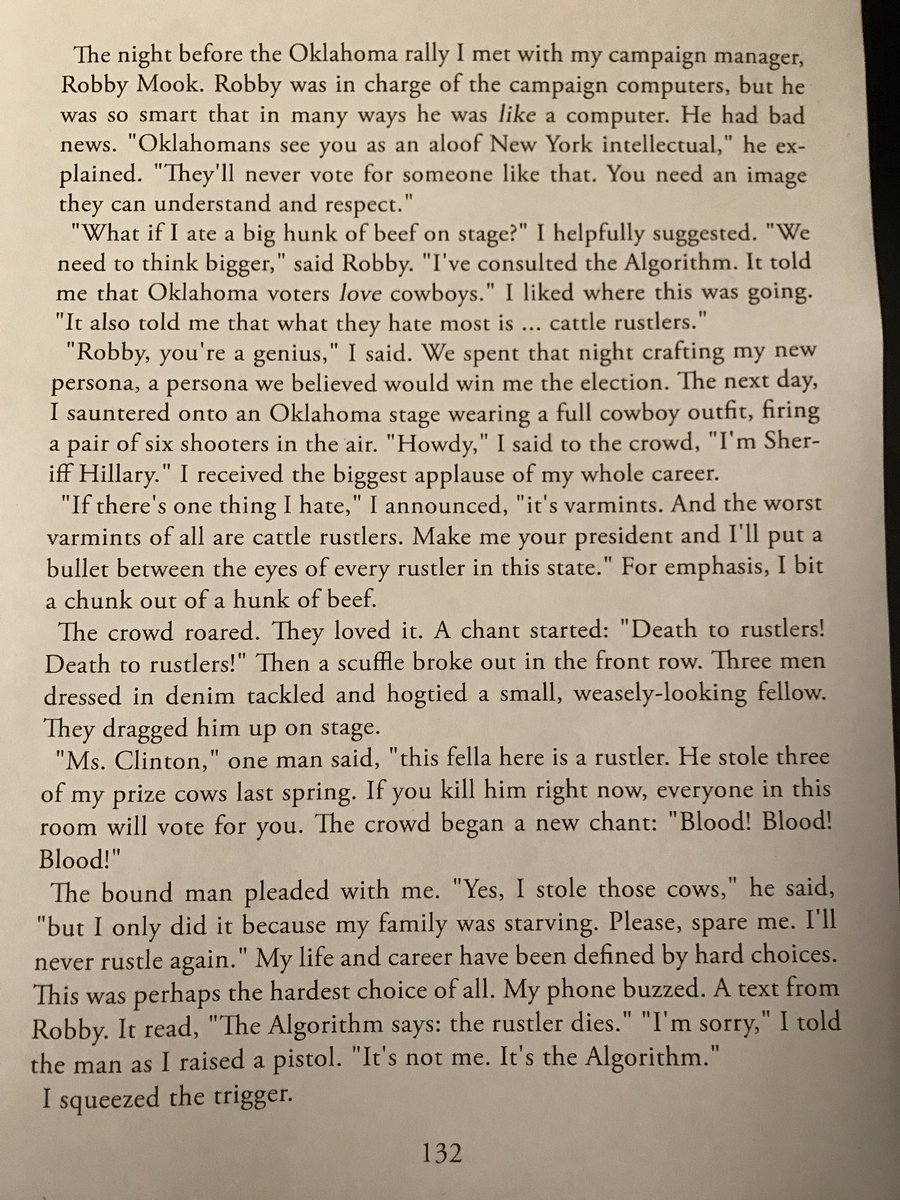


 Steve Prestegard.com: The Presteblog