The Financial Times says this is “a bid to capitalize on U.S. election fever.” (Before the Chicago Cubs bestrode the world like a colossus, T-shirts proclaimed “Cubs Fever: Catch it — and die.”) A beer bottle metaphysician at the brewer of soon-to-be America says, “We are embarking on what should be the most patriotic summer that this generation has ever seen.” This refers to the once-in-a-generation, light-the-sparklers opportunity to choose between two presidential candidates roundly disliked by American majorities. It is enough to drive one to drink something stronger than beer.
Budweiser’s name change is part of an advertising campaign featuring the slogan “America is in your hands.” The brewer says this will “remind people . . . to embrace the optimism upon which the country was first built.” So, between now and Nov. 8, whenever you belly up to a bar, do your patriot duty by ordering a foamy mug of America. Nothing says “It’s morning in an America that is back and standing tall” quite like beer cans festooned with Americana by Anheuser-Busch InBev, a firm based in Leuven, Belgium, and run by a Brazilian.
The beer brands most familiar to Americans — Budweiser, Miller, Coors — are foreign-owned. Want to win a round of cold Americans this summer? Wager that no one in the saloon can identify the U.S.-owned brewer with the largest market share and say what that share is. The answer is: D.G. Yuengling & Son with just 1.4 percent of the market, slightly more than Boston Beer Co., which makes the Samuel Adams brand.
Years ago, historian Daniel J. Boorstin said that whereas Europeans go to market to get what they want, Americans go to discover what they want. Nowadays the market comes to customers everywhere via ubiquitous advertising, precious little of which is designed to create desires for new products. Beer commercials are not supposed to make viewers thirsty or to prompt them to buy beer rather than Buicks. Rather, the commercials’ primary purpose is to defend and expand a brand’s market share. They do this by giving particular beers distinctive personalities. By doing so, they stroke consumers’ psyches, drawing beer drinkers into what Boorstin called “consumption communities.” Consumers are moved to covet a product less for its intrinsic qualities than its manufactured meaning. Advertising does this by reducing its information content and increasing its emotional appeal.
Budweiser is the “king of beers” — we know it is because Budweiser says it is — but will not be saying so during this advertising campaign. The slogan will be replaced by “E Pluribus Unum.” This is Latin for “Perhaps a gusher of patriotic kitsch will stanch the leakage of our market share to pestilential craft breweries.”
The United States has more than 4,000 craft breweries. Most American adults — all 235 million of them — live within 10 miles of a local brewery. And more than 40 percent of Americans 21-to-27 have never tasted Budweiser. They prefer craft beers (a craft brewer ships no more than 6 million barrels a year; Budweiser shipped 16 million in 2013, down from 50 million in 1988), which perhaps explains Budweiser’s current weirdly truculent commercials, such as this: “Proudly a macro beer. It’s not brewed to be fussed over. . . . It’s brewed for drinking, not dissecting. . . . Beer brewed the hard way. Let them sip their pumpkin peach ale.” And this: “Not small. Not sipped. Not soft. Not a fruit cup. Not imported.” Not cheerful.
Last year, craft brewers, which are increasing at a rate of almost two a day, won 12.8 percent of the $105.9 billion beer market. And 2015 was the sixth consecutive year, and the 12th time in 15 years, in which beer’s portion of the nation’s alcohol revenue declined as more Americans drank cocktails like the characters on “Mad Men.”
If, however, these aspiring Don Drapers hoist an America, they will have in their hands bottles and cans adorned with snippets of American Scripture — the Pledge of Allegiance, “The Star-Spangled Banner” and “America the Beautiful.” The psalmist said that joy cometh in the morning. Fat lot the psalmist knew. Joy cometh in the evening when you crack a cold can of America and anticipate the thrills of the looming “patriotic summer.” Go ahead. It’s 5 o’clock somewhere.
It’s 5 o’clock here, but I will not crack a cold can of America. I have better taste than Bud, and I avoid drinking beer in cans.
Those who are not fans of country music stereotype by creating lyrics like:
My girl left me
My dog died
My truck blew up
Mama’s goin’ back to prison
So let’s all get drunk!
Those who are not fans of today’s country music take the tack with which Peter Lewis begins:
If you know any fans of classic country music, you know how much we like to complain about today’s country scene and how it’s all gone wrong. What used to be a genre full of wry, bittersweet songs about bad luck and heartbreak, has become an endless series of interchangeable party anthems and syrupy love songs. (You could tell a similar story about R&B, but one problem at a time.)
Of course, in today’s world, no one believes anything without an infographic. And after years of waiting for Nate Silver to take an interest, I realized it was up to me to make one.
My initial plan was to take the annual Billboard country #1 hits for the last 50 years, tag every song according to its lyrical content, and then chart the trends over time. I quickly realized that would be way too much work, so I decided to use every tenth year as a sample: 2015, 2005, 1995, and so on. I made up abbreviated tags to summarize each type of song as I was going through the lists, like WCYBT (why can’t you be true) or CGOY (can’t get over you), and then tried to hammer them into a few larger categories.
What I learned is that there are four main types of country song, two sad types and two happy ones. After removing one instrumental track and a few novelty songs (mostly about truck drivers), the rest of the list fell into one of these four buckets:
1. It’s all over
What unites these songs is a core theme of regret or loss. Usually what’s over is a romantic relationship, but it could be about anything else good that the singer has lost, often by actively screwing it up. I JustCan’t GetOver You and You’ll Get Yours are among the subtypes; common elements include drinking, cheating, bad luck and bad decisions. In some ways this was once the quintessential country song, the one that spawned jokes like “What do you get when you play a country song backwards? You get your girl back, your job back, your dog, your truck, your house…”
I actually tagged most of these as SLS, for “sappy love song,” but decided to go with a more neutral label. It’s not so different from the same category of pop song, although some variations are particularly popular with country singers, including They Said We’d Never Make It (who did?), Back Together, and assurances of fidelity (maybe because so many country songs in the first two categories are about cheating).
There are still some common threads in the genre; one thing I noticed in going through the newer songs is how the old lyrical templates from the first two categories have been updated to be more positive. For example, “I’m over you (but clearly I’m not),” as practiced by George Jones, Connie Smith, Tammy Wynette and many others, has had the subtext stripped away in this song by Cole Swindell to become “I’m really over you, time to party” — which completely misses the central joke of the premise (why would you be singing about someone if you’re really over them?) and just comes off as mean-spirited. Or the classic “don’t screw up your life like I did,” often delivered by an old man in a bar (here are two examples from Vern Gosdin and Robbie Fulks), which has been inverted in this song by Lee Brice to make the old man a positive role model and source of trite life advice.
In any case, that chart pretty much speaks for itself: modern country fans are more interested in healthy relationships, motivational speeches and having a good time than sadness and misery. And on a certain level, who can blame them? But that tiny uptick in sad songs last year offers a ray of hope for those of us who still like a few tears in our beer now and then.
This also got picked up by MetaFilter, which included this comment …
A guy I know who works in Nashville pointed out to me that all the producers who were doing hair metal in the ’80s ended up doing country in Nashville in the 2000s. That probably explains something, but I’m not sure what. Maybe nothing? Hard to tell, without doing the same analysis for rock and pop that he’s done with country. I’d be interested in that analysis. Is it just country fans who are getting more into “healthy relationships, motivational speeches and having a good time”, or is it everybody?
… answered by Lewis:
Don’t know, but I’ve seen a few studies suggesting that pop songs are actually getting more sad over time, both in terms of more minor-key songs and more downbeat lyrics — here’s a recent podcast that discusses some of the lyrics research — so that could suggest that country music is even more of an outlier. I do feel subjectively though that country’s not the only genre that’s gotten happier, I mention R&B in the post as another potential example..
Someone else asked about the “damned drinking songs.”
I spent most of January working with someone who listened to country music all day–specifically, to a station that played the same twenty songs, over and over again, all day every day. It was my first major exposure to modern country music. One of the things that struck me (aside from how abjectly terrible and derivative the songs were), was that roughly half of them included some reference to drinking. Sometimes just a line about getting a beer with the boys, but drinking to forget also seemed to be a reoccurring theme.
Unrelatedly, there’s an actual song called She Thinks My Tractor’s Sexy and I honestly cannot tell if it’s supposed to be an ironic send-up of country music themes or like a proud embrace of stereotypes or what. I’m guessing proud embrace, but it kinda breaks my irony meter.
Someone else found the need to inject politics:
I wonder whether this could be connected to the polarisation in American politics/culture/society between the blue-state/coastal/secular/liberal folks and the red-state/conservative/religious folks, with each consuming their own media and regarding the other as an alien enemy. As such, if country-listening folks are a fortified camp at war against the other side, country music (the musical genre that defines them) could be pressed into service to rally the troops and reinforce shared values that differentiate Us from Them; something that songs about The Right Way To Live are much more suited for than melancholy ballads about having lost everything.
This is probably a minority opinion today, but current country music is, to me, much better to listen to than steel guitars, fiddles and twangy singing of the heartbreaks and sucky life of the songwriter. (I am also, as you know, one of those cretins who doesn’t generally listen to the words of songs, which is how I am able to listen to music that doesn’t correspond to my worldview but sounds good to me.) Life is hard enough without being reminded of it on every song on the radio or your favorite MP3 playback device. I prefer to listen to music that doesn’t make me want to drive into a bridge support at 100 mph.
It’s not as if rock or pop are suffused with originality either. At least half, and probably more than half, of rock and pop songs since the beginning of the rock era in the 1950s have to do with love and/or sex, including lack thereof or end thereof. The other half is comprised of partying, cars (’60s), protest (late ’60s and early ’70s), shaking your booty (’70s), angst (particularly ’80s and ’90s) and weird stuff (“MacArthur Park, “Mexican Radio,” etc.).
There may be a legitimate observation about how country songs sound alike …
… but country is far from the only offender in that regard:
It may also be true that country singers are more likely to get airplay if they look like, say, Carrie Underwood or Miranda Lambert instead of Betty Friedan or Hillary Clinton. This is not a new thing. For that matter, none of the male country singers of today look like Willie Nelson or Mick Jagger.
Because apparently everything today must be political, someone named Machine Trooper writes:
There is a surging groundswell in the grass roots of America. I’ve noticed it (I daresay I’ve been a part of it) for the last few years. It is pushing back against the left-wing cultural svengalis and their Narrative. It’s not huge or sensational (yet), but it is widespread.
Anti-war protestors in the 1960s had a saying that went something like this: “What if there was a war, but nobody showed up?” Well, I’ll tell you what happens when one side doesn’t show up: that side loses.
For generations centrists and everyone right-of-center simply have not shown up for the culture wars. Predictably, the leftists have blitzed right through battlefields of opinion and ideas unopposed–like the Red Army rolling through eastern Poland in 1939–so that their monopoly on the flow of information, including creative expression, was ironclad.
It took some irritated computer nerds to show us that the left is far from invincible.
In fact, #gamergate showed the world that the SJWs, feminists and Marxists (cultural and otherwise) are not only vulnerable, they’ve become arrogant from never being challenged for so long, and prove to be weak, inept cowards when confronted by a smart, determined opposition. They are beatable. Very much so.
But you have to actually show up to the fight if you’re going to beat them.
In greater and greater numbers, the right wing is finally showing up to fight in the war for the mind and soul of our posterity.
Looking for a good book to read, but tired of sucker punches and nihilistic misery when all you want to do is relax? You’re in luck … Behold! A gallery of conservative and libertarian-friendly fiction.
The CLFA has expanded from Facebook into their own website, and are compiling a wish-list library of books written by non-leftists (or at least sans the ubiquitous leftist Narrative rammed down our throat at every turn).
Books need not be political or moral message fiction; we’re mainly looking for good, entertaining stories that happen to embrace things we love, like individualism, self-reliance, the importance of liberty, and so on. Sometimes these books are even written by self-proclaimed leftist authors. But whatever – a good story is a good story!
Hoowah. At least one of my favorite books was written by an author who I later met, and it turned out we were quite at odds, politically.But by whatever arrangement of circumstances, he told a great story.
It’s nice to read a novel with a political slant that cuts against The Narrative. But often, it’s even nicer to read a book that’s apolitical–no message or counter-message; just a good story, told well. But even those are more and more difficult to find, so it pleases me that such books won’t be excluded from the CLFA gallery.
(BTW, have you ever noticed how right-wingers are open about their political biases, but left-wingers pretend to be impartial centrists and throw a fit when you call them out ontheir biases? Hmm…there’s at least one blog post in that curious state of things.)
CLFA’s gallery of fiction is in its infancy right now, but already it is proving to be as diverse as the right wing writ large. Authors run the gamut from “social libertarians” and “establishment conservatives” all the way to radical “religious right” rebels like me. You’ll find not only tradpubbed popular authors like Larry Correia and Andrew Klavan, but plenty of indie authors you’ve been missing out on until now.
The CLFA has also organized its own award. I believe this is the second year of said award. The finalists have been chosen for 2015 and voting begins in June to determine the winner.
WWII was the last time the USA fought a war with the intention of pursuing absolute victory. It wasn’t just the soldiers, sailors and marines committed to the war effort–the wives, children, parents, grandparents and 4Fs also did what they could. They bought War Bonds, collected cans, organized bake sales, wrote letters to GIs overseas, and fed them or danced with them when they came home.
If you are a reader, consider doing your part on the home front of the Culture War. When you’re looking for a good book, go somewhere like the CLFA first. (And buy using their links, to help them offset the cost of their website–and provide them incentive for the time and effort they put into doing this for us.) If you’re going to spend your “voting dollars” on a book anyway, why not vote for books written by authors who are fighting to take our culture back? When you discover a good read, don’t just finish it and go about your business–write a review and increase the book/author’s chances of being discovered by others who would appreciate it like you did. Then tell another reader about your discovery.
It’s natural to assume that documentary films and nonfiction books would be the most influential weapons in the culture war, but they’re not. Entertainment, in its various forms (fiction, movies, music, etc.) has been an enormous influence on how people think. Consider which political faction has dominated entertainment; then examine the state of our culture today. If that dominance isn’t challenged now, while it’s still possible, you are only going to get more of the same and worse…but to a greater degree.
The soldiers on our side in this war are marching to the sound of the guns. Your support would be dearly appreciated, down in the trenches.
There is a kind of joke called the “Russian reversal,” overattributed to Russian comedian Yakov Smirnoff, that goes something like: “In America, you pick government; in Soviet Russia, government picks you!” We conservatives and libertarians may not have chosen to participate in a cultural civil war, but as Gen. Douglas MacArthur was fond of saying, in war there is no substitute for victory.
When people ask me why millions of good jobs remain unfilled while millions of able bodied Americans remain unemployed, I try to alternate my responses between a decline of work ethic, an onslaught of unrealistic expectations, and our irresistible desire to reward bad behavior. But I think the biggest reason so much legitimate opportunity goes unloved, is due to our bizarre obsession with separating “good jobs” from “bad jobs.”
There’s no better way to discourage the next generation from learning a skill that’s actually in demand, than by telling them that certain jobs are “bad,” and therefore “beneath” them. Consider the latest wisdom from the luminaries at WalletHub. For whatever reason, these arbiters of job satisfaction have taken it upon themselves to identify the “best and worst” vocations in America. To accomplish this, a cadre of “experts” were consulted, as WalletHub compared and contrasted over a hundred entry-level occupations across three “key dimensions” 1) Immediate Opportunity, 2) Growth Potential and 3) Job Hazards.
Next – because science is important – WalletHub identified “11 relevant metrics,” each of which was assigned a “corresponding weight.” Then, each metric was given a value between 0 and 100, wherein 100 represents the most favorable conditions for a specific entry-level position, and 0 the least. In this way, 109 different occupations were ranked from first to worst.
I’m tempted to spell out the absurdity of WalletHub’s methodology, and show you why the statistics they use are as flawed as they are irrelevant. Instead, I’m just going to post their Top 10 and Bottom 10 careers, and direct you to their website, where you can judge their methodologies and agenda for yourself. https://wallethub.com/edu/best-entry-level-jobs/3716/… ,,,
At a time when society could be celebrating opportunity wherever it occurs, in all it’s varied forms, we instead shine a light on “research” that demonizes work, disparages the skilled trades, discounts the importance of dozens of good careers, and demeans thousands of skilled tradespeople. Madness. …
Seven jobs historically supported by mikeroweWORKS have been singled out as undesirable. Welders – a truly noble profession that WalletHub ranks dead last – have used our scholarship funds to gain valuable training. Likewise plumbers, machinists, boiler-makers, mechanics, carpenters, and many other people who had the good sense to pursue a skill that’s actually in demand. I’m in touch with these people, and I can tell you that all of them are thriving. They’re proud of what they do, and proud of how they do it. Seeing their chosen profession at the bottom of somebody else’s list however, is probably a lousy way to start the weekend, so I’ll close with this:
Don’t be fooled by these lists. They’re cobbled together by imaginary experts looking to sell America a one-size-fits-all approach to job satisfaction. It’s a crock. And so are the journalists who report such nonsense as news. There’s simply no such thing as a bad job, and anyone who tells you otherwise is selling something.
The next time a Comrade Sanders supporter says college should be free, show them this, from Gail MarksJarvis:
How could anyone be against free college tuition?
It’s a mom-and-apple-pie issue. Millennials, suffering from debilitating student loans, love it. Parents, who can’t wring enough out of paychecks to save for college and retirement, see it as salvation. Many Americans who believe the country will be stronger if young people go to college and boost their potential and lifetime earnings, embrace it too.
Democratic presidential candidate Bernie Sanders is running on it. The other Democratic candidate, Hillary Clinton, doesn’t go as far as Sanders but favors more aid for low- and moderate-income students, not everyone.
Yet now, with election-year crowds cheering for college student relief, the think tanks are taking aim at the idea of free college for everyone, and the idea isn’t sounding as sweet as mom and her apple pie.
First, the Tax Policy Center, a respected think tank on tax issues, knocked holes — big ones — in the funding Sanders has been suggesting. Then the Brookings Institution joined the critics.
Brookings leans left, so you might think it would be friendly to a proposal that would free future generations from killer college debt.
But that’s where Brookings takes issue. In a report released Thursday by Brookings, Matthew Chingos criticizes the plan for spending too much money helping affluent and rich families and shortchanging the low-income students who he says need help the most.
Free college would mean “spending billions on upper-income groups that could afford to pay,” said Chingos, who is a senior fellow for the Urban Institute. In his report, he notes that under the Sanders proposal that’s been so popular with young voters, “the top half of the income distribution would receive 24 percent more in dollar value from eliminating tuition than students from the lower half” of incomes.
The top half, according to Chingos’ data, includes families with incomes over $62,500.
Although many families close to that cutoff don’t consider themselves affluent and are struggling to get their children through college, Chingos notes “there are trade-offs.”
“When college is free for everybody,” he said, there’s less public money for the lowest-income families.
For low-income students, “even free college isn’t cheap enough,” he said.
Chingos argues that while Sanders’ free college proposal would eliminate tuition and fees at public colleges, lower-income students struggle with living expenses that end up costing even more than their college tuition and fees. So relieving the students of those direct college costs doesn’t go far enough.
He notes that families with incomes under $62,500 spend $18 billion out-of-pocket on living expenses. That’s where free college fails, he argues. Rather than giving tuition and fees free to affluent and rich people, he would like to see more funding go to lower-income people for living expenses in addition to tuition.
In addition, Chingos argues that free college for all students will not be equal for all because more affluent students pick the public colleges and universities that tend to be more expensive than those selected by lower-income students. In particular, many lower-income students go to community college, where the average tuition is $1,673. He contrasts that with a student at a four-year college paying between $6,119 and $7,319.
With free tuition, Chingos said the lower-income students would save $1.8 billion in tuition costs but still need to pay $4.5 billion in living expenses and other college costs.
“The upshot is that dependent students from the most affluent 25 percent of families represent 11 percent of students at public colleges, but would receive 18 percent of the benefits if tuition were eliminated,” he said. Yet, students in the bottom fourth of income “make up 14 percent of public college students and would receive 16 percent of free tuition benefits.”
Many lower-income students are living independently of their parents. They go to school only part time as they struggle to hold jobs to pay for college and living expenses. Meanwhile, more affluent students depend on parents, and 68 percent go to college full time.
As a result, Chingos calculates, the top half of students by income would receive $16.8 billion by eliminating tuition costs, while the lower half could get $13.5 billion.
At some point writers usually are given a copy of William Zinsser’s On Writing Well: The Classic Guide to Writing Nonfiction.
What follows is not nonfiction. But what follows here isn’t good writing either, as compiled from current and past popular fiction by BrainJet in the spirit of the famous Bulwer–Lytton Bad Writing Contest.
We begin with the immensely popular, yet immensely bad, 50 Shades of Grey:
I am all gushing and breathy—like a child, not a grown woman who can vote and drink legally in the state of Washington.
Jeez, he looks so freaking hot. My subconscious is frantically fanning herself, and my inner goddess is swaying and writhing to some primal carnal rhythm.
Someone named Ron Miller wrote something called Silk and Steel, in which …
Her legs were quills. They were bundles of wicker, they were candelabra; the muscles were summer lightning, that flickered like a passing thought; they were captured eels or a cable on a windlass. Her thighs were geese, pythons, schooners. They were cypress or banyan; her thighs were a forge, they were shears; her thighs were sandstone, they were the sandstone buttresses of a cathedral, they were silk or cobwebs. Her calves were sweet with the sap of elders, her feet were bleached bones, her feet were driftwood. Her feet were springs, marmosets or locusts; her toes were snails, they were snails with shells of tears.
Stephenie Meyer, writer of the Twilight manglings of vampires, contributed:
Aro laughed. “Ha ha ha,” he giggled.
(Technically, a laugh and a giggle are not quite the same thing. “Ha ha ha” isn’t a giggle either.)
“Stop!” I shrieked, my voice echoing in the silence, jumping forward to put myself between them.
Claire Delacroix, not Yoda, wrote this in Unicorn Vengeance:
Like the wolf he was named for was he, he realized, for his life was solitary above all else.
(As one comment pointed out, however, wolves are pack animals, which makes this sentence not only badly constructed but based on a false premise.)
Dan Brown of The Da Vinci Code fame wrote elsewhere:
Physicist Leonardo Vetra smelled burning flesh, and he knew it was his own.
(And how did he know that? Did Vetra run test flesh burnings?)
Overhanging her precarious body was a jaundiced face whose skin resembled a sheet of parchment paper punctured by two emotionless eyes.
Just because you’re popular doesn’t mean every word is a pearl. Lee Child, Jack Reacher’s creator:
It was about as distinctive as the most distinctive thing you could ever think of.
Dean Koontz in Whispers:
“For a minute, the three of them sat in silence, within the expensive, single-engine, overhead-wing, two-hundred-mile-per-hour, sixteen-mile-per-gallon, white and red and mustard-yellow, airborne cocoon.”
Tom Clancy in Red Storm Rising:
“Fighter weather,” agreed Lieutenant Colonel Bill Jeffers, commander of the 57th Fighter Interceptor Squadron, the “Black Knights,” most of whose F-15 Eagle interceptors were sitting in the open a bare hundred yards away.
Bad writing is not a recent thing. Langston Hughes wrote in Thank You, M’Am:
He did not trust the woman not to trust him. And he did not want to be mistrusted now.
(I think that’s a double negative. Or something.)
Not many people may realize the human cartoon Rambo came off a serious movie, “First Blood,” which came from a novel that included …
One man came running off the corner to stop him, but Rambo kicked him away and then he was whipping left around the corner, and for now he was safe and he really got that cycle going.
This was found in a novel spun off the new “Star Wars” movie:
The TIE wibbles and wobbles through the air; careening drunkenly across the Myrran rooftops – it zigzags herkily-jerkily out of sight.
One wonders if any of these writers had editors. As one comment put it:
Our readers today are so illiterate, they wouldn’t know bad writing if their phones depended on it.
At least the creator of this list took the time to read more than one book, which based on another comment may not have been necessary:
I feel like just posting every sentence from 50 Shades of Grey would have been sufficient to make this list. Literally nothing ever written is as horrible as anything in that sad excuse for a book.
The existence of this list was derided as jealousy of successful writers by some. The counter to that is that popularity and quality are not the same thing, and all you need do is look at the Kardashians.
It’s remarkable to me that the liberal Vox allowed this to be published:
There is a smug style in American liberalism. It has been growing these past decades. It is a way of conducting politics, predicated on the belief that American life is not divided by moral difference or policy divergence — not really — but by the failure of half the country to know what’s good for them.
In 2016, the smug style has found expression in media and in policy, in the attitudes of liberals both visible and private, providing a foundational set of assumptions above which a great number of liberals comport their understanding of the world.
It has led an American ideology hitherto responsible for a great share of the good accomplished over the past century of our political life to a posture of reaction and disrespect: a condescending, defensive sneer toward any person or movement outside of its consensus, dressed up as a monopoly on reason.
The smug style is a psychological reaction to a profound shift in American political demography.
Beginning in the middle of the 20th century, the working class, once the core of the coalition, began abandoning the Democratic Party. In 1948, in the immediate wake of the Franklin Roosevelt, 66 percent of manual laborers voted for Democrats, along with 60 percent of farmers. In 1964, it was 55 percent of working-class voters. By 1980, it was 35 percent.
The white working class in particular saw even sharper declines. Despite historic advantages with both poor and middle-class white voters, by 2012 Democrats possessed only a 2-point advantage among poor white voters. Among white voters making between $30,000 and $75,000 per year, the GOP has taken a 17-point lead.
The consequence was a shift in liberalism’s center of intellectual gravity. A movement once fleshed out in union halls and little magazines shifted into universities and major press, from the center of the country to its cities and elite enclaves. Minority voters remained, but bereft of the material and social capital required to dominate elite decision-making, they were largely excluded from an agenda driven by the new Democratic core: the educated, the coastal, and the professional.
It is not that these forces captured the party so much as it fell to them. When the laborer left, they remained.
The origins of this shift are overdetermined. Richard Nixon bears a large part of the blame, but so does Bill Clinton. The evangelical revival, yes, but the destruction of labor unions, too. I have my own sympathies, but I do not propose to adjudicate that question here.
Suffice it to say, by the 1990s the better part of the working class wanted nothing to do with the word liberal. What remained of the American progressive elite was left to puzzle: What happened to our coalition?
Why did they abandon us?
What’s the matter with Kansas?
The smug style arose to answer these questions. It provided an answer so simple and so emotionally satisfying that its success was perhaps inevitable: the theory that conservatism, and particularly the kind embraced by those out there in the country, was not a political ideology at all.
The trouble is that stupid hicks don’t know what’s good for them. They’re getting conned by right-wingers and tent revivalists until they believe all the lies that’ve made them so wrong. They don’t know any better. That’s why they’re voting against their own self-interest.
As anybody who has gone through a particularly nasty breakup knows, disdain cultivated in the aftermath of a divide quickly exceeds the original grievance. You lose somebody. You blame them. Soon, the blame is reason enough to keep them at a distance, the excuse to drive them even further away.
Finding comfort in the notion that their former allies were disdainful, hapless rubes, smug liberals created a culture animated by that contempt. The rubes noticed and replied in kind. The result is a self-fulfilling prophecy.
Financial incentive compounded this tendency — there is money, after all, in reassuring the bitter. Over 20 years, an industry arose to cater to the smug style. It began in humor, and culminated for a time in The Daily Show, a program that more than any other thing advanced the idea that liberal orthodoxy was a kind of educated savvy and that its opponents were, before anything else, stupid. The smug liberal found relief in ridiculing them.
The internet only made it worse. Today, a liberal who finds himself troubled by the currents of contemporary political life need look no further than his Facebook newsfeed to find the explanation:
Liberals are better able to process new information; they’re less biased like that. They’ve got different brains. Better ones. Why? Evolution. They’ve got better brains, top-notch amygdalae, science finds.
The smug style created a feedback loop. If the trouble with conservatives was ignorance, then the liberal impulse was to correct it. When such corrections failed, disdain followed after it.
Of course, there is a smug style in every political movement: elitism among every ideology believing itself in possession of the solutions to society’s ills. But few movements have let the smug tendency so corrupt them, or make so tenuous its case against its enemies.
“Conservatives are always at a bit of a disadvantage in the theater of mass democracy,” the conservative editorialist Kevin Williamson wrote in National Reviewlast October, “because people en masse aren’t very bright or sophisticated, and they’re vulnerable to cheap, hysterical emotional appeals.”
The smug style thinks Williamson is wrong, of course, but not in principle. It’s only that he’s confused about who the hordes of stupid, hysterical people are voting for. The smug style reads Williamson and says, “No! You!”
Elites, real elites, might recognize one another by their superior knowledge. The smug recognize one another by their mutual knowing.
Knowing, for example, that the Founding Fathers were all secular deists. Knowing that you’re actually, like, 30 times more likely to shoot yourself than an intruder. Knowing that those fools out in Kansas are voting against their own self-interest and that the trouble is Kansas doesn’t know any better. Knowing all the jokes that signal this knowledge.
The studies, about Daily Show viewers and better-sized amygdalae, are knowing. It is the smug style’s first premise: a politics defined by a command of the Correct Facts and signaled by an allegiance to the Correct Culture. A politics that is just the politics of smart people in command of Good Facts. A politics that insists it has no ideology at all, only facts. No moral convictions, only charts, the kind that keep them from “imposing their morals” like the bad guys do.
Knowing is the shibboleth into the smug style’s culture, a cultural that celebrates hip commitments and valorizes hip taste, that loves nothing more than hate-reading anyone who doesn’t get them. A culture that has come to replace politics itself.
The knowing know that police reform, that abortion rights, that labor unions are important, but go no further: What is important, after all, is to signal that you know these things. What is important is to launch links and mockery at those who don’t. The Good Facts are enough: Anybody who fails to capitulate to them is part of the Problem, is terminally uncool. No persuasion, only retweets.Eye roll, crying emoji, forward to John Oliver for sick burns. …
On June 26, 2015, the Supreme Court found that denying marriage licenses to same-sex couples constituted a violation of the 14th Amendment. After decades of protests, legislation, setbacks, and litigation, the 13 states still holding out against the inevitable were ordered to relent. Kim Davis, a clerk tasked with issuing marriage licenses to couples in her Kentucky county, refused. …
But a more fundamental element of smug disdain for Kim Davis went unchallenged: the contention, at bottom, that Davis was not merely wrong in her convictions, but that her convictions were, in themselves, an error and a fraud.
That is: Kim Davis was not only on the wrong side of the law. She was not even a subscriber to a religious ideology that had found itself at moral odds with American culture. Rather, she was a subscriber to nothing, a hateful bigot who did not even understand her own religion.
Christianity, as many hastened to point out, is about love. Christ commands us to render unto Caesar what is Caesar’s. If the Bible took any position on the issue at all, it was that divorce, beloved by Davis, was a sin, and that she was a hypocrite masquerading among the faithful.
How many of these critiques were issued by atheists?
This, more than anything I can recall in recent American life, is an example of the smug style. Many liberals do not believe that evangelical Christianity ought to guide public life; many believe, moreover, that the moral conceits of that Christianity are wrong, even harmful to society. But to the smug liberal, it isn’t that Kim Davis is wrong. How can she be? She’s only mistaken. She just doesn’t know the Good Facts, even about her own religion. She’s angry and confused, another hick who’s not with it.
It was an odd thing to assert in the case of Christianity, a religion that until recently was taken to be another shibboleth of the uncool, not a loving faith misunderstood by bigots. But this is knowing: knowing that the new line on Jesus is that the homophobes just don’t get their own faith.
Kim Davis was behind the times. Her beliefs did not represent a legitimate challenge to liberal consensus because they did not represent a challenge at all: They were incoherent, at odds with the Good Facts. Google makes every man a theologian.
This, I think, is fundamental to understanding the smug style. If good politics and good beliefs are just Good Facts and good tweets — that is, if there is no ideology beyond sensible conclusions drawn from a rational assessment of the world — then there are no moral fights, only lying liars and the stupid rubes who believe them. …
In November of last year, during the week when it became temporarily fashionable for American governors to declare that Syrian refugees would not be welcome in their state, Hamilton Nolan wrote an essay for Gawker called “Dumb Hicks Are America’s Greatest Threat.”
If there has ever been a tirade so dedicated to the smug style, to the proposition that it is neither malice, nor capital, nor ideological difference, but rather the backward stupidity of poor people that has ruined the state of American policy, then it is hidden beyond our view, in some uncool place, far from the front page of Gawker.
“Many of America’s political leaders are warning of the dangers posed by Syrian refugees. They are underestimating, though, the much greater danger: dumbass hicks, in charge of things,” Nolan wrote. “…You, our elected officials, are embarrassing us. All of us, except your fellow dumb hicks, who voted for you in large numbers. You — our racist, xenophobic, knuckle-dragging ignorant leaders — are making us look bad in front of the guests (the whole world). You are the bad cousin in the family who always ruins Thanksgiving. Go in the back room and drink a can of beer alone please.”
Among the dumb hicks Nolan identifies are “many Southern mayors” and “many lesser known state representatives.” He cites the Ku Klux Klan — “exclusively dumbass hicks,” he writes. “100%,” he emphasizes — despite the fact that the New York Times, in an investigation of white supremacist members of Stormfront.org, found that “the top reported interest of Stormfront members is reading.” That they are “news and political junkies.” Despite the fact that if “you come compare Stormfront users to people who go to the Yahoo News site, it turns out that the Stormfront crowd is twice as likely to visit nytimes.com.”
“They have long threads praising Breaking Bad and discussing the comparative merits of online dating sites, like Plenty of Fish and OKCupid,” the Times reports.
In another piece, published later the same month, Nolan wrote that “Inequality of wealth — or, if you like, the distribution of wealth in our society in a way that results in poverty — is not just one issue among many. It is the root from which blooms nearly all major social problems.”
He’s right about that. But who does he imagine is responsible for this inequality? The poor? The dumb? The hicks? …
Nolan is perhaps the funniest and most articulate of those pointing fingers at the “dumbass hicks,” but he isn’t alone. It is evidently intolerable to a huge swath of liberalism to confess the obvious: that those responsible have homes in Brooklyn, too. That they buy the same smartphones. That they too are on Twitter. That the oligarchs are making fun of stupid poor people too. That they’re better at it, and always will be.
No: The trouble must be out there, somewhere. In the country. Where the idiots are; where the hicks are too stupid to know where problems blossom.
“To the dumb hick leaders of America, I say: (nothing). You wouldn’t listen anyhow,” Nolan writes. “My words would go in one ear and right out the other. Like talking to an old block of wood.”
It’s a shame. They might be receptive to his concerns about poverty.
If there is a single person who exemplifies the dumbass hick in the smug imagination, it is former President George W. Bush. He’s got the accent. He can’t talk right. He seems stupefied by simple concepts, and his politics are all gee-whiz Texas ignorance. He is the ur-hick. He is the enemy.
He got all the way to White House, and he’s still being taken for a ride by the scheming rightwing oligarchs around him — just like those poor rubes in Kansas. If only George knew Dick Cheney wasn’t acting in his own best interests!
It is worth considering that Bush is the son of a president, a patrician born in Connecticut and educated at Andover and Harvard and Yale.
It is worth considering that he does not come from a family known for producing poor minds.
It is worth considering that beginning with his 1994 gubernatorial debate against Ann Richards, and at every juncture thereafter, opponents have been defeated after days of media outlets openly speculating whether George was up to the mental challenge of a one-on-one debate.
“Throughout his short political career,” ABC’s Katy Textor wrote on the eve of the 2000 debates against Al Gore, “Bush has benefited from low expectations of his debating abilities. The fact that he skipped no less than three GOP primary debates, and the fact that he was reluctant to agree to the Commission on Presidential Debates proposal, has done little to contradict the impression of a candidate uncomfortable with this unavoidable fact of campaign life.”
“Done little to contradict.”
On November 6, 2000, during his final pre-election stump speech, Bush explained his history of political triumph thusly: “They misunderesimated me.”
What an idiot. American liberals made fun of him for that one for years.
It is worth considering that he didn’t misspeak.
He did, however, deliberately cultivate the confusion. He understood the smug style. He wagered that many liberals, eager to see their opponents as intellectually deficient, would buy into the act and thereby miss the more pernicious fact of his moral deficits.
He wagered correctly. Smug liberals said George was too stupid to get elected, too stupid to get reelected, too stupid to pass laws or appoint judges or weather a political fight. Liberals misunderestimated George W. Bush all eight years of his presidency.
George W. Bush is not a dumbass hick. In eight years, all the sick Daily Show burns in the world did not appreciably undermine his agenda.
The smug mind defends itself against these charges. Oh, we‘re just having fun, it says.We don’t mean it. This is just for a laugh, it’s just a joke, stop being so humorless.
It is exasperating, after all, to have to live in a country where so many people are so aggressively wrong about so much, they say. You go on about ideology and shibboleths and knowing, but we are right on the issues, aren’t we? We are right on social policy and right on foreign policy and right on evolution, and same-sex marriage, and climate change too. Surely that’s what matters.
We don’t really mean they’re all stupid — but hey, lay off. We’re not smug! This is just how we vent our frustration. Otherwise it would be too depressing having to share a country with these people!
We have long passed the point where blithe ridicule of the American right can be credibly cast as private stress relief and not, for instance, the animating public strategy of an entire wing of the liberal culture apparatus. The Daily Show, as it happens, is not the private entertainment of elites blowing off some steam. It is broadcast on national television.
Twitter isn’t private. Not that anybody with the sickest burn to accompany the smartest chart would want it to be. Otherwise, how would everyone know how in-the-know you are?
The rubes have seen your videos. You posted it on their wall.
Still don’t get why liberal opinion is correct? This video settles the debate for good.
I have been wondering for a long time how it is that so many entries to the op-ed pages take it as their justifying premise that they are arguing for a truth that has never been advanced before.
“It’s an accepted, nearly unchallenged assumption that Muslim communities across the U.S. have a problem — that their youth tend toward violent ideology, or are susceptible to “radicalization” by groups like the Islamic State,” began an editorial that appeared last December in the New York Times. But “after all,” it goes on, “the majority of mass shootings in America are perpetrated by white men but no one questions what might have radicalized them in their communities.”
But this contention — that Muslims possess superlative violent tendencies — has been challenged countless times, hasn’t it? It was challengedhere, andhere and here as far back as 9/11. The president of the United State challenged it on national television the night before this editorial was published. The Times itself did too. The myopic provincialism of anybody who believes that Muslims are a uniquely violent people is the basis of a five-year-old Onion headline, not some new moral challenge.
The smug style leaves its adherents no other option: If an idea has failed to take hold, if the Good Facts are not widely accepted, then the problem must be that these facts have not yet reached the disbelievers.
In December 2015, Public Policy Polling found that 30 percent of Republicans were in favor of bombing Agrabah,the Arab-sounding fictional city from Disney’s Aladdin. Hilarious.
PPP has run joke questions before, of course: polling the popularity of Deez Nuts, or asking after God’s job approval. But these questions, at least, let their audience in on the gag. Now liberalism is deliberately setting up the last segment of the population actually willing to endure a phone survey in service of what it knew would make for some hilarious copy when the rubes inevitably fell for it. This is not a survey in service of a joke — it is a survey in service of a human punchline.
As if only Republicans covered up gaps in their knowledge by responding to what they assume is a good-faith question by guessing from their general principles.
It may be easy to mistake with the private venting of frustrated elites, but the rubes can read the New York Times, too. It is not where liberals whisper to each other about the secret things that go unchallenged. Poll respondents are not the secret fodder for a joke.
This is the consequence of “private” venting, and it is the consequence of knowing too: If good politics comes solely from good data and good sense, it cannot be that large sections of the American public are merely wrong about so many vital things. It cannot be that they have heard our arguments but rejected them — that might mean we must examine our own methods of persuasion.
No: it is only that the wrong beliefs are unchallenged — that their believers are trapped in “information bubbles” and confirmation bias. That no one knows the truth, except the New York Times(or Vox). If only we could tell them, question them, show them this graph. If they don’t get it then, well, then they’re hopeless.
The smug style plays out in private too, of course. If you haven’t started one yourself, you’ve surely seen the Facebook threads: Ten or 20 of Brooklyn’s finest gather to say how exasperated they are, these days, by the stupidity of the American public.
“I just don’t know what to do about these people,” one posts. “I think we have to accept that a lot of people are just misinformed!” replies another. “Like, I think they actually don’t want to know anything that would undermine their worldview.”
They tend to do it in the comment section, under an article about how conservatives are difficult to persuade because they isolate themselves in mutually reinforcing information bubbles.
What have been the consequences of the smug style?
It has become a tradition for the smug, in editorials and essay and confident Facebook boasting, to assume that the presidential debates will feature their candidate, in command of the facts, wiping the floor with the empty huckster ignorance of their Republican opponent.
It was popularly assumed, for a time, that George W. Bush was too stupid to be elected president.
The smug believed the same of Ronald Reagan.
John Yoo, the architect of the Bush administration’s torture policies, escaped The Daily Show unscathed. Liberals wondered what to do when Jon Stewart fails. What would success look like? Were police waiting in the wings, a one-way ticket to the Hague if Stewart nailed him?
It would be unfair to say that the smug style has never learned from these mistakes. But the lesson has been, We underestimated how many people could be fooled.
That is: We underestimated just how dumb these dumb hicks really are.
We just didn’t get our message to them. They just stayed in their information bubble. We can’t let the lying liars keep lying to these people — but how do we reach these idiots who only trust Fox?
Rarely: Maybe they’re savvier than we thought. Maybe they’re angry for a reason.
As it happens, reasons aren’t too difficult to come by.
During a San Francisco fundraiser in the 2008 primary campaign, Barack Obama offered an observation that was hailed not without some glee as the first unforced error from then-Senator Cool.
“You go into these small towns in Pennsylvania,” Obama said, “and, like, a lot of small towns in the Midwest, the jobs have been gone now for 25 years and nothing’s replaced them. And they fell through the Clinton administration, and the Bush administration, and each successive administration has said that somehow these communities are gonna regenerate, and they have not. And it’s not surprising then they get bitter. They cling to guns or religion or antipathy toward people who aren’t like them or anti-immigrant sentiment or anti-trade sentiment as a way to explain their frustrations.”
It’s the latter part that we remember eight years later — the clinging to guns and religion and hate — but it is the first part that was important: the part about lost jobs and neglect by two presidential administrations.
Obama’s observation was not novel.
The notion that material loss and abandonment have driven America’s white working class into a fit of resentment is boilerplate for even the Democratic Party’s tepid left these days. But in the president’s formulation and in the formulation of smug stylists who have embraced some material account of uncool attitudes, the downturn, the jobs lost and the opportunities narrowed, are a force of nature — something that has “been happening” in the passive voice. …
If any single event provided the direct impetus for this essay, it was a running argument I had with an older, liberal writer over the seriousness of Donald Trump’s presidential campaign. Since June 2015, when Trump announced his candidacy, this writer has taken it upon himself each day to tell his Facebook followers that Donald Trump is a bad kind of dude.
That saying as much was the key to stopping him and his odious followers too.
“Ridicule is the most powerful weapon we have against any of our enemies,” he told me in the end, “but especially against the ones who, not incorrectly, take it so personally and lash out in ways that shine klieg lights on those very flaws we detest.
“If you’re laughing at someone, you’re certainly not respecting him.”
“Anyway,” he went on, “I’m done talking to you. We see the world differently. I’m fine with that. We don’t need to be friends.”
Ridicule is the most effective political tactic.
Ridicule is especially effective when it’s personal and about expressing open disdain for stupid, bad people.
Political legitimacy is granted by the respect of elite liberals.
You can’t be legitimate if you’re the butt of our jokes.
If you don’t agree, we can’t work together politically.
We can’t even be friends, because politics is social.
Because politics is performative — if we don’t mock together, we aren’t on the same side.
If there is a bingo card for the smug style somewhere, then cross off every square. You’ve won. …
Nothing is more confounding to the smug style than the fact that the average Republican is better educated and has a higher IQ than the average Democrat. That for every overpowered study finding superior liberal open-mindedness and intellect and knowledge, there is one to suggest that Republicans have the better of these qualities.
Most damning, perhaps, to the fancy liberal self-conception: Republicans score higher in susceptibility to persuasion. They are willing to change their minds more often.
The Republican coalition tends toward the center: educated enough, smart enough, informed enough.
The Democratic coalition in the 21st century is bifurcated: It has the postgraduates, but it has the disenfranchised urban poor as well, a group better defined by race and immigration status than by class. There are more Americans without high school diplomas than in possession of doctoral degrees. The math proceeds from there.
The smug style takes this as a defense. Elite liberalism, and the Democratic Party by extension, cannot hate poor people, they say. We aren’t smug! Just look at our coalition. These aren’t rubes. Just look at our embrace of their issues.
But observe how quickly professed concern for the oppressed becomes another shibboleth for the smug, another kind of knowing. Mere awareness of these issues becomes the most important thing, the capacity to articulate them a new subset of Correct Facts.
Everyone in the know has read “The Case for Reparations,” but it was the reading and performed admiration that counted, praised in the same breath as, “It is a better historythan an actual case for actually paying, of course…”
Pretend for a moment that all of it is true. That the smug style apprehended the world as it really is, that knowing — or knowing, no inflection — did make our political divide. That the problem is the rubes. That the dumbass hicks are to blame. They can’t help it: Their brains don’t work. They isolate themselves from all the Good Facts, and they’re being taken for a ride by con men.
Pretend the ridicule worked too: that the videos and the Twitter burns and destroyingthe opposition made all the bad guys go away.
What kind of world would it leave us? An endless cycle of jokes? Of sick burns and smart tweets and knowing? Relative to whom? The smug style demands an object of disdain; it would find a new one quickly.
It is central to the liberal self-conception that what separates them from reactionaries is a desire to help people, a desire to create a fairer and more just world. Liberals still want, or believe they still want, to make a more perfect union.
Whether you believe they are deluded or not, whether you believe this project is worthwhile in any form or not, what I am trying to tell you is that the smug style has fundamentally undermined even the aspiration, that it has made American liberalism into the worst version of itself.
It is impossible, in the long run, to cleave the desire to help people from the duty to respect them. It becomes all at once too easy to decide you know best, to never hear, much less ignore, protest to the contrary.
At present, many of those most in need of the sort of help liberals believe they can provide despise liberalism, and are despised in turn. Is it surprising that with each decade, the “help” on offer drifts even further from the help these people need?
Even if the two could be separated, would it be worth it? What kind of political movement is predicated on openly disdaining the very people it is advocating for?
The smug style, at bottom, is a failure of empathy. Further: It is a failure to believe that empathy has any value at all. It is the notion that anybody worthy of liberal time and attention and respect must capitulate, immediately, to the Good Facts.
If they don’t (and they won’t, no matter how much of your Facts you make them consume), you’re free to write them off and mock them. When they suffer, it’s their just desserts.
Legendary Minnesota pop musician Prince was found dead Thursday morning at his Paisley Park recording studio complex in Chanhassen, the Associated Press has confirmed from his publicist. He was 57.
Immediately upon hearing the news, mourners began lining up with flowers and stuffed animals outside the studio on Audubon Road, some sobbing and embracing. Shocked condolences flooded social media. Lawmakers paused for a moment of silence at a state legislative hearing.
Fans touched a star bearing his name painted on the First Avenue music club in downtown Minneapolis, the “Purple Rain” site where he played often early in his career.
“Our hearts are broken,” First Avenue said on Facebook. “Prince was the Patron Saint of First Avenue. He grew up on this stage, and then commanded it, and he united our city. It is difficult to put into words the impact his death will have on the entire music community, and the world. As the tragic news sinks in, our thoughts are with Prince’s family, friends, and fans.”
Former KMSP anchor Robyne Robinson, who interviewed Prince several times and maintained a personal relationship, said she was working with University of Minnesota to give Prince an honorary music degree in June and Prince had tentatively agreed.
“He was a genius,” she said, tearfully. “He was an amazingly generous man to this community and to his people. There’s no one that will match his brilliance. His genorisity was really endless … I’ll be a fan until the day I die.”
Prince’s childhood friend and early bandmate André Cymone said he traded messages with him from Los Angeles last weekend after the reports of his illness on a plane flight.
“He said he was doing OK and we’d try to hook up next time he was in LA,” said Cymone, whose mother took Prince into her home in his midteens when his relationship with his parents got too strained. “I’m just devastated now. I’m in utter disbelief. It’s such a tragedy.” …
The news of his death came less than a week after Prince’s private plane made an emergency landing early Friday morning in Illinois as he was returning to the Twin Cities from two shows in Atlanta on Thursday.
Afterward, a source close to Prince told the Star Tribune that the singer was dehydrated on the flight home. Prince himself wanted to clarify the situation on Saturday, saying, “Wait a few days before you waste any prayers.”
Prince was inducted into the Rock ‘n’ Roll of Fame in 2004. Standing just 5 feet, 2 inches tall, he seemed to summon the most original and compelling sounds at will, whether playing guitar in a flamboyant style that openly drew upon Jimi Hendrix, switching his vocals from a nasally scream to an erotic falsetto or turning out album after album of stunningly original material. Among his other notable releases: “Sign O’ the Times,” “Graffiti Bridge” and “The Black Album.”
He was also fiercely protective of his independence, battling his record company over control of his material and even his name. Prince once wrote “slave” on his face in protest of not owning his work and famously battled and then departed his label, Warner Bros., before returning a few years ago.
Prince’s protectiveness of his independence extended to the ability of anyone to hear his work online without paying for it. I wasn’t able to find much online beyond the NFL Films account of Prince’s Super Bowl XLI performance in, yes, rain. Those of my age will recall when for a few years he was called “The Artist Formerly Known as Prince,” with an unpronounceable symbol, in said dispute with said record company.
On Milwaukee details the meeting with a Wisconsin rock group and what could have been:
Shortly after Prince’s sudden and tragic death early this afternoon, OnMilwaukee happened to meet up with Milwaukee musician (and OnMilwaukee contributor) Victor DeLorenzo, who had a fun story and a few thoughts to share about the late musical icon.
OnMilwaukee: Do you have any Prince stories?
Victor DeLorenzo: Well, the one incredible Prince story I have to relay is the time when the Violent Femmes were in Los Angeles, and we were working on a record that eventually became “Why Do Birds Sing?” We were working on some of the recording with Prince’s engineer, Susan Rogers, and we had a great time with Susan. We were doing final mixes over at a studio called Larrabee, and this was a studio complex – we were in one studio, and in the studio next to us, Prince was in the studio.
So jokingly we said to Susan one afternoon when we were working, “Hey, why don’t you go next door and ask Prince if he’s got a song for us?” After doing this a number of times, she finally said, “OK, alright, I’ll go bother him!” So she goes over there.
She’s gone about ten minutes, and we’re thinking, “Wow, what’s going to happen? What if he wants to come over and meet us? Or if he has a song?” Suddenly, she comes back into the studio we’re working in, and she says, “Prince has a song for you. He’s sending someone over to his archive, and they’ll get a cassette over to you later this afternoon.”
So this cassette arrives, and it’s a song called “You’ve Got A Beautiful Ass.” And I think it did come out on one of his collections or compilations or outtakes or what have you. We had this cassette, and we listen to it, and I can remember the chorus: “You’ve got a wonderful ass; you’ve got a beautiful ass.” Or something to that effect. I think Gordon still probably has the cassette. But another mistake in a long line of many made by Violent Femmes, we never recorded it.
Did you guys consider it?
We did consider it! But at that time, we were thinking, “Wow, if we record something like this, is it going to be able to really get out there – even if we say it’s a Prince song – because of the subject matter and that?” Even though we’d had songs like “Girl Trouble” (sic) and “Add It Up” (sic) and all this other stuff, we still kind of thought, “Is that the right thing for us right now when we’re trying to get something really on the radio?”
Did you think at the time that he was messing with you?
No!
You thought that was a song that he really thought would be great for you guys.
Yeah, and I wish I had the cassette, because the song was really cool! I really liked the song.
So he actually did put some thought into that.
Yeah! It was like what I was just reading today; he’s got an archive of I don’t know how many thousands of songs that are just finished that are just sitting there. And that’s what Susan Rogers told us too. He would come in there to the studio and just record all the time. He would be there every day, just working on stuff.
She would set up mics on the drum set; he would go out and play the drums first. Then he’d come in and play the bass to the drums. Then he’d do the guitars and do some keyboards. And then he’d say, “OK, Sue, it’s time for me to do my thing.” And then she would set up a mic behind the console, and she would leave for an hour or so. And he would sit there, and he would do all his vocals by himself.
Would it have made a difference if the interaction had happened sooner? You were saying you were mixing the record by then, so basically the record was done. Would it have mattered if it could’ve been an album track?
I like to think that anything could’ve happened the moment that cassette got into our hands. But, as you said, yes, the record was in the final stages of being mixed – even though we did take that whole record and remix it here in Milwaukee with Dave Vartanian. We didn’t track anything brand new; the record itself was finished.
But who knows? If things would’ve gone another way, maybe we would’ve made time to do just a recording of that track and release it just as a single.
In a more overarching way, what does Prince leave us with? I mean, this was not your average, ordinary musician; this is a guy who made a major contribution.
I think what I most appreciate about Prince and his music is the mystery that was involved. I liked the fact that he infused so many different styles of music into his own and that he, much like a ’30s or ’40s Hollywood movie star, really banked on that persona of his, and the sexuality and the mystery surrounding it. So he was being sexy, but not in an overtly masculine or feminine way, which was very progressive at that time. Long before Madonna did her sex book or anything like that, this was something middle America had to confront.
And being from Minneapolis! How amazing that you have these two cultural icons – Bob Dylan and Prince – coming out of Minnesota.
And both craftsmen.
Right! And prolific! Both so prolific.
Nick Gillespie defines Prince’s role in the ’80s, including the overheating over song lyrics:
Prince is dead and we look to see who might replace him and see no one on the horizon. As Brian Doherty so aptly puts it, “he was a bold rebel in terms of image and message, playing with still-prevalent social confines of propriety in behavior, dress, and comportment, mixing sex and religion like they were his own personal possession he was generous enough to share with us, destroying color lines in pop music and its fandom.”
More than Michael Jackson and arguably even more than Madonna—to name two other ’80s icons who challenged all forms of social convention in a pop-music setting—Prince took us all to a strange new place that was better than the one we came from. (In this, his legacy recalls that of David Bowie.)
In the wake of the social progress of the past several decades, it’s hard to recapture how threatening the Paisley One once seemed, this gender-bender guy who shredded guitar solos that put Jimi Hendrix or Eric Clapton to shame while prancing around onstage in skivvies and high heels. He was funkier than pre-criminality Rick James and minced around with less shame and self-consciousness than Liberace. Madonna broke sexual taboos by being sluttish, which was no small thing, but as a fey black man who surrounded himself with hotter-than-the-sun lady musicians, he was simultaneously the embodiment of campy Little Richard and that hoariest of White America boogeymen, the hypersexualized black man.
No wonder he scared the living shit out of ultra-squares such as Al and Tipper Gore. In 1985, the future vice president and planet-saver and his wife were, as Tipper’s 1987 best-selling anti-rock, anti-Satanism, anti-sex manifesto put it,Raising PG Kids in an X-Rated Society. Tipper headed up the Parents Music Resource Center (PMRC), whose sacred document was a list of songs it called “The Filthy Fifteen.” These were songs that glorified sex, drugs, Satan, and masturbation and could pervert your kid—or even lead them to commit suicide. At number one on the list was Prince’s “Darling Nikki,” from his massive soundtrack record to Purple Rain (jeezus, wasn’t that movie a revelation? Of what exactly, I can’t remember, but finally, it seemed, a rock star had truly delivered on the genius we all wanted to see emerge from pop music into film). …
In 1985, the Senate wasted its time and our money by holding a hearing on the dread menace of dirty lyrics and the whole bang-the-gong medley of backward masking, rock-induced suicide, and sexual promiscuity. Just a few years later, Al and Tipper would reinvent themselves as diehard Grateful Dead fans, the better to look hip while campaigning with Bill and Hillary Clinton (another couple of revanchist baby boomers who burned a hell of a lot time in the 1990s attacking broadcast TV and basic cable asimpossibily violent and desperately in need of regulation).
The two most important things I have learned which have changed my initial attitude to this whole concern are, No. 1, the proposals made by those concerned about this problem do not involve a Government role of any kind whatsoever. They are not asking for any form of censorship or regulation of speech in any manner, shape, or form.
What they are asking for is whether or not the music industry can show some self-restraint and working together in a manner similar to that used by the movie industry, whether or not they can come up with a voluntary guide system for parents who wish to exercise what they believe to be their responsibilities to their children, to try to prevent their children from being exposed to material that is not appropriate for them.
The second thing I have learned over the past several months is that the kind of material in question is really very different from the kind of material which has caused similar controversies in past generations. It really is very different, and I think those who have not become familiar with this material will realize that fact when they see some of the examples that involve extremely popular groups that get an awful lot of play, some of the most popular groups around now. …
Tipper devoted an entire chapter of her book to “Playing With Fire: Heavy Metal Satanism” and called attention to the threat of…Dungeons and Dragons. “Many kids,” she wrote, “experiment with the deadly satanic game, and get hooked.”
If all of this seems so, so, so long ago—and it does, thank god—we owe a huge debt to Prince and the people like him who soldiered on, expressing themselves as they saw fit, in free and unfettered ways. In fact, Prince did it not just with the content of his art, as he also experimented with new, direct ways of distribution, too, while (stupidly, IMO) eschewing the shift to digital and taking on what was at the time the most-powerful music label in the business. Depending on who you are, you might hate all or some of his music, or think his creative streak dried up somewhere around the time he became The Artist Formerly Known as Prince or started scrawling “SLAVE” on his cheeks…
Yeah, sure, maybe.
But there’s no denying that those of us who actually believe in free expression are standing on the tiny shoulders of Prince as surely as we are on the broad shoulders of Thomas Jefferson or George Mason. And upon Prince’s death, we owe it ourselves not only to praise his artistry and risk-taking but to shame the Al and Tipper Gores of the world, who tried so hard and so pathetically to force their narrow vision of what is right and proper upon this world of tears that beautiful, weird, and even dirty music makes slightly more bearable for a few minutes.
(See? Conservatives knew Al Gore was an idiot well before Earth in the Balance.)
Prince was described online yesterday as my generation’s Elvis. That’s a hard comparison to make, though his music appealed over more than one genre (had he done just rock he could certainly have stood up with any ’80s guitarist), he wrote songs for other acts, he made movies, and he sold bazillions of records. He was also a performer whose concerts (none of which I saw) were worth whatever you had to pay to see them.
Not that I paid attention for the first few years of my life, but time was when conservatives were the defenders of tradition and authority, and not necessarily friends of free expression. By the time it took for “South Park” to be created, conservatives are much more defenders of free expression and differences of opinion than liberals.
Feminist journalist Jill Filipovic recently made a hilariously un-self-aware comment on Twitter.
One advantage the left has over the right is we don’t value bowing to authority. But I see a kind of Messiah worship in Sanders supporters.
I wonder: was she around when Barack Obama was running in 2008? (Yes, she was.) Nothing about Bernie’s messiah complex should be remotely new to you if you followed the Obama phenomenon.
The Left still clings to this old view of themselves as bold free-thinkers who “question authority,” when they have long since set themselves up as the authorities everyone else is supposed to bow to.
By coincidence, I came across this at about the same time as a video of Bill Nye, thesupposed “science guy,” taking a break from asking big and important questions like “What if the Earth were a cube instead of a ball?” and declaring that maybe global warming skeptics should be thrown in jail.
He does it through a series of rhetorical questions: “Was it appropriate to jail the guys from Enron? Was it appropriate to jail people from the cigarette industry who insisted that this addictive product was not addictive, and so on.”
Enron was a case of provable fraud, in which executives lied about specific facts about the operation of their own company—not about complex scientific conclusions. As for tobacco executives, none of them did go to jail (much to the consternation of anti-tobacco fanatics), and for good reason. To ban one side of a political debate from making its case is to condemn them in advance, denying them an opportunity to speak in their own defense.
But Nye isn’t just speculating about putting people in jail. He is referring to a specific attempt to use the model of those old tobacco lawsuits to prosecute any company that has ever funded research or advocacy skeptical of claims about global warming. This campaign was started last year and has taken its newest steps recently with a meeting of state attorneys general who vowed to launch “investigations into whether fossil fuel companies misled investors and the public on the impact of climate change.”
The attorney general of the U.S. Virgin Islands—whom you would think would have enough to deal with at home straightening out a notoriously dysfunctional office—hassubpoenaed a leading free-market think tank, the Competitive Enterprise Institute, demanding all of its internal communications from 1997 through 2007. Why? Because CEI once committed the presumed crime of accepting money from a major oil company.
This is what you call a “fishing expedition.” The prosecutors are not demanding any specific evidence of criminal activity, because they have no specific grounds to suspect it. They’re just demanding everything, in the hope that once they fish through it, they will find something they can cast as incriminating, or at least embarrassing. It’s a well-known form of legal harassment.
To those who object that this will create a “chilling effect” on scientific debate over global warming, which is the obvious goal of the investigation, Nye says that’s just fine. “That there is a chilling effect on scientists who are in extreme doubt about climate change, I think that is good.”
As bad as that is, Nye’s justification for it is worse. “As a taxpayer and voter, the introduction of this extreme doubt about climate change is affecting my quality of life as a public citizen. So I can see where people are very concerned about this, and they’re pursuing criminal investigations.” I could make the case that Nye’s continued existence “affects my quality of life.” Should I get the government to do something about that?
But wait, there’s more. “The extreme-doubt-about-climate-change people—without going too far afield here—are leaving the world worse than they found it because they are keeping us from getting to work. They are holding us back.” It used to be that the Left wanted to limit “commercial speech,” but “political speech” was sacrosanct. Now it is considered acceptable to suppress other people’s speech precisely because they might have an impact on the political debate.
In other words: Bow to authority. My authority.
Bill Nye is just one entertainer, a third-rate popularizer of science. But he is totally representative of the Left’s real attitude about authority. Their fundamental conviction is that the conscience of the individual must be forced to yield to the demands of the collective, as decided by the authorities who presume to speak for it.
Try refusing to bake a cake for a gay wedding, and tell me whether you will be forced to bow to authority. Try running a fast-food joint or comic-book shop that can’t afford to pay its employees $15 an hour, and tell me whether you will be forced to bow to authority. Try keep men dressed as women out of your ladies’ restroom, and tell me whether you will be forced to bow to authority.
You should check out the Twitter feed A Crime a Day, which draws from the vast depths of the US criminal code to inform us of all the actions and decision of private individuals that have been transformed into crimes for no readily apparent reason. Take this one:
21 USC §§331(m), 333 & 347(b)(2) make it a federal crime for a retail establishment to sell margarine in packages larger than one pound.
There is no real rhyme or reason to the vast patchwork of regulation except: bow to authority.
Thanks to the Left, we live in an era of authority. Authority is their entire agenda, in politics, in economics, in culture, in religion, in science. It’s grimly amusing when they try to hide this, and a lot less amusing when the pretense falls away, and they try to make us bow.
A mysterious planet that wiped out life on Earth millions of years ago could do it again, according to a top space scientist.
And some believe the apocalyptic event could happen as early as this month.
Planet Nine — a new planet discovered at the edge of the solar system in January — has triggered comet showers that bomb the Earth’s surface, killing all life, says Daniel Whitmire, of the University of Louisiana.
The astrophysicist says the planet has a 20,000-year orbit around the sun and, at its closest to us, it knocks asteroids and comets toward Earth.
Fossil evidence has suggested most life on Earth is mysteriously wiped out every 26 million to 27 million years.
Whitmire claims Planet Nine’s passage through a rock-laden area called the Kuiper Belt is responsible for the “extinction events.”
Conspiracy theorists in the ’80s and ’90s previously claimed a red dwarf planet called Nibiru or Nemesis, which orbits too close to Earth every 36,000 years, was behind the events.
Now some are convinced there will be a collision or a near miss before the end of April.
Nemesis or Nibiru was widely dismissed as crackpot pseudo-science — until Planet Nine was identified in January by the California Institute of Technology.
Maybe I better buy a Corvette sooner rather than later. After all, to quote the late great Harry Caray, it’s later than you think.
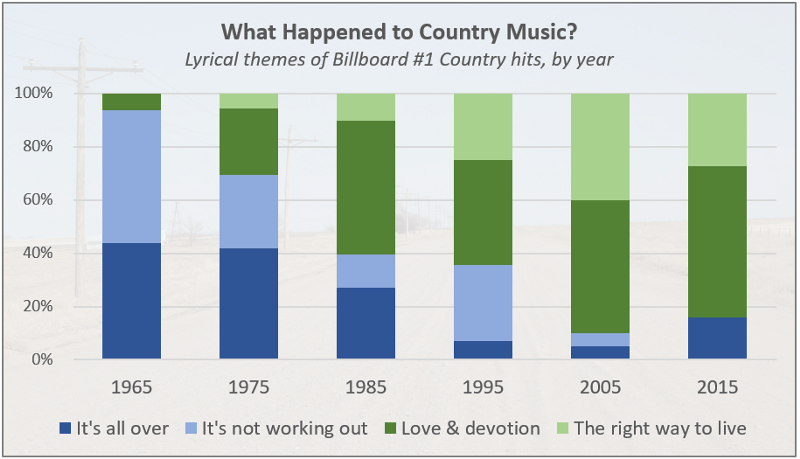


 Steve Prestegard.com: The Presteblog