The Black Lives Matter movement has received a great deal of credibility from the news media, and had recently become the “cause célèbre” for multi-millionaire stars like San Francisco 49ers Quarterback Colin Kaepernick and pop star Beyonce Knowles.
The almost immediate protests that have on at least one occasion turned violent have fueled incorrect rhetoric that there is an epidemic of “killer cops” who are targeting African-Americans for mass incarceration or worse, death for no apparent reason. This narrative has been proven legally incorrect by numerous federal and local grand juries who, despite a condemning by the court of public opinion, find no wrongdoing on behalf of law enforcement. These findings in legal courts are usually due to the analysis of physical, scientific and testimonial evidence that is presented within the secrecy and discretion of a grand jury; which in the cases of Eric Garner and Michael Brown and others show that the officers acted within the law.
Instead of pointing fingers in an argument with a league of online social justice warriors, I feel it more constructive to remind the public that much of what law enforcement is being asked to do in response to the mass-criticism is not within their scope of authority. Therefore, what the public needs is a necessary role clarification for what law enforcement is tasked with doing, and what community resources should be invested in the vastly important services that can actually prevent citizens from having contact with law enforcement in the first place.
If you are in contact with a law enforcement officer, that’s normally because something is wrong. This could be because you are reporting a crime; which means you’re having a bad day as you’re a victim, are being stopped for a traffic/safety issue, or are under investigation for a crime. Law enforcement officers in these instances have to deal with people at their worst, not their best. They enforce laws, they are not there to write the laws and decide what laws are socially acceptable enough to not enforce. If someone resists arrests, fails to cooperate with a lawful order, or commits further crimes in the presence of that officer; then they will be arrested.
The public reactions to the Eric Garner and Alton Sterling videos best demonstrated the need for this reality check.Many people contacted me following Eric Garner to cry foul as to why “he was killed for selling loose cigarettes?” He wasn’t. Eric Garner had over thirty prior arrests and knew, barring a felony warrant, he would be brought into the station, had his fingerprints ran, and would have been released with a “C-Summons” ticket for that minor infraction. However, upon noticing that someone was recording with a cellphone, Garner became belligerent and physically resistant to his arrest.
Did anyone expect that the police officers, in the course of their duties, were just going to say“Ok” and walk away? Of course not. Garner resisted, and was brought to the ground by an unauthorized chokehold. He died from a cardiac arrest likely brought on by aggravating a number of his serious health concerns. What was clear in the video was that, despite the loud public outcry in the belief that he died from being choked by the officer; Garner was breathing while being handcuffed because he was loudly exclaiming that he couldn’t breathe. As famed NYC Commissioner William Bratton stated after Garner’s death, “You have no constitutional right to resist arrest.”
Therefore, it is vital to understand the role of the law enforcement officer; who performs the job of policing and to make it home at night unscathed. If you are on the other side of that equation and you resist, threaten or fight… you will likely be met with physical force and lose your freedom. That’s the law.
Mass incarceration is a serious problem in America, but what leads to it? To attack the police for mass incarceration is akin to the famous line from the film Apocalypse Now of “Handing out Speeding Tickets at the Indianapolis 500.” What social contributors are bringing those incarcerated into contact with law enforcement in the first place? If every other rung of the social structure has failed someone to the point where they are being arrested in the first place, then something is very wrong with society and it would be extremely valuable to direct the public attention given to BLM to improving social services that prevent folks from turning to crime. Of course, some will argue that reforming mandatory minimums for things like Marijuana and assuring that new gun control measures don’t make criminals out of law-abiding gun owners, but the majority of the argument currently directed at law enforcement should be aimed at keeping people from having contact with law enforcement to begin with.
So this highlights the need to clarify other, more important societal roles. First, the role of parental participation and supervision is needed to create a support network in the lives of young people that, if not met, is filled with gangs or antisocial behavior. Penalties need to be defined more clearly for child endangerment to include fostering a positive environment for a child that includes them being taught right from wrong in accordance with our laws and social norms. No, I am not talking religion or morality as preached by conservative groups. I, myself, come from a divorced home; but both my parents were a part of my life and worked hard to keep me from emulating so much of the criminal behavior I was exposed to when growing up in the city.
Second, a serious role clarification in education is needed. This includes socialization outside what is the norm in many of the communities where there are high crime rates and assuring that students learn a path in life outside the next standardized test cycle; and learn money management, a trade, and vocational skills that translate to real jobs if a four-year college followed by grad school isn’t in the budget yet. Pathways in crime and drug use are rooted in poverty and a feeling of hopelessness, and a set of useful skills are key in breaking that cycle; but so many public school systems are not offering such as skill-set, and are resistant to school choice programs that will.
At the end of the day, the constant arguing and finger-pointing online is exhausting. Instead of tearing our country apart and pointing fingers at the civil servants who volunteer to risk their lives in service to the community; why not focus on the roots of the issues resulting in these tragic losses of life? Having a serious conversation on parenting, education, and poverty will serve the community far beyond the current, corrosive rhetoric offered by BLM and the media currently will.
If not, consider the alternatives of forcing law enforcement to become more lenient on criminal behavior, and remember how bad places like New York City were in the 1970s and 80s when this was common. Then ask yourselves, why should law-abiding citizens be victimized to further a political argument?
Mike Gonzalez apparently watched much more of the Olympics than I did, and enjoyed it immensely, particularly women’s gymnastics:
The only fly in the ointment has come via the news and the realization that politics and race have once again crept up into the Olympics, just as it has in the past. I picked up USA Today at a local supermarket one morning to read that the Final Five is proof of the triumph of “diversity.”
An editorial notes that race relations are at a nadir in America, “as evidenced by the intense battles over illegal immigration, policing and the Black Lives Matter movement.” All true, and the polls are there to prove it. But the editorial goes on to aver, “But diversity also improves America’s competitiveness, from the balance beams of athletics to the board rooms of the world economy.”
A quick check online that night turned up that a lot of people have been saying similar stuff stateside. Over at the Chicago Tribune, Heidi Stevens had this cris de coeur: “We need the Final Five to push back against the daily rhetoric that tells us we’re a divided, crumbling shell of our former selves.” Vox, as usual, got its knickers in a twist, celebrating the team’s diversity while bemoaning that its achievements “won’t calm race relations.”
America, however, has always been diverse and drawn upon this large talent pool to surmount existential moments, just as it did when during the Civil War, when an estimated quarter of the Union Army’s enlisted men were foreign born.
If this is what the writers mean by “diversity”—that we take people from all over the world, turn them into Americans, and benefit from their talents—then of course I am with them.
But the melting pot isn’t what is usually meant when people celebrate diversity.
In fact, as any college freshman can tell you, diversity and the melting pot are rival models of how to organize the country. The enforced affirmation of diversity above all else often detracts from the greater national identity, and thus the unity that makes a team succeed, whether it’s made up of five or 330 million.
The Final Five are indeed a victory for the melting pot—the idea that we all meld together into an American nation, forging out of many different elements one unified, stronger alloy. But their feat is a rebuke of diversity as it is indoctrinated in campuses and policed by all levels of government. The board rooms that USA Today refers to are in fact not diversifying fast enough even for the independent Securities and Exchange Commission, which is considering mandating stricter rules to force companies to disclose plans to make boards more diverse.
“Diversity,” thus, is enforced through means that are inimical to the success of the women’s gymnastics team:
Affirmative Action: Diversity enforcers demand that participation in all aspects of society reflect the numbers of members of different groups. If the Final Five were, for example, the Final 10, they would be suspect if they did not include a member of the other two components of the ethno-racial pentagon, Asians and Native Americans. But Simone Biles, Gabby Douglas, Laurie Hernandez, Aly Raisman and Madison Kocian—two African-Americans, a Latina, and two white girls—as we keep hearing—obviously got their place in their elite group through meritocracy. They deserved to be there because of their talent as gymnasts. Period. If two of them had been replaced to wedge in a less-deserving Asian-American or Native American, the team would have suffered as a result.
Ethnic Identity: Diversity emphasizes identification with sub-groups at the expense of the traditional touchstones of religion and country. Being a member of one of the oppressed groups deemed to have suffered from historic discrimination—a consideration even accorded to an immigrant whose ancestors could not have been kept poor by the very real legally sanctioned depredations that took place decades ago—is the important identity when it comes to the affirmative action discussed above. But the members of the Final Five give no indication that such racial or ethnic emphasis is present at all. Look up Hernandez, for example, and what jumps out is not that her parents are Puerto Ricans, but that she’s a strong Christian who’s been home-schooled from the third grade. She meditates daily on 1 Thessalonians 5:18 (“Give thanks in all circumstances”), a verse that’s hard to square with racial grievance mongering—which may be why it’s missing from most articles on this outstanding athlete. Just last week Hernandez told reporters she didn’t “think it matters what race you are. If you want to train hard enough to go to Olympics, then you’re going to go out and you’re going to do it. It doesn’t matter what skin color or who you are.” Again, not exactly Black Lives Matter.
Official Multilingualism: This other shibboleth of the diversity movement would render Americans less able to pull together for a common purpose (for examples, please see Belgium and Canada in the industrialized world, and places too numerous to cite in the less developed world). But the Final Five work as one. Hernandez again: “We’re always building each other up and making sure that we’re cheering for each other and shouting ‘C’mon, you got it, confidence.’”
The melting pot cuts against the grain of all this, which is why it is denigrated and discouraged today from kindergarten on. The melting pot, in fact, is what allowed Reisman and Kocian—one Jewish and the other with one likely Czech ancestor—to be undistinguishable Americans. While the Czech immigration into Texas begins in the 1840s, many of the East European immigrants who came in through Ellis Island from 1890 to the 1920s weren’t even considered white at all, and neither of course were Jews for decades. The melting pot got rid of these differences, though of course African-Americans were kept out of it. The answer obviously is to extend one American identity to all, and to minimize our differences.
Heather Mac Donald has written about the unnoticed increase in urban crime, which got noticed last weekend:
The war on cops, ideological and sometimes lethal, may be expanding into a broader race war, in which only one side fights. The thugs who torched businesses and police cars, assaulted cops, and shot at firemen in northwestern Milwaukee on Saturday night went after “white bitches,” among other targets. (The riots were inspired by the fatal police shooting of Sylville K. Smith, a black man. Smith, who had an extensive arrest record, including for a shooting, fled from officers after a traffic stop while carrying a stolen handgun; he refused commands to drop the gun. Wisconsin governor Scott Walker has activated the state’s National Guard and declared a state of emergency, but violence continued into Sunday night, with four officers injured, three squad cars damaged, and multiple businesses burned down.) The Black Lives Matter-inspired assassin who murdered five police officers in Dallas in July 2016 said that he wanted to kill white people, as well as white cops. The vitriol that officers working in urban areas now encounter on a daily basis is inflected with racism.
And if the war on cops escalates into more frequent attacks on whites and their perceived interests, the elite establishment will bear much of the blame. For the last two years, President Barack Obama has seized every opportunity to advise blacks that they are the victims of a racist criminal justice system. We should not be surprised when that belief, so constantly inflamed, erupts into violence. Even in his remarks at the memorial service for the five murdered Dallas cops, Obama had the gall to trot out his usual racial vendetta against the police, even though he was fully on notice that cops were being killed because of it:
When African-Americans from all walks of life, from different communities across the country, voice a growing despair over what they perceive to be unequal treatment; when study after study shows that whites and people of color experience the criminal justice system differently, so that if you’re black, you’re more likely to be pulled over or searched or arrested, more likely to get longer sentences, more likely to get the death penalty for the same crime; when mothers and fathers raise their kids right and have “the talk” about how to respond if stopped by a police officer—“yes, sir,” “no, sir”—but still fear that something terrible may happen when their child walks out the door, still fear that kids being stupid and not quite doing things right might end in tragedy—when all this takes place more than 50 years after the passage of the Civil Rights Act, we cannot simply turn away and dismiss those in peaceful protest as troublemakers or paranoid.
Obama’s indictment ignored, as usual, the astronomically higher rates of black crime that fully explain racial disparities in the criminal justice system. Meanwhile, Obama hasn’t uttered a word in condemnation of the lawless behavior in Milwaukee, two days into the events.
Hillary Clinton has been just as quick to enflame black hatred of cops and, by inevitable extension, of “white” society. She said during a January 2016 Democratic presidential debate that it was “reality” that police officers see black lives as “cheap,” adding that “there needs to be a concerted effort to address the systemic racism in our criminal justice system.” (In fact, there is no government agency more dedicated to the proposition that black lives matter than the police; tens of thousands of black lives have been saved thanks to data-driven, proactive policing.) The July 2016 cop assassinations had no more deterrent effect on Clinton’s determination to keep anti-cop tensions at a boil than they did on President Obama. Speaking at the NAACP after the Baton Rouge assassinations, which followed the Dallas massacre, Clinton said that “we cannot rest until we root out implicit bias and stop the killings of African-Americans.” Showing herself to be as statistically challenged as Obama, she continued: “Let’s admit it, there is clear evidence that African-Americans are disproportionately killed in police incidents compared to any other group.” (Blacks are actually killed at alower rate than their crime rates would predict. And at least four studies this year have shown that police officers are less likely to shoot blacks than whites, whether armed or unarmed.)
Last week, the Justice Department emitted yet another mendacious indictment of alleged cop racism, declaring the Baltimore Police Department guilty of a pattern or practice of systemic civil rights abuses. Baltimore officers accost and arrest blacks in Baltimore at higher rates than their proportion in the population, the Justice Department’s civil rights division wrote, carefully avoiding any notice of the crime that brings cops to black neighborhoods. The Justice Department report was ecstatically received in the media, and no doubt word of the confirmed racism of Baltimore police—and by extension, all police—trickled down into northwestern Milwaukee.
These nonstop rhetorical sorties against police officers and the criminal justice system inevitably expand into a broader indictment of the society that the criminal justice system defends. The Black Lives Matter riots of the last two years are inseparable from a hatred of what is perceived to be “white” society and civilization.
And as important as the political stoking of that hatred is the academic race industry that keeps black victimology at a fever pitch. The 2015–2016 school year saw an outbreak of delusional self-pity among black college students across the country. They claimed to be discriminated against by faculty, administrators, fellow students, and academic standards. Never mind that many allegedly disparaged students were attending the colleges in question only because ofracial preferences, despite having test scores that would automatically disqualify white or Asian applicants. Never mind that nearly every waking hour of a college administrator is devoted to the cultivation of a separatist racial consciousness among black students and to dreaming up new racial sinecures for faculty and other administrators.
The academic version of Black Lives Matter was not as physically destructive as the Milwaukee riots, but it had as corrosive an effect on civilizational norms.Last fall, a group of black students at Yale surrounded and screamed insults at their college master. (His sin was to be married to a Yale professor who had sent out an email suggesting that Yale students could select their own Halloween costumes without policing from Yale’s diversity bureaucrats.) One student was caught on video shrieking at the master to “be quiet” and calling him “disgusting.” Other students were just as savage, but their behavior was not recorded. The shrieking girl and her classmates have never been reprimanded for their uncivil behavior. To the contrary, Yale’s president, Peter Salovey, penned a sycophantic missive to the Yale “community” after the incident, gushing that he had never been as proud of Yale students as in the last few weeks of protests. Even the college master who had been screamed at by his charges expressed contrition for his failure to understand the oppression experienced by Yale’s coddled minority students.
Yale was hardly the only college to excuse racial attacks on basic manners and decency. Black Dartmouth students stormed into the library spitting on and cursing at white students. The administrators let it pass.
The rioters in Milwaukee have likely not attended Yale or Dartmouth, but they have absorbed the same narrative that originates with university race-mongers and is then adopted by the media and government. Perhaps the narrative’s biggest lie is that white people are the most powerful source of racism today—a lie embraced by elite white society itself. When that society is not twisting itself into knots trying to hire or promote as many blacks as possible, it is in a constant state of anguish trying to track down those deep, if invisible, pockets of white racism that supposedly explain ongoing racial disparities. Black racism, however, is far more pervasive than any vestigial white racism, as anyone who has spent time in inner-city black neighborhoods knows. I have been warned by residents of one Harlem housing project not to venture into a neighboring project because the hatred of whites is even more acute there. A resident of the Taft Houses in East Harlem told me of the abuse she took as a child because her mother was Irish. Black flash mobs and participants in the “knock-out game” are motivated by anti-white animus, though the media strive frantically to ignore both the violence and the emotion generating it. Blacks are the primary source of interracial violence. In 2012, blacks committed 560,600 acts of violence against whites, and whites committed 99,403 acts of violence against blacks, according to data from the National Crime Victimization Survey provided to the author by a Bureau of Justice Statistics statistician. Blacks, in other words, committed 85 percent of the interracial crimes between blacks and whites, even though they are less than 13 percent of the population. It would be naïve to think that some of that black-on-white violence does not have a racial tinge to it.
And the academic discourse of white privilege, microaggressions, institutional racism, and “intersectionality” promotes its own effete version of anti-white animus, eagerly promoted by white professors and administrators.
The exculpations of the Milwaukee riots started up immediately. “Do we continue—continue with the inequities, the injustice, the unemployment, the under-education, that creates these byproducts that we see this evening?” Milwaukee alderman Khalif Rainey asked portentously. “The black people of Milwaukee are tired. They’re tired of living under this oppression.” The website Vox informed its readers: “Historians and experts say these types of violent outbursts are typically rooted in longstanding anger toward a system that has in many ways failed them. . . . Compounded with the racial disparities in the criminal justice system, people were clearly furious—and lashed out.”
The rioters were not so furious about the five blacks who were fatally shot in Milwaukee by other blacks in the 24 hours prior to Sylville Smith’s shooting or about the overwhelmingly black victims of Milwaukee’s 73 percent surge in homicides in 2015, the result of what I have called the Ferguson effect.
The Milwaukee riots were low on the topic totem pole of Sunday morning talk shows and have almost disappeared from sight on cable news channels on Monday. Racial violence is becoming normalized, like Islamic terrorism. More attention was devoted to the Baltimore Justice Department report and to Donald Trump’s war on the press than to the breakout of anarchy in a major American city. The shootings of cops on Sunday—a police officer in Eastman, Georgia, killed following a traffic stop; a police officer north of Atlanta shot on Sunday morning after responding to a call—also got little media notice. (Did race play a role in those shootings? The media is not interested in the question. Thesuspected killer of Eastman officer Tim Smith, Royheem Delshawn Deeds, is black; Smith was white. Had Smith killed Deeds, the media would have been all over the story. Yet the relationship between victim and killer in the Smith death is far more typical of fatal encounters between blacks and police officers. Police officers are 18.5 times more likely to be killed by a black male than an unarmed black male is to be killed by a police officer.) Fatal shootings of cops this year are up 68 percent through August 15 compared with the same period last year. Chicago cops now operate under a death sentence, with the pact among Chicago gangbangers to take out a cop in retaliation for the Paul O’Neal shooting.
If we continue to look the other way at racial violence and the hatred that fuels it, we may find ourselves in a state of anarchy. The Milwaukee rioters chanted “black power,” a clear evocation of the 1960s. This time, however, the “establishment” is only a rhetorical target. In point of fact, it is an enabler and coconspirator.
“Last night was unlike anything I’ve seen,” Barrett said. “I hope I never see it again.”
Killed was 23-year-old Sylville K. Smith, a man with a long and violent rap sheet. Body camera footage showed Smith was carrying a handgun loaded with 23 rounds, police said. He out-armed the officer who shot him. The officer appeared to have acted according to procedure in discharging his weapon
“He had the gun with him and the officer fired several times,” Barrett said. Smith was shot in the arm and chest, the mayor said during a press conference.
Police said the handgun he carried was stolen during a burglary in nearby Waukesha in March, according to CNN
“The victim of that burglary reported 500 rounds of ammunition were also stolen with the handgun,” police said.
His police record includes a charge of first-degree recklessly endangering safety. The charge was dismissed after the victim refused to go to court. Smith was charged with victim intimidation in 2015. That charge also was dismissed.
Barrett tried to placate angry community members, who called for the release of the officer’s body camera. But the investigation is now in the hands of state investigators. Wisconsin was the first state in the nation to put on the books a law requiring an independent investigation anytime there is a law-enforcement related shooting.
[Gov. Scott] Walker, Barrett and others commended police, saying they showed remarkable restraint in not firing any shots during the riots. A 16-year-old was injured when a stray round from a crowd struck her. The teen’s injuries were described as non-life threatening.
Mike Crivello, president of the Milwaukee Police Association, said the union denounces the suggestion by community members, and some city leaders, that the department is teeming with racism. Police say the officer who shot the armed suspect is black. They had not released his name as of Sunday afternoon.“
Our ranks are broad and diverse; derived from all God’s children. These officers deserve respect and support. Support which must begin with leadership – mayor/alderpersons, police chief, and community!” Crivello wrote in a statement.
“Leadership must denounce violent riotous behavior! There can be no appropriateness in rationalizing terrorist-like actions,” the union chief added. “The good families, beautiful young children, living in the neighborhoods where police were attacked and buildings burned certainly did not sleep well last night; how could they, when will they? The thugs that caused this are certainly terrorists and must be held accountable.”
Saying Milwaukee police are “under siege,” Crivello in his press release included a video clip of angry, black men shouting at Milwaukee police.
“We cannot cohabitate with white people,” one unidentified speaker said. “We want blood. We don’t want peace or justice.”
Alderman Khalif Rainey blamed the “powder keg” of Milwaukee on rampant racism.
“Something has to be done to address these issues,” he said. “The black people of Milwaukee are tired; they are tired of living under this oppression, this is their life.”
Crivello said he, Milwaukee’s peace officers, and law-abiding citizens have had enough excuses. He called on Milwaukee voters to stop supporting any elected official who “does not unequivocally support the law as written, while ensuring enforcement.”
“Our police force is under staffed – our officers forced to work alone. We must be assured of Permanent Two-Man Squads. … We must adequately [immediately] address the staffing deficit!! Our family deserves to know their loved one has a fighting chance to come home after each tour of duty,” the police union chief wrote.
“What are we gonna do now? Everyone playing their part in this city, blaming the white guy or whatever, and we know what they’re doing. Like, already I feel like they should have never OK’d guns in Wisconsin. They already know what our black youth was doing anyway. These young kids gotta realize this is all a game with them. Like they’re playing Monopoly. You young kids falling into their world, what they want you to do. Everything you do is programmed. … They got us killing each other and when they even OK’d them pistols and they OK’d a reason to kill us too. Now somebody got killed reaching for his wallet, but now they can say he got a gun on him and they reached for it. And that’s justifiable. When we allowed them to say guns is good and it’s legal, we can bear arms. This is not the wild, wild west y’all. But when you go down to 25th and Center, you see guys with guns hanging out this long, that’s ridiculous, and they’re allowing them to do this and the police know half of them don’t have a license to carry a gun. I don’t know when we’re gonna start moving.
… only to say something unexpected:
I had to blame myself for a lot of things too because your hero is your dad and I played a very big part in my family’s role model for them. Being on the street, doing things of the street life: Entertaining, drug dealing and pimping and they’re looking at their dad like ‘he’s doing all these things.’ I got out of jail two months ago, but I’ve been going back and forth in jail and they see those things so I’d like to apologize to my kids because this is the role model they look up to. When they see the wrong role model, this is what you get. … I’ve gotta start with my kids and we gotta change our ways, to be better role models. And we gotta change ourselves. We’ve gotta talk to them, put some sense into them. They targeting us, but we know about it so there’s no reason to keep saying it’s their fault. You play a part in it. If you know there’s a reason, don’t give in to the hand, don’t be going around with big guns, don’t be going around shooting each other and letting them shoot y’all cause that’s just what they’re doing and they’re out to destroy us and we’re falling for it.”
“I lost my brother. I can’t get him back. Never. Never. That’s pain. I can’t look him in the eye no more,” Smith’s sister Sherelle said.
“At the end of the day, acting out ain’t gonna solve it. Ain’t gonna solve nothing for Sylville. The city went crazy (Saturday) night over Syville. We tired of it. We tired,” Kimberly Neal, Smith’s sister said.
As a political scientist and president of a liberal arts college in Wisconsin, I’m looking forward to the fall. I’ll have a chance to teach 18- to 22-year-olds during the run-up to a historic presidential election. It’ll likely dominate discourse in the classroom, cafeteria and even keg parties.
This raises the question — how should professors talk about Donald Trump? Is there a way to teach this subject in a thoughtful way, pushing beyond the name-calling and apocalyptic predictions? I believe there is.
In conversations with my faculty colleagues, I’ve come to a few conclusions.
First, I think it’s fine for professors to acknowledge Trump’s narrow-minded rhetoric. If Trump were a student, he would have already been called into the dean’s office to explain comments about women, minorities, immigrants, veterans and people with disabilities. My college’s core values celebrate and protect differences of perspective, background and heritage. Relationships on college campuses are supposed to be friendly, welcoming and supportive. (In Trump’s worldview, however, it is precisely this kind of academic environment that has led to the United States’ general decline. “I don’t, frankly, have time for total political correctness,” he said. “And to be honest with you, this country doesn’t have time, either.”)
Second, I hope our faculty spends some of the fall semester explaining Trump’s political rise to their students, because the real story lies beyond political science. Understanding Trump and his supporters means having a deep knowledge of words like “empathy,” “tolerance,” “power” and “narcissism.” History, literature, economics, philosophy, religion, communications and sociology all offer important insights. One of my psychology department colleagues told me that students will be very tempted to take their newfound knowledge and apply it to the Republican nominee’s bizarre behavior, though the American Psychiatric Association just warned its members not to do so. Another professor in the communications department said she plans to hold a class discussion on Trump’s discourses, focusing on how he speaks to people’s fears and creates an illusion of identification and credibility for voters.* There will be assigned readings.
I know some professors and students think it might be easier to just avoid the subject of Trump altogether. But we need to resist that urge. Professors should dive right into the big question: How can we be open-minded in the face of Trump’s bigotry? How can we extend that empathy and thoughtfulness even to those we disagree with?
We need to extend these qualities to the victims of Trump’s bigotry. But we also need to listen and respect those students and professors who support Trump. That 19-year-old supporter just starting his sophomore year shouldn’t be dismissed automatically as a racist for supporting Trump. He’s a stand-in for our next-door neighbor, your child’s softball coach and my cousin’s spouse. Keeping the classroom open for discussion slows a student retreat to the anonymous online world of Yik Yak, where college-aged Trump supporters troll hate without ever directly engaging their classmates. That means that the possibility of ever broadening their perspectives organically will be lost.
There will be tense points and tempers may well flare. Why are Trump’s most ardent supporters rural whites without a college degree? Why does he belittle those he disagrees with? Where does his worldview and his preoccupation with Vladimir Putin come from? But there is a way to have these discussions in the classroom with respect. It will be up to our professors to defend the right to hold an unpopular position, even one that we strongly disagree with. Because if colleges and universities want to remain a training ground for future leaders, an incubator for new ideas or a place where a future political consensus is forged, civil discourse is a fundamental part of that higher calling.
This will not be an easy task, but it is a crucial one. While professors and administrators need to do everything they can to make sure that their campuses promote free speech, they also need to maintain civility and basic decency. And that’s tricky. Beyond higher education, how the nation wrestles with this same conundrum is important — and not just in the run-up to the election. In the weeks and months after Nov. 8, the country is going to have to understand what Donald Trump and Trumpism means going forward. Win or lose, it is critical that we study and interpret what his candidacy signifies beyond American politics. How the nation’s teachers integrate understanding Trumpism into their classrooms this fall, regardless of discipline, will go a long way toward finding some common ground with the 40-something percent of the voting population that supports him.
Campus Reform took what Messitte wrote and put a substantial negative spin while adding:
Despite his apparent hostility toward Trump, Messitte does urge students and faculty to listen respectfully to their classmates and colleagues who support Trump, though according to a Harvard survey, only 25 percent of Millennials say they are likely to vote for Trump, whereas 61 percent would vote for Hillary Clinton in a head-to-head contest.
Faculty support for liberal candidates is even more staggering, with 99.51 percent of political contributions at top liberal arts colleges going to Democrats. Among those who donated to presidential campaigns, contributions averaged $1,043.75 for Hillary Clinton and $323.73 for Bernie Sanders.
Messitte’s most objectionable statement is his assertion that “If Trump were a student, he would have already been called into the dean’s office to explain comments about women, minorities, immigrants, veterans and people with disabilities.” (Where to begin?) There can be a fine line between free expression and being a jerk. Such an experience could bring home the real-world lesson that the First Amendment need not apply to the private sector, and sometimes it’s better to keep your mouth shut and express your opinions in the polling booth than in public.
On the other hand, to put on my cynical face for a moment, one wonders if as a tuition-dependent college (as most private colleges are) Ripon College would really expel from campus one of its students who, using this example, comes from a rich family of potential future college donors.
Beyond that, perhaps it’s because, unlike the Campus Reform writer, I have actually spoken face to face with Messitte, but I have a hard time getting wound up about this. Perhaps it’s that in five years at UW–Madison I argued, when I thought it was worth doing, non-liberal points of view in classes and was not expelled from the university. I know present and former Ripon professors, and yes, many are quite liberal. It is safe to assert as a 13-year resident of Ripon that Ripon College is certainly the most liberal thing in Ripon.
If you actually read Messitte’s column, or previous opinions he’s written, you’d read that he is actually a defender of free speech, unlike some other college administrators. (See Shalala, Donna, “speech codes.” By the way, Shalala was mostly great for UW–Madison with one major exception, along with not firing football coach Don Mor(t)on immediately upon arriving in Madison.) Is the objection that professors are liberal (and they mostly are), or that they hate Trump? If it’s the latter, the population of Trump haters is much, much larger than college professors.
Readers know that I am not a believer in the echo chamber. I have made appearances in such non-conservative places as Wisconsin Public Radio, the Sly radio show(s), and The Scene tabloid. I don’t think your viewpoint gains anything by talking only to people with whom you mostly agree. Your views do not necessarily make you correct, and you certainly won’t find that out unless you find someone with whom you don’t generally agree and try your persuasive skills.
As someone who worked in higher education for a college probably as liberal as Ripon College (and my former employer is my favorite employer in my career), I see complaints about liberalism in academia and education as reflecting a certain lack of faith in your own parenting skills and in your children’s reasoning skills. Just like when I was growing up, I have had discussions in the Presteblog world headquarters about things our kids have learned in school, and if they seem to me inaccurate I point that out. Ultimately it’s up to them to decide which views are correct, though I always have the ability to assign dishwashing duties until Armageddon.
One also wonders sometimes whether objections to the liberalism of college professors are motivated by concern over constitutional rights, or opposition to constitutional rights expressed differently from your own. Freedom of expression has to apply to everyone, or it means nothing.
Suffice to say Brandon Smith lacks sympathy for the self-titled Social Justice Warriors (underlining and boldface his):
I have not been writing much concerning the U.S. election this November, and with good reason – elections are always a distraction from tangible solutions. They are an anathema to honest debate; a circus of delusions and prefabricated talking points. They offer the illusion of choice in order to placate the masses. They are a theater of false hopes.
That said, elections do accomplish one thing very well — they are great for mobilizing large numbers of people into opposing camps and pitting them against each other over ideologies and political celebrities. Sometimes, these elections can lead to internal war. This is where we stand in 2016.
In my article Will A Trump Presidency Really Change Anything For The Better, published in March, I outlined why I believed that the election of 2016 would revolve around a Trump vs. Hillary free-for-all. The two sides are perfectly diametrically opposed. At least, as far as public image is concerned, one is the exact antithesis to the other, and I don’t think this is a coincidence. …
In this age of unstable economies and societies, there are many people who are desperate to be told what to do rather than lead themselves. However, none are quite as horrifying as the social justice cultists.
These people are, in my view, nearly the pinnacle of the communist ideal. They are die hard collectivists, and are willing to rationalize almost any action as long as they believe it is being done in the name of the “greater good.” Usually, this greater good is based on entirely arbitrary determinations rather than any inherent moral code, making it vaporous and easily changeable. A “greater good” without principles based in inherent conscience or natural law can be shifted on a whim to suit any evil imaginable.
They believe fervently in the purity of their world view. Most of them are not open to even the slightest question or concern over their ethos. Their blind faith is unshakeable, even in the face of extensive empirical evidence and superior logic. Such people are the ultimate cannon fodder for the elites.
Social justice cultists act on the assumption that history is on their side, and that they will one day be seen as heroes for their deeds.
They not only seek to promote and spread their ideology — this would merely make them a new form of religion. No, they are not just evangelists, they also want their own version of a caliphate; an all dominating cult that crushes any embers of dissent and destroys its philosophical opponents trapped within its ever expanding borders.
A recent and starling example of this mentality can be found in the following video of a BBC show called “The Big Questions.” The subject of the debate — “Does social media reveal men’s hatred for women?” Milo Yiannopoulos faces off with a crowd of mouth breathing true-believers and barely gets a word in edgewise as they do what cultural Marxists do best: use the mob to shout down their opponent and attack the person’s character rather than confront his arguments and evidence:
Though this show is produced out of the U.K. and not the U.S., I am using it to shed light on the inevitable end game of all social justice cultists regardless of where they live — to dominate all discussion and erase conservative thought from society. The attitudes displayed by the feminists and the rather pathetic members of the audience are truly frightening. Not only do they argue that Yiannoupoulos has no right to even be dignified with time to respond, they are at bottom also claiming the right to assert force of law to ban ideas they disagree with and even to imprison the people that argue those ideas.
Instead of simply ignoring or blocking the people who offend them like rational adults, or participating in a free exchange, they want the power of government to silence opposition. If their ideas were truly superior in merit then they would have no need to use force to silence or imprison their opponents. They want to turn the whole of the web, the whole of the WORLD, into a federally enforced “safe space” for their ideology and their ideology alone.
It is this kind of zealotry that leads to outright totalitarianism and collectivism. This is the kind of evil that is done in the name of the so-called “greater good.”
The fact is, their feelings are irrelevant. They do not matter. Most rational people don’t care if SJWs are offended, or afraid or disgusted and indignant. Their problems are not our problems. Our right to free expression and freedom of association is far more important than their personal feelings or misgivings. We do not owe them a safe space. If they want a safe space, then they should hide in their hovels or crawl back to the rancid swamps from whence they slithered.
A backlash is building against the social justice cult that will be unleashed sooner rather than later, and so far it is accelerating at the height of the election frenzy under the banner of Donald Trump.
Social justice warriors seem to find themselves befuddled at the rise of Trump, but as I predicted in March, a Trump vs. Hillary face-off was inevitable.
For conservatives, Hillary is the ultimate representation of political hell spawn. She is a proven elitist puppet, with a criminal record that reads like a transcript from the Nuremberg trials. She is also a part of an ongoing trend of dynasties in U.S. politics. Americans have grown tired of the Bushes and the Clintons. We have grown tired of the endless reign of neo-cons and neo-liberals. We are looking something different, or what we hope is something different. Trump at first glance at least looks like a candidate outside of the establishment norm.
Beyond this increasing aversion to the status quo, though, is the growing American contempt for the social justice cult. This will be a primary driver of the U.S. election.
While many in the cult had thrown their support behind Bernie Sanders for a time, Bernie showed his true colors by bowing down to the Clinton machine. This is typical of socialists, who regularly forgo their proclaimed principles in the name of “unity” and “victory” under a single collectivist umbrella. Many in the social justice crowd have quickly jumped on Hillary’s bandwagon, as her campaign now rides solely on the disposition of her own sexual organs.
That is to say, Clinton is now the new mascot for the SJW crowd, even though many of them don’t really like her.
I’m not so sure the “vote for me because I’m a woman” theme is going to go over quite as effectively as Obama’s “vote for me because I’m black” theme. The Hillary campaign symbol, looking strangely like a warped version of the arrowed symbol for “Male” and Mars, is emblazoned on worshipful feminist posters and cartoons everywhere. A nice touch was the cringe-worthy display of Clinton’s giant head on the DNC mega-screen bashing through photos of past male presidents as if “shattering” the proverbial glass ceiling. Set aside the fact that over half of American voters are women, and that there is no glass ceiling preventing women from being voted into office by other women if being a woman rather than a decent candidate was all that mattered.
The theater of the feminist absurd aside, this election is going to tumble about wildly on all sorts of carnival sideshows.
The so called “controversy” over comments made by Trump against the parents of a Muslim soldier killed in U.S. service in Iraq is just the beginning of the circus. To be fair to Trump, the sheer hypocrisy of Hillary Clinton, a warmonger of the highest degree and a participant by-proxy in the death of the soldier in question, using his parents as fuel for a campaign controversy goes so far into the realm of the disturbing that I might be shocked if I didn’t understand that the whole thing is a mind game. These kinds of distractions are meant to fuel the flames and I predict they will become frequent and overwhelming by November.
To reiterate, it is clear that the Clinton campaign is going the route of pandering to the SJWs. This is the script, and I as I said after the Brexit referendum vote, I believe that the script ends with a Clinton failure and a Trump victory. Pandering to SJWs rarely leads to success. And, a faltering economy blamed on Trump would be far preferable to one blamed on Clinton.
My regular readers know well that I personally do not have much faith in the Trump campaign; I’ve seen too many constitutional inconsistencies and too many meetings with elitist representatives so far to give him the benefit of the doubt. If he turns out to be a true constitutionalist, then I will be pleasantly surprised and happy to admit I was wrong.
That said, I do understand why the public is rallying around Trump. They see him not as a candidate, but as a vehicle to push forward a fight against a social justice juggernaut that has gone unanswered for far too long. They don’t much care about him as a man, which is why the character attacks by the social justice cult and the media have fallen flat again and again. They only care that he might not be the status quo. They are looking for something radical to counter the radicalism of cultural Marxists.
I am not here to argue over which candidate is “better,” or preferable or the “lesser of evils.” None of this matters. I realize that I am not going to convince anyone to vote in anyway different than how they have already decided to vote. In fact, I am certain that most people decided exactly how they were going to vote as soon as the candidates were publicly finalized.
The zealotry will be evident on both sides. Democrats will accuse me of being biased in favor of Trump because I outline in articles the endless parade of horrors surrounding Clinton’s career. Republicans will accuse me of “secretly working for the Democrats” because I refuse to throw full blind faith behind Trump. That’s just how elections work – follow my mascot or you are my enemy.
I really couldn’t care less. I’m on the side of liberty and individualism and I’ll fight on this side alone if I have to.
I will say that I KNOW exactly what will happen under Hillary Clinton – despotism in the name of “equality”, leading to outright civil war. I only SUSPECT according to what I have seen so far that Trump is not a constitutional candidate.
The danger is that in our search for the counterbalance to social justice despotism and Hillary Clinton’s evident communist addictions, we conservatives will fall into the old historical paradigm of fascism in the name of defeating communism, helping the elites instead of dethroning them. The danger is that we get so caught up in trying to destroy the social justice mob that we forget our principles.
If a President Trump shows any indications of being anti-constitution, even in the name of our own “greater good,” conservatives MUST stand by our ideals and stand against him, or we become no better than the SJW psychopaths we seek to stop. No man, no woman, no president is more important than the liberties and heritage of this nation and its citizenry.
As far as social justice activists are concerned, if they really want to change this country for the better, then they should consider dropping out of their little cult and finding something productive to do. Stop spending your parents’ money on garbage gender studies classes. Become scientists and engineers. Become doctors and inventors. Create a better planet through ingenuity rather than manic ideology. Make yourselves useful or something. You’re not only wasting your own time wreaking havoc with your collectivism, you are also wasting our time, because now we have to spend it working to stop you and the elites that fund you.
Become self sufficient instead of begging for handouts or feeding off your family and their savings accounts. Add to the world instead of bleeding it dry. Help people through personal action instead of trying to micro-manage their lives and their speech and their thoughts through force of government.
Otherwise, all you are is more gasoline on a fire that will result in inevitable conflict; a conflict which you will lose. A conflict which may only serve the interests of the very elites which you think you are fighting against. Remember, whatever happens, it was the social justice cult that helped to create the conditions by which such a conflict became unavoidable. Without the cultural Marxists, there would be no rationale for any division. If they would simply leave us all alone to think and say what we feel, to choose our associations without interference or invasive conquest of “spaces” and to live in a functioning society based on merit rather than victimhood and artificial fear, there would be no fertile ground for an election circus of this magnitude.
And finally, if EVERYONE relied less on political celebrities, if everyone stopped waiting for a knight on a white horse, or a feminist icon, or a crusade to fight, or a social justice mob to join and started determining their own futures; if everyone began looking far more carefully at the people behind the curtain, then perhaps we could finally see a change in humanity not seen in thousands of years. Not a collectivist change, but an individualist change, which is the only kind of change everlasting or worth a damn.
They Boldly Went (the non-infinitive past-tense, or something) writes about Star Trek with its original captain, who was not played by William Shatner:
One of the main (and some would say the single largest) difference between “The Cage” and what came after is the man sitting in the center seat. Originally named Robert April (and then changed to James Winter for a single draft), the character that would become Christopher Pike was created with a very different actor in mind: Lloyd Bridges.
Roddenberry reported in The Star Trek Interview Book that he approached Bridges even before he’d written “The Cage,” because he had a definite sort of captain in mind, someone who could pull off military gravitas but still have sufficient charm to be compelling for the audience. Bridges, however, wasn’t interested in doing science fiction, which at the time meant Flash Gordon serials and Captain Video to the vast majority of people in the entertainment industry.
Among the forty or so actors that Roddenberry looked at seriously were Peter Graves, Robert Loggia, Jack Lord, Leslie Nielsen and even William Shatner, but that certain something that Roddenberry wanted was missing. Majel Barrett even recommended that he talk to James Coburn, but the man who would become Flint was at first rejected because he was judged insufficiently sexy by the production team.
After some reconsideration, though, Coburn’s name appeared a second list of names submitted to NBC that included Patrick O’Neal and Jeffrey Hunter, an actor whose most famous role had been playing John Wayne’s nephew in the western classic The Searchers. Despite the fact that Coburn and O’Neal elicited “a strong reaction” from the NBC team, Roddenberry thought Hunter had a magnetism and coolness that the role required. He even joked that Hunter’s performance as Christ in the 1961 bomb King of Kings meant that he could easily command a starship.
When we watch “The Cage” now, it’s immediately obvious how different Christopher Pike is from the man who’d succeed him in the center seat. We see a man who’s burdened by command, someone who is haunted by the deaths of two crewmembers in the recent past and is actually considering resigning his commission instead of continuing to send young people to death.
At the time, Roddenberry and director Robert Butler believed Hunter perfectly embodied the character that’d been conceived from the beginning as a far-future Horatio Hornblower, a complex personality whose drive and position alienated him from the rest of the crew. Even as he experienced the loneliness of command, Pike’s character was written to feel the plights of others. Hunter’s sober, deliberate performance is fine (especially in the context we’re used to seeing it now), but it’s easy to see how the network found his calculating, thoughtful manner off-putting.
Despite the network’s notes on the matter, Roddenberry and his team wanted to keep Hunter in the center seat and refit the character and the show around him. Hunter’s wife Barbara felt otherwise and let her feelings be known almost as soon as the pilot screening at Desilu ended. She thought her husband was above science fiction and pressured him to walk away.
Within two weeks of the pilot’s screening, Hunter wrote to Roddenberry to let him know that he wasn’t going to continue with the project despite the fact that NBC had made the unprecedented decision to give the show another shot. Roddenberry’s return correspondence shows the esteem with which he held the actor. He wrote: “I am told you have decided not to go ahead with Star Trek. This has to be your decision, of course, and I must respect it. You may be certain I hold no grudge or ill feelings and expect to continue to reflect publicly and privately the high regard I learned for you during the production of our pilot.”
A second pilot was commissioned and the production team went back to its list of performers to see who might be the next captain of the Enterprise. Once again, Lloyd Bridges and Jack Lord were considered (with the former getting his second offer after Roddenberry screened “The Cage” for him to prove how Trek would be different) but it was William Shatner who got the role that would define his career.
Hunter’s career was in freefall after Star Trek, dominated by appearances in foreign-made B-movies like 1969’s Viva America. He auditioned for the role of Mike Brady inThe Brady Bunch in 1968 but lost to Robert Reed. Hunter’s last TV appearance was on an episode of Insight in 1969.
On a flight back from filming in Spain, Hunter suffered stroke-like symptoms with paralysis in his right arm and loss of speech. Doctors believed that injuries he’d received on the set of the movie may have caused them, Shortly after, he suffered a cerebral hemorrhage and fell in his home. He died during surgery to repair the skull fracture that he suffered, just one week before “Turnabout Intruder,” Star Trek’s final episode, was aired.
Captain Pike and science officer Spock, who seemed to have usual human emotions …… unlike the Enterprise’s first officer, known in the pilot as “Number One.” Has anyone seen her and Nurse Chapel in the same room at the same time?
“Book ’em, Spock”? No, that wouldn’t have worked, though Lord certainly would have had command presence. (Recall that in “Hawaii Five-O” Steve McGarrett was a former naval commander in intelligence.) Bridges would have been a different captain than either Hunter or Shatner, though roles are written for the actors playing them.
Nielsen, on the other hand, had already done science fiction, the classic “Forbidden Planet,” which certainly inspired Roddenberry.
It’s impossible to say what kind of captain Hunter would have been based on one pilot. On the other hand, Shatner would have played the first pilot differently from Hunter. The scene with Pike and the keeper where Pike finally captures him is intensely done:
(The group is apparently dozing when the Magistrate opens the hatch to get the laser pistols Pike dropped there. He grabs him and pulls him into the cage, and starts to throttle him)
PIKE: Now you hold still, or I’ll break your neck.
VINA: Don’t hurt them. They don’t mean to be evil.
PIKE: I’ve had some samples of how good they are.
(the Talosian appears to be a vicious monster)
PIKE: You stop this illusion, or I’ll twist your head off. (it stops) All right, now you try one more illusion, you try anything at all, and I’ll break your neck.
MAGISTRATE: Your ship. Release me or we’ll destroy it.
VINA: He’s not bluffing, Captain. With illusion they can make your crew work the wrong controls or push any button it takes to destroy your ship.
PIKE: I’m going to gamble you’re too intelligent to kill for no reason at all.
(Pike hands the Magistrate over to Number One and picks up the laser pistols, firing them at the glass wall. Then he puts one to the Magistrate’s head)
PIKE: On the other hand, I’ve got a reason. I’m willing to bet you’ve created an illusion this laser is empty. I think it just blasted a hole in that window and you’re keeping us from seeing it. You want me to test my theory out on your head?
Remember that NBC rejected the first pilot for being “too cerebral.” Hunter looks like he’s either going to fire the laser or shove it through the Magistrate’s skull.
It’s interesting that the author brings up Horatio Hornblower, and the book Hornblower seems to accurately describe Pike. The movie Hornblower (played by Gregory Peck), however, accurately describes Kirk. Peck’s Hornblower is not “alienated from his crew” like the novels’ Hornblower is. Kirk might be closer to an excellent naval model for a starship captain, Patrick O’Brian’s Jack Aubrey, though Aubrey had not been created yet when Star Trek premiered.
All this comes to mind with not only the 50th anniversary of The Original Series, but the new series coming up. Read here if you want my input on what the new series should and shouldn’t have.
It was my luck to be on Wisconsin Public Radio Friday morning to discuss the latest American horror, the murder of five police officers in Dallas during an anti-police protest the previous night.
The irony, of course, is that the protesters, who were exercising their First Amendment right to protest the deaths at the hands of police of two black men in Baton Rouge, La., and the Twin Cities, were running the opposite direction while the people whose profession they were protesting were heading toward the gunfire to protect the protesters.
The additional irony is that whatever the protesters want changed is likely to be overlooked in the wave of outrage over the assassination of five police officers by someone who used the pretext of the protest as his opportunity. The shooter was interested in killing whites, including white police officers.
The danger of commenting upon police is that very few people know what being a police officer is like. My own experience is slightly more than most people, but far less than being an actual officer — from having covered crime (including the murder of a law enforcement officer) and courts, including police disciplinary matters, and from police ridealongs, which are always most educational even on slow nights. However, we taxpayers have the right to have opinions about what our elected officials allow the police to do and prohibit the police from doing.
Facts are necessary:
The U.S. violent crime rate, according to the FBI, is, you’ll notice, where it was around 1970.
The U.S. homicide rate, you’ll notice, is where it was in the 1950s.
And perhaps this is why. The next time someone complains about all the Americans in jail, ask that person if they would trade reducing the prison population for increasing the crime rate.
Or perhaps this is why. U.S. gun ownership is at a record high. None of those more than 300 million guns loaded themselves, aimed themselves and fired themselves, including Thursday night’s murderer.
All of those, of course, could be examples of correlation without causation. It also seems that while crime may be down, fear of crime is up. Part of that is because the media is able to report what might be considered infamous crime — child kidnappings, gruesome murderers, carjackings with children inside the carjacked car, etc. — from anywhere in the nation, whether or not it’s pertinent to you.
Government generally and some police specifically don’t help. Last week I posted about this Ohio police chief who claims children shouldn’t be allowed to leave home unaccompanied until they’re 16. Police handouts of identification kits and fingerprinting of kids, which have good intentions, carry with them an unspoken message that it’s a dangerous world out there. (As usual, if you’re a certain age you can see these things and wonder how we survived a world without, among other things, bicycle helmets.)
The other thing government does is pass laws that police have to enforce, whether or not the laws make sense. Recall Eric Garner, shot to death by New York police while he was out on bail for a charge of selling untaxed cigarettes. Libertarians question the resources governments use in enforcing drug laws. The Minnesota death the Dallas protesters were protesting was after a traffic stop for a broken taillight. The most outrageous finding to come from the investigation into the Ferguson, Mo., police was that city officials apparently expected the police to fund city operations by writing as many citations as possible, leading to comments that the city looked at its residents as ATMs.
USA Today reports that “The number of police officers shot and killed in the USA is 44% higher than at this time last year following the Dallas ambush Thursday night that left five officers dead, according to data from the National Law Enforcement Officers Memorial Fund.” And indeed last year there were, according to the group, 41 fatal shootings; the 26 so far this year puts us on pace for about 50 fatal shootings in 2016, about 22 percent more than last year. (The 44 percent number is because only 18 of the 41 killings last year came by this time of the year.)
But if one looks at the fund’s data for 2005 to 2014, one sees that (a) 2015’s 41 fatal shootings was unusually low, and (b) there is a good deal of year-to-year variation. Indeed, the only three years from 2005 to 2015 that saw fewer than 49 fatal shootings of police officers were 2008 (41), 2013 (33), and 2015 (41), and most years saw at least as big a change in raw numbers as we’re expecting for 2015 to 2016. Most important, if you average the totals from 2005 to 2015, you get almost 53 fatal shootings per year — about the pace we’re seeing for this year.
I share the sorrow and the anger over the murders of the police officers in Dallas, and indeed over murders of police officers generally. But we shouldn’t let the accident that there were fewer fatal police shootings than normal in 2015 make us worry that there’s any broad upward trend.
Many people’s views of police are based on their past experiences with police, which tend to be negative either as defendant (technically a traffic ticket is an arrest) or as victim of a crime. A county sheriff once told me that his department interacts with 80 percent of the public once, and of the remaining 20 percent interacts with 80 percent of them once more. Assuming his math is correct, about 4 percent of police business is with, shall we say, repeat customers.
One caller to WPR, a black woman, claimed that black men feel stalked by police, in her opinion. I wonder how much of that is racism, as she seemed to claim (and she was certainly more thoughtful on the subject than the caller who followed her), and how much of it was police training to note the unfamiliar. A police officer seems unlikely to stalk a black man the officer knows from non-unfriendly contacts. A police officer is trained to notice what does not fit, including who does not fit, which is why if you’re a young person out at night, you are more likely to see a police officer ask what you’re doing than if you’re, say, 50.
That also gets to a point about the divide between police and the people they’re sworn to protect, including at the cost of their own lives. One reason living in small towns is superior to urban areas is that you are much more likely to know your local police officers in contexts other than as I listed two paragraphs ago. Police officers I’ve known over the years include relatives, a former Boy Scoutmaster of mine, my daughter’s former softball coach, part of a local two-man guitar act, and, of course, parents of children our children’s ages. I probably know more police than the average person for professional reasons, but it never hurts, one way or another, to get to know police officers in a non-professional context.
Several columnists wrote about the Dallas police and its chief, including Radley Badko:
… one particularly unfortunate aspect of the murder of five Dallas police officers Thursday night is that the city’s police department is a national model for community policing. Chief David Brown, who took office in 2010, has implemented a host of policies to improve the department’s relationship with the people it serves, often sticking out his own neck and reputation in the process. At risk of stating the obvious, no sane person would argue that these murders would have been okay if they had occurred in a city with a less community-oriented police department. Nor am I suggesting that the killer or killers represent any legitimate faction of the police reform or racial justice movements. But because Dallas is grieving right now, and the rest of us with it, it’s worth pointing out that in its police department, the city has much for which to be proud.
There are always calls for unity after events like Thursday’s, the largest one-day death of police officers since 9/11. Unity over the horror ends up disappearing when it’s time to figure out what to do about it. (And that’s preferable to disagreements over what the problems are, such as what’s caused the shrinkage of this country’s middle class.) Most people have not had repeated negative encounters with police, so most people may not think it’s a problem. Those protesting police forget that blacks dying at the hands of police are a minute percentage compared to the deaths of blacks at the hands of other blacks.
We also discussed Hillary Clinton’s not being prosecuted over emails that, had a federal employee or soldier done a fraction of what she did, would have resulted in that person’s firing from federal service and prosecution. The Dallas protesters were protesting what they see as police officers’ not being held accountable for their actions, and Hillary Clinton is not being held accountable for her actions either. So both sides perhaps see laws as not applying to the “little people.”
No law enforcement agency is perfect, because the criminal justice system is not perfect, because all human creations are flawed. There are dangers to excessive crackdowns on police, as explained by Heather Mac Donald back in May:
Federal Bureau of Investigation Director James Comey has again drawn the wrath of the White House for calling attention to the rising violence in urban areas. Homicides increased 9% in the largest 63 cities in the first quarter of 2016; nonfatal shootings were up 21%, according to a Major Cities Chiefs Association survey. Those increases come on top of last year’s 17% rise in homicides in the 56 biggest U.S. cities, with 10 heavily black cities showing murder spikes above 60%. …
Mr. Comey’s sin, according to the White House, was to posit that this climbing urban violence was the result of a falloff in proactive policing, a hypothesis I first put forward in these pages last year, dubbing it the “Ferguson effect.” The FBI director used the term “viral video effect,” but it is a distinction without a difference. “There’s a perception,” Mr. Comey said during his news conference, “that police are less likely to do the marginal additional policing that suppresses crime—the getting out of your car at 2 in the morning and saying to a group of guys, ‘What are you doing here?’ ” …
But the evidence is not looking good for those who dismiss the Ferguson effect, from the president on down. That group once included Richard Rosenfeld, a criminologist at the University of Missouri, St. Louis, who was an early and influential critic. Mr. Rosenfeld has changed his mind after taking a closer look at the worsening crime statistics. “The only explanation that gets the timing right is a version of the Ferguson effect,” he told the Guardian recently. “These aren’t flukes or blips, this is a real increase.”
A study published this year in the Journal of Criminal Justice found that homicides in the 12 months after the Michael Brown shooting rose significantly in cities with large black populations and already high rates of violence, which is precisely what the Ferguson effect would predict.
A study of gun violence in Baltimore by crime analyst Jeff Asher showed an inverse correlation with proactive drug arrests: When Baltimore cops virtually stopped making drug arrests last year after the rioting that followed the death of Freddie Gray while in police custody, shootings soared. In Chicago, where pedestrian stops have fallen nearly 90%, homicides this year are up 60% compared with the same period last year. Compared with the first four and half months of 2014, homicides in Chicago are up 95%, according to the police department. Even the liberal website Vox has grudgingly concluded that “the Ferguson effect theory is narrowly correct, at least in some cities.”
Despite this mounting evidence, the Ferguson effect continues to be distorted by its critics and even by its recent converts. The standard line is that it represents a peevish reaction from officers to “public scrutiny” and expectations of increased accountability. This ignores the virulent nature of the Black Lives Matter movement that was touched off by a spate of highly publicized deaths of young black men during encounters with police. As I know from interviewing police officers in urban areas across the country, they now encounter racially charged animus on the streets as never before.
Accountability is not the problem; officers in most departments are accustomed to multiple layers of review and public oversight. The problem is the activist-stoked hostility toward the police on the streets and ungrounded criticism of law enforcement that has flowed from the Obama administration and has been amplified by the media. …
Policing is political. If a powerful segment of society sends the message that proactive policing is bigoted, the cops will eventually do less of it. This is not unprofessional; police take their cues, as they should, from the messages society sends about expected behavior. The only puzzle is why many Black Lives Matter activists, and their allies in the media and in Washington, now criticize police for backing off of proactive policing. Isn’t that what they demanded? …
Officers must of course treat everyone they encounter with courtesy and respect within the confines of the law. But unless the ignorant caricaturing of cops ends, there will be good reason for FBI Director Comey and the rest of us to worry about what the rising tide of bloodshed holds in store for U.S. cities this summer.
Who is hurt the most? The “rich” can buy alarm systems and even hire private security. Middle-class people can buy guns and, if necessary, move. Poor people generally have none of those options, including leaving their high-crime neighborhood.
I have written here before about the (largely inaccurate or exaggerated) portrayals of journalists in entertainment, from the heights (“All the President’s Men” and “The Green Hornet”) to the depths (the brief CBS-TV series “Hard Copy”).
(That includes the scare quotes in the headline. Heroes should be rightly identified as soldiers who give their lives for their fellow soldiers, or police officers and firefighters who see one of the World Trade Center towers collapse, and nonetheless head into the other tower to try to save lives, or police officers who headed toward the gunshots last night in Dallas while the people protesting those same police were running in the opposite direction.)
While looking up the old radio drama “Night Beat,” which is occasionally on Wisconsin Public Radio’s Old Time Radio Drama weekend nights, I came upon an entire website, “Newspaper Heroes on the Air,” described by its creator thusly:
“JHeroes.com” or “Newspaper Heroes on the Air” is a nostalgic media-history blog and podcast about old-time radio’s portrayals of journalists, from fictional role models like Clark Kent and Lois Lane to dramatized biographies of Greeley, Pulitzer and other pioneer printers, publishers, editors and reporters. Since 2011, the site also has been a Web-first draft of what may be a printed book someday.
The phenomenon of mid-20th century radio dramatists glorifying newspaper journalists strikes me as ironic and interesting, considering that radio was the “new medium” of the day — competing with newspapers for audience attention and advertising. But, through the 1930s, ’40s and ’50s, radio’s dramatic writers couldn’t help reflecting just how big a part of daily life newspapers were. Along the way radio offered its listening audience lessons in newspaper history, reporting-practice, newspaper ethics, newspaper business, and newspaper romance. …
I’m interested in how the public formed its opinions of 20th century newspaper journalists: Their ethics, professional practices, personal lifestyles, and importance to society. Obviously some impressions came from what journalists said in the newspapers themselves, but images of reporters, editors and publishers were present throughout American popular culture, from Broadway to Hollywood to best-selling fiction. Numerous books have focused on movie portrayals of journalists, but radio had its own messages, delivered them right into the home, and has been mostly neglected by “image of the journalist” researchers.
Some of Hollywood movies’ newspaper characters were romanticized or heroic; others were presented as sad stereotypes — immature, sexist, drunken and unreliable. I don’t have “quantitative” conclusions, but I think radio’s portrayals of newspaper journalists were more positive, benefitting from broadcasters’ sensitivity to the living-room audience, to advertisers, and to critics who might pounce on antisocial messages.
While some of the programs discussed here are comic-book shallow or soap-opera silly, others explore serious “newspaper drama” themes — media ethics, reporters’ loyalty to a newspaper (sometimes devastating to personal relationships), journalism as a career for women, editors’ civic spirit, citizens’ respect for their local paper, the value of a free press, abuse of media power, and more. You’ll also hear about the value of newspapers’ investigative work, political crusades, muckraking, crime-fighting, and sometimes a bit of cynical frustration about “the system.” (The sort of thing that drove Britt Reid to becomeThe Green Hornet.)
The related areas of portrayal of journalists in films, fiction, comic books, songs, or other manifestations of popular culture “pop” up from time to time in these pages, along with links to media-history research resources. (See the Image of the Journalist in Popular Culture project at USC Annenberg for related materials, especially concerning Hollywood film portrayals of journalists.) …
I also discovered that NPR’s All Things Considered — the best of present-day radio — had posted online 10 minutes of Walter Cronkite reminiscing about another old series I’d been listening to, one that had dramatized his own adventures during World War II.
Opening with a mixture of kettledrums and jazz clarinet, “Night Beat” was a Chicago-flavored 1950s drama about a newspaper columnist, narrating his own half-hour tales of writing a late-night column on deadline.
The well-written series appears to have caught the ear of professional journalists: At the end of one episode, star Frank Lovejoy stepped out of character to deliver praise and congratulations to the real-life officers of the National Press Club. Another week, the president of a fraternity for women journalists presented Lovejoy with a scroll for his “honest and convincing portrayal of a newspaperman.”
Each week, the columnist’s first words set the mood for the episode, which ranged from suspenseful “newsroom-noir” detective-mystery to sentimental melodrama and human interest; an O.Henry twist often took them from one genre to the other. The opener usually began this way:
“Hi, this is Randy Stone. I cover the night beat for the Chicago Star. My stories start in many different ways. This one began…”
Frank Lovejoy played columnist Randy Stone with a cast of Hollywood’s strongest supporting voices, often including the very recognizable William Conrad, Gunsmoke’sMatt Dillon on radio, whose film appearances included the gruff city editor in the newspaper film “- 30 -” with Jack Webb. On Night Beat, Conrad might be a punch-drunk boxer one week, a dying mobster another — or Stone’s boss.
Whatever the setting and cast, Stone told quite a “how I got the story” tale, from his opening summary to his wrap-up remarks, usually accompanied by the clack of a telephone receiver or the ratchet of a typewriter carriage, and a call of, “Copy boy!” Sometimes the idea of a reporter starting work at dusk and delivering his story before dawn provides a frame. …
Frank Lyons, listeners learn, was a career-driven Northwestern grad who had made himself the top newspaperman in town when Stone was “a cub,” but Lyons was set-up, given fake records and tricked into publishing a big story that led to a libel suit and destroyed his reputation.
“I was bounced and black-balled and washed up overnight,” he tells Stone. In classic film-noir fashion, a femme fatale is involved. And so is a hood, involved in the original frame-up years earlier, who slugs Stone when he isn’t looking and adds insult to injury with the line, “They’ve got the dumbest reporters in the world in this town.”
After Stone comes to, he digs up the old details with the help of a researcher back in the Star’s file room, and winds his way to a moral about the dramas and ironies of life and death, and a promise to put Frank’s byline on one last story.
Details like Lyons’ Chicago area journalism school, his reflections on the excitement of a newspaper career, Stone’s willingness to help out another newspaperman in trouble, and his reporting techniques are all examples of the series’ attention to journalistic details. …
Stone reflects on the realities of the newspaper business as well as the details of life in Chicago, from the sound of an elevated train to the jazz clubs and street sounds. Like Chicago columnists from Finley Peter Dunne to Mike Royko, he paints vivid pictures of the city and its people, even if the prose does get a bit purple at times. Lovejoy’s narration sometimes wraps a story around the story.
“Tonight is just about washed up. The sky is getting that tattle-tale grey around the edges. Another hour or so, three million alarm clocks will start yakking against the eardrums of Chicago’s dear hearts and gentle people. A goodly number of said dear hearts and gentle people will stumble to the front door for their copy of the Morning Star.
“I’m wondering what they’ll say when they read the opening sentence of the Night Beat story for today, the line that goes, ‘This is a love story with the happiest ending that I’ve ever heard.’
“I guess they’ll figure spring has got me in its perfumed clutches and more than likely I’ll wind up wrapped around the baloney sandwich and that will be that. Only if they just keep reading, maybe they’ll be in for a strange kind of surprise…”
In the 1958 series “Frontier Gentleman,” radio drama brought a cultured London Times correspondent to the American West of the 1870s — and in the process explored ethics, bravery, style, humor and a sense of adventure that might be hoped for in professional journalists in any century.
John Dehner, a character actor in films, radio and television since the 1940s, starred in the weekly CBS adult Western as J.B. Kendall, who may have looked (or sounded) like a city dude, but proved to be a man of action.
The show’s opening set the tone:
“Herewith, an Englishman’s account of life and death in the West. As a reporter for the London Times, he writes his colorful and unusual stories. But as a man with a gun, he lives and becomes a part of the violent years in the new territories.”
In the 41 available episodes, Kendall meets newsmakers like Jesse James, Calamity Jane and Wild Bill Hickok, among others. He hopes to interview George Armstrong Custer and Sitting Bull, but with less success. From the scripts and acting to the cinematic musical score, Frontier Gentleman was an example of mature state-of-the-art radio storytelling just before American radio drama as a genre disappeared in the glare of television. …
Despite the series title and Kendall’s cultivated accent, this mild-mannered reporter was no London dandy. Described as a former British cavalry officer in India, he was shown to be handy with a six-gun, a knife and his fists, while he spun his prose poems from Missouri to Montana Territory. He even had a flair for language when getting the drop on the bad guys:
“You may very slowly and carefully unbuckle your gunbelt and let it drop to the floor. If you try to be foolish and brave, I shall be delighted to shoot you in the stomach.” (Remittance Man)
Alas, “Night Beat” was on for only two years, and there were only 41 “Frontier Gentleman” episodes. Another series was on for 15 years:
“The power and the freedom of the press is a flaming sword; that it may be a faithful servant of all the people, use it justly. Hold it high. Guard it well!” — Edward J. Pawley as “Steve Wilson, fighting managing editor” of the Big Town Illustrated Press
That motto was announced at the start of eachBig Town episode for most of the series’ 15-year run. With such a lead-in, it may seem the most outspokenly “pro-journalism” radio drama, although most episodes involved more crime-fighting than news-reporting.
Even a December 1948 episode titled “Deadline at Dawn” that opens with a star reporter being sent to Washington to cover preparations for President Truman’s second inauguration becomes a typical battle against “racket rats.”
By the end of the half-hour, Wilson is holding a gun on one crook and his photographer is apologizing for slugging another with “$280 bucks worth of camera.” “Cheap at twice the price,” the editor replies.
In its later years, the show’s “fighting managing editor” punched bad guys more than anyone punched a typewriter at the Illustrated Press. Editor Steve Wilson also had a habit of calling his star reporter “Lorelei, my lovely” and inviting her to sit on the corner of his desk for a chat, with a “What’s on your mind, beautiful?” (At least he didn’t ask her to sit on his lap, like Walter Burns did with ex-wife Hildy Johnson in “His Girl Friday.”)
Judging by the episodes available for online listening, “Big Town” may have spent less time on reporters doing interviews, shouting across the newsroom, or heading off on assignment than “The Green Hornet” and “The Adventures of Superman.” But “Big Town” was still the best known of radio’s newspaper-focused series for much of its 1937-1952 run, according to On the air: the encyclopedia of old-time radio by John Dunning.
“Writer Jerry McGill had been a newspaperman himself but took great creative license, slipping into high melodrama,” Dunning said. Still, he called McGill’s reporters “diligent sober champions of justice.” (p.89)
Instead of showing Illustrated Press reporters tracking down stories with tips, interviews and shoe-leather in a “newsroom procedural,” McGill told newsworthy stories about rackets, wrong-doing and risks to public safety — all woven into dramatic half-hour episodes. His “Big Town” stories used an economically small cast and were limited to a confining half-hour format, unlike daily serials like “Front Page Farrell,” “Wendy Warren and the News,” “Betty and Bob,” or even “The Adventures of Superman,” which took weeks to tell a story in 15-minute installments. It’s no wonder Steve Wilson came off as more two-fisted detective than pencil-pushing editor.
Well, that’s how you know it’s fiction. What overweight editor (the result of too much sitting and not enough getting out of the office) could be two-fisted when he only needs one fist with which to drink his daytime coffee and nighttime adult beverage? For that matter, I know of no journalist who is remotely handy with firearms. Notebooks and cellphones are not lethal weapons. (However, a UW–Madison classmate of mine used a 400-mm telephoto lens as a weapon when, while shooting photos of a White House protest, one of the protesters got too close to her. She, however, was an Army veteran.)
Clark Kent’s Superman was not the only superhero on radio to take advantage of the information flow of a “major metropolitan newspaper.” The Green Hornet’s adventures almost always kept one foot in the newsroom of The Daily Sentinel, a newspaper that offered a reward for his capture — but had an even closer relationship than that.
The original Green Hornet answers the question, “What can happen when a publisher gets frustrated with the failure of his editorials to Bring About Change?”
Almost 30 years after The Green Hornet’s first success on radio, a TV version was launched in 1966 by the same network that had been running the “camp” pop-art juvenile Batman series. The two shows even had cross-promotion episodes, although The Hornet generally attempted a slightly more serious tone. A 1966 cameo, stored at YouTube, has Batman and Robin encounter The Green Hornet and Kato — probably the only time the Hornet said he was “on special assignment for The Daily Sentinel.”
The Hornet, after all, was newspaper publisher Britt Reid’s secret identity. On TV as well as radio, The Daily Sentinel‘s star reporters considered the Hornet a menace — a masked mystery man who always seemed to escape just as the police arrived to corral other racketeers and gangsters.
Radio listeners knew the secret: The Hornet was really The Daily Sentinel’s young publisher, donning a mask and pretending to be a crook to bring down criminals who operated “inside the law,” despite the paper’s editorial campaigns against crime and corruption.
Assisted by his brilliant inventor/valet, Kato, who had provided him with a super-fast car and a sleeping-gas gun, radio’s Green Hornet brought criminals to justice by hoaxing, blackmailing or trapping them in contrived “sting” operations.
The TV version relied more on James Bond or Batman style gadgetry, plus actor Bruce Lee’s martial arts expertise as Kato. The radio series and the quickly spun-off 1940-41 movie serials had Kato deliver a karate chop now and then, but fighting was never his main function until the TV series came along.
Like TV itself, that 1960s Hornet was about visual action, and the newspaper played a smaller role. In fact, by then Britt Reid’s media empire included a TV station as well as the paper; he even had a remote studio in his home, the better to broadcast emergency editorials.
On radio, the Green Hornet had much more to do with traditional newspaper journalism — reporters hitting the street, providing eyewitness accounts, interviewing newsmakers, trying to get at shifty businessmen and crooked politicians. The Sentinel’s meat was the racket-busting, crusading type of journalism popular in B-movies and hit radio series like “Casey, Crime Photographer” and “Big Town.”
Sentinel reporters were an active part of almost every Hornet story, sometimes uncovering crimes while demonstrating solid newsgathering skills, sometimes getting taken in by the Hornet themselves. One reporter, the Irish-accented Michael Axford, was mostly for comic relief — a former policeman who helped cover the police beat for the Sentinel while serving as Reid’s bodyguard. (He was also a spy for Reid’s father, the real media mogul.)
The Sentinel’s racket-busting was rarely comic book “super-hero” stuff. There were no aliens or costumed villains, but plenty of crooked dealings involving corrupt officials, public works projects, protection rackets terrorizing small businesses, and a wide range of confidence games and swindles. During World War II, spies and saboteurs were part of the problem, along with domestic black market criminals… all topics that might be find in a hard-hitting real-world newspaper.
Whie the Sentinel never seemed to run into serious business trouble, some Hornet plots centered on competition with its sensational tabloid competition, the Clarion, and gave Britt Reid a chance to explain the differnce between responsible and irresponsible journalism. At least one story concerned an investigative reporter for a radio station, and the newspaper reporters’ attempt to investigate his murder.
That sentence “The original Green Hornet answers the question, “What can happen when a publisher gets frustrated with the failure of his editorials to Bring About Change?” is the best sentence I’ve read this week.
The website also includes my favorite newspaper movie, “Deadline USA“:
The newspaper is after a murderer. The founder’s daughters are after a profitable sale that will close the paper. Their mother has a change of heart, and tells her daughters, “Stupidity is not hereditary; you acquired it all by yourselves.”
A gangster is after the editor: “You’ve got two Pulitzer Prizes, they say. Are they worth much?”
Editor Ed Hutcheson (Humphrey Bogart in the film, Dan Dailey on the radio) has great lines about good newspapers and bad. …
Memorable scenes:
1. The Day… A 1950s newsroom full of typewriters, pneumatic tubes, rewrite men in headsets, and a AP teletype bulletin saying the paper is being sold.
2. The newspaper wake. The staff “testify” at a journalism saloon… One man remembers being interviewed by the paper’s founder:
“Are you a journalist or a reporter?… A journalist makes himself the hero of the story; a reporter is only a witness.”
Hutcheson describes the competing newspaper, ironically named The Standard:
“It’s wild and yellow, but it’s not exactly a newspaper.”
To a young man seeking a newspaper job:
“So you want to be a reporter? Here’s some advice about this racket. Don’t ever change your mind. It may not be the oldest profession, but it’s the best.”
Later, he assigns the guy to the rewrite desk on the (late-night, red-eyed) “lobster shift,” even if it is only for a night or two before the paper closes.
3. When one of his reporters is assaulted outside the Hall of Records, the editor gets fighting mad. At a meeting with the owners, he quotes the founder’s statement of Pulitzer-like principles, to publish…
“Without fear, without distortion, without hope of personal gain…”
4. Another reporter is sent to investigate the beating:
“From this a fellow could catch a hole in the head…”
“He could. That bother you?”
“Oh no. No. No.”
5. Ed:
“The newspaper has no political party. We support men for office, some good, some bad.”
Even the competing yellow sheet’s publisher is impressed, ordering his city editor to get on the story and do some good old-fashioned journalism. (Coincidentally, the city editor is played by Joseph Crehan, the same actor who — as another city editor — gave an idealistic young news photographer a hard time 14 years earlier in Here’s Flash Casey.)
6. Editor:
“I figured with a story like this they’d never close us down. Well, we showed them how a real newspaper can function.”
7. The closing conversation…
Gangster: “Print that story, you’re a dead man!… (editor holds phone at arms length, toward the roaring presses) What’s that noise?”
Ed:”It’s the press, baby! And there’s nothing you can do about it…”
That is one of the greatest final scenes in the history of film. (Not that I’m Siskel or Ebert.)
Surprisingly to me, one newspaper movie not on the website is “-30-“, the name signifying the end of a story in the pre-computer days, starring Jack Webb and William Conrad:
Everything I’ve listed so far, and all the other depictions on the website, are necessarily spiced up because, well, reporting is not very exciting to watch. How exciting is watching someone write something down? How exciting to watch is typing?
The site, however, also includes real-life journalists, including the one I’m starting to emulate in worldview, H.L. Mencken:
When Henry Louis Mencken died in January 1956, both NBC and CBS memorialized the Baltimore newspaperman who had become one of the nation’s most outspoken magazine editors. Their presentations demonstrate two very different radio approaches to storytelling.
CBS Radio Workshop’s dramatized biography, broadcast in June, was titled “Bring on the Angels.” The cast of at least 10 actors included Jackson Beck — well-known announcer for “The Adventures of Superman,” Luis Van Rooten, and Mason Adams, who was back in a newsroom as editor Charlie Hume on the Lou Grant TV series 20 years later. The program was described as an affectionate revival of Mencken’s earlier writing, and — based on his own notes and published work — captured his love of newspapering, from his first job as a young man in 1899, “with a typewriter, a spitoon of my own, and a beat.”
As city editor in 1904 at the age of 24, he supervised what he called his greatest story — intense coverage of the Great Baltimore Fire — ultimately publishing the paper in Philadelphia after the newspaper building itself was burned out. The radio production is complete with sounds of crashing masonry and crackling flames… and the crumpling papers as the actor playing Mencken rummages through the remains of the office. The fire had destroyed almost everything, he said, “even my collection of pieces of hangman’s ropes.”
The caustic Mencken of later years is not part of the CBS story, but became the focus of the NBC broadcast a month later.
NBC’s Biographies in Sound broadcast its profile in a more journalistic or documentary style, as “The Bitter Byline.” It featured soundbites of Mencken himself, living up to the title of the episode, along with reminiscences and analysis from a variety of experts.
Among others, novelist James T. Farrell, journalist Alistair Cooke and Mencken biographer William Manchester discuss Mencken’s life and works, his respect for truth, his early championing of young writers, his use of language, his hand-washing habits, and his feelings about Germany and Hitler.
The website even talks about going from one disrespected profession, journalism, to another, politics:
From adventure series like The Green Hornet to soap operas like Betty & Bob, comedies like Bright Star, and serious dramatic anthologies like NBC University Theater, radio’s fictional newspaper men and women covered elections, took on political corruption, or went to work for the candidates of their choice.
The DuPont Cavalcade of America’s inspiring stories of American values often featured editors who advised presidents of the United States — Anne Royall helping Andrew Jackson take on the bankers, Horace Greeley counseling Lincoln on what to do with Jefferson Davis, William Allen White lunching at the White House. Other stories showed the political power of the press to mold public opinion: Nast’s editorial cartoons bringing down Boss Tweed, Pulitzer raising pennies to build a base for the Statue of Liberty, Sarah Josepha Hale mounting campaigns to establish Bunker Hill monument and Thanksgiving Day, and many more.
As in real life, journalists portrayed in radio dramas walked the line between covering civic life and becoming a partisan — or actually running for office.
Actress Irene Dunne seems to have been a likely candidate for such parts. As newspaper publisher Sabra Cravatt in the film and radio adaptations of Cimarron, she was elected to Congress. As newspaper editor in the series Bright Star, she ran for mayor. So did Perry White, editor of the Daily Planet, after Clark Kent assured him the paper did not need his daily attention.
Will Rogers Jr., in real life newspaper publisher who was elected to Congress, settled for covering an election or two in his series “Rogers of the Gazette,” except for the episode where he gets to play golf with the president.
The strongest political novel of the era was adapted for radio a few months before it made it to the silver screen.
In the movies of All the King’s Men, starring Broderick Crawford (1949) or Sean Penn (2006), charismatic Southern politician Willie Stark is obviously the main character.
But for the only radio adaptation I’ve found of Robert Penn Warren’s novel — as in the novel itself — the burden is literally on the teller of the tale, former journalist Jack Burden.
NBC University Theater adapted the story for broadcast January 16, 1949, before the firstfilm version premiere that November and a year before its general release. Following the program’s university-of-the-air format, it added scholarly discussion of Warren and his book at the half-way point, presented by critic Granville Hicks. …
Eight minutes into the story, Burden explains how they met when he was covering Stark’s first campaign, trimming his fingernails during the speeches — until the key “a hick like you” speech that showed Stark’s promise as a populist leader, not unlike Louisiana’s real-life Huey Long, who met a similar end.
Burden doesn’t reflect on his shift in role from journalist to partisan hack putting his research skills to work on tasks that come close to blackmail. But students of politics, ethics and the media can read a lot between the lines of the hour-long broadcast.
In the end, Burden is almost a reporter again, lining up facts, asking the key question, “How do you know? How do you know? How do you know?” Historian or journalism student, it’s a good question to keep asking.
Sandy Hingston is not pleased with the millennial generation:
As a boomer, I have a special interest in millennials. It’s the same sort of interest I have in car wrecks: I don’t want to see what’s going on, but I can’t look away. Take, for instance, the cover story that Time magazine had a few months back about how millennials are raising their children. I didn’t read the article. I couldn’t, because the very first paragraph stopped me cold. Here it is, reproduced in full:
On a playground in San Francisco, 4-year-old Astral Defiance Hayes takes a stick and writes his name in the sand. His twin brother Defy Aster Hayes whizzes around their father.
The fact is, I don’t need to know anything more about how millennials are parenting than that two of them thought it was a great idea to name their twin boys Astral Defiance and Defy Aster.
I mean: Who does that?
There are so very many boys’ names out there that aren’t Astral Defiance and Defy Aster. Old-fashioned names like Ezekiel and Joseph and Malachi. Newer names like Ryan and Marcus and Jack. Even names that are silly but super-popular right now and at least sound like names, like Jace and Jayden and Jaxon. Why would anyone hang a 50-ton albatross like Astral Defiance around his own child’s neck?
I can’t stop wondering how Astral Defiance and Defy Aster’s grandparents reacted when their offspring informed them of their new grandsons’ names. How would I react if my children told me they were doing something so rock-dumb? Would I be able to control my instinctive grimace of pain? I probably would, because every day at work, I get practice hiding my expressions of perplexity and disbelief at the odd things millennials do.
I was sitting just the other day at what we call, here in our office, “the newspaper table.” We call it that because it’s where, since time immemorial, our copies of the daily papers get placed each morning. I was paging through the New York Times when a passing intern paused. “What are you looking for?” she asked.
What was I looking for? “I’m reading the newspaper,” I told her.
“Oh,” she said.
I’ve never felt more old.
There’s an Ed Sheeran song lots of millennials are using for the first dance at their weddings. It’s a lovely song, except for this one line: “Darling, I will be loving you till we’re seventy.” Seventy! Seventy is the outside limit of the youthful imagination when it comes to age. Never mind that the average American now lives to be many years older than that — years, I suppose, that are loveless and forlorn. Fifty, 60, 70 — it’s all the same, it’s old, it’s decrepit, it’s stupid, it has nothing to say or do that’s relevant.
Still, I believe the children are our future, so I try to be kind to them in spite of their obliviousness. It helps that I’m not the only one struggling to come to terms with millennials in the workplace. Philly Mag’s November cover package highlighted the pretzels that local companies are twisting themselves into to attract and keep younger workers. Forget about a salary and some health insurance. Kids today want “hardwood floors, greenery and sunlight,” gourmet staff breakfasts, “nap rooms,” ping-pong tables, slides, rooftop lounges and beer on tap. Floor plans are open, with no doors to close or etch titles into. “The modern workplace has got to be a lot more egalitarian,” advised Al West, chairman and CEO of SEI, the investment giant out in Oaks. “If you’ve got offices for more senior people, it creates a hierarchy and gets in the way.” When did “hierarchy” become a dirty word? Hierarchy is the way the world works.
Just look at nature. Young elks tilt at grizzled older elks, and older elks smack them into place. Wolf pups nip at their elders’ necks, and the elders bite back. It’s the same with humans. Baseball rookies get hazed; sorority pledges have to buy their big sisters lattes; new Army recruits get latrine duty. People who know more get to say more. People who don’t know squat are supposed to watch and learn.
But millennials, West notes, “want to be heard and appreciated.” You know what’s awkward from an elder’s standpoint? Being expected to listen to and appreciate people who haven’t earned that right. Consider, for example, John Lim, a senior at Swarthmore College and, until this past fall, a member of its baseball team. A recent article in the independent student newspaper the Phoenix noted that before Lim left the team, baseball was his life. Yet he quit playing the sport for Swarthmore because he reached this sad conclusion: “I think athletics is really bad for this campus. I really do.” And what, pray tell, has convinced him of this? Why, it’s the unfairness of the athlete-coach dialectic: “[T]he relationship on the field between the player and the coach,” he told the Phoenix, “is very much whatever the coach says, you do.” Whatever the coach says, you do. Oh, the humanity!
Can you imagine coaching an entire team made up of John Lims?
It’s technology that’s skewing the picture, of course. My generation was raised on stories and myths about people who trudged their way through the ranks to positions of power: Ben Franklin, John Rockefeller, Oprah Winfrey. Millennial fairy tales are all about disrupters, the young Jacks who slay the old, slow giants: Evan Spiegel, Mark Zuckerberg, Steve Jobs. Raised with iPhones in hand, young people scorn the slow learning curves of their elders. Their prowess with gewgaws like Slack and Snapchat has made them our masters; we’re forced to turn to them for information and advice on our devices. (Though a major Slack theme in our office is, “Who has a charger for my device that has run out of juice because I apparently did not anticipate needing to use it at work today, again?”) What seems to escape their notice is that all the tech is just the delivery system. And cool, fancy new delivery equipment doesn’t make what’s being delivered worthwhile.
There was a time when young people were expected to read the classics — books written by old, or even dead, people. Granted, most of those people were white and male, but that alone shouldn’t see their work summarily dismissed. Yet recently, in the ongoing war over whether college students should be permitted to swaddle themselves in fluffy, fluffy cotton balls, the faculty senate at American University in Washington, D.C., voted in favor of a “free-speech resolution” that would require students who demand trigger warnings in classes to provide medical documentation of their “psychological vulnerability.” In response, the students rose up to complain that being required to provide actual proof of the disabilities for which they were demanding accommodation was onerous. Part of the reason the faculty senate took that vote was that the 18- and 19- and 20-year-old students had been calling on the university library to provide warning stickers on the covers of books that contain controversial material. You know, like The Great Gatsby (“gory, abusive and misogynistic violence,” according to one Rutgers student), and Ovid’s Metamorphoses (“marginalizes student identities,” say kids at Columbia). Students tiptoe out of these feather-lined ivory towers into the office, still cotton-swathed — and they want to be journalists! Do they think they’ll be writing about sunshine and rainbows and puppies, for chrissake? If you haven’t read great works of literature because you find them triggering, how will you write about famine or child rape or serial killers or global warming? What fathoms of the human experience will go unplumbed because gazing into those depths is really, really hard? …
It’s not their fault, entirely. They haven’t been exposed to older people very much. Their best friends may be their parents, but since the reverse is also true, their parents haven’t any adult friends. I saw my grandparents every day when I was growing up; they lived with us. My kids see their grandparents five or six times a year. Again, I’m not laying blame. Everybody’s trying to get together, texting and Skyping and emailing about availability. It’s just that families are different these days — smaller, more spread out, less centered on the hearth. Also, if Grandma wants to see me, she can just sign up for Facebook, right?
But when youngsters haven’t ever been exposed to the brutish behavior of elderly boomers — especially boomers not related to them by blood — that behavior can come as a great shock. Sometimes in the workplace, we have to tell you that you’re doing something wrong. Sometimes we raise our voices. Especially if it’s the fifth or sixth or seventh time we’ve had to rouse you from the nap room to tell you that you’re still spelling “separate” wrong, and that there’s this nifty thing called spell-check that would inform you of that if you would only employ it, and that if you don’t start using it now, today, we’re not going to employ you. It’s no swing down the office slide to be told you need to adapt to the structures that are in place instead of having those structures warp to accommodate you. Sometimes there isn’t any trigger warning at all on your annual review. …
On the very day that then-69-year-old Princeton professor Angus Deaton was named the latest winner of the Nobel Prize in economics, Vox’s Dylan Matthews posted a treatise titled, “Nobel Winner Angus Deaton Is Very Critical of Foreign Aid. The Reality Is More Complicated.” Which led Gen-Xer Michael C. Moynihan of the Daily Beast to tweet a tart link to Matthews’s piece:
I love when omniscient 25-year-old bloggers Voxsplain to newly minted Nobel laureates
I find it immensely heartening that as the Gen Xers mature and we boomers die off, they’re assuming our burden.
Generational stereotyping is dangerous because not everyone of the same age came from the same family background. I know millennials who aren’t lazy and self-centered. They are college student–athletes, however, and lazy and self-centered college student–athletes don’t remain athletes very long.
Complaints about the next generation are also as old as observations about culture. That doesn’t mean complaints aren’t valid.
Millennials are the worst. I should know — I am one.
At 26, I’m stuck in the middle of the world’s most maligned, mocked and discussed age group. And I hate it. Imagine being forever lumped into a smug pack of narcissists who don’t just ignore the past, but openly abhor anyone and everything that came before them.
“My boomer co-workers get paid more and they have no clue what Reddit is!” drones the millennial victim as the tiny violin plays. Meanwhile, baby boomers gave us, um, computers, and our major contributions to society are emojis and TV recaps.
2016 hasn’t exactly been a banner year for the Lousiest Generation.
And then entered the Sandernistas, Bernie Sanders obsessives who preached reform and inclusion by berating their closest friends and family for daring to think differently. (One post on the “Bernie or Bust” Facebook group reads, “I don’t want to be friends with you if you support Hillary Clinton or Donald Trump.”)
This is what happens when parents slap their toddler’s headshot on a birthday cake.
Recently, a comment from a colleague hit me like a stray selfie-stick. She said, “In some ways I love being a millennial, because it’s so much easier to be better than the rest of our generation. Because they suck.” It was jarring to hear the truth so plainly stated. But she’s right. We suck. We really suck.
Like a member of Alcoholics Anonymous, I must admit that I’m powerless to my biological age. Nonetheless I fight back every day against the traits that have come to define Gen Y: entitlement, dependency, nonstop complaining, laziness, Kardashians.
People like me are called “old souls,” or “26-going-on-76.” We’re chided by our peers for silly things such as enjoying adulthood, commuting to a physical office and not being enamored with Brooklyn. Contentment has turned us into lepers. Or worse: functioning human beings.
My millennial friends want me to be hopelessly nostalgic for the ’90s, obsessing over which “Saved by the Bell” character I’m most like, while ironically purchasing Dunkaroos and Snapchatting my vacant expressions for 43 pals to ignore. Or flying home for the weekend to recover from office burnout by getting some shut-eye in my pristine childhood bedroom. Thanks, but I’ll pass.
This is my number one rule: Do whatever millennials don’t. Definite no-nos include quitting a job or relationship the moment my mood drops from ecstatic to merely content; expecting the world to kowtow to my every childish whim; and assuming that I am always the most fascinating person in the room, hell, the zip code.
Millennials are obsessed with their brand. They co-opted the term from Apple and Xerox to be — like so many other things — all about them. “What’s your brand?,” millennial employers ask. The trouble is that a young person’s brand rarely extends beyond a screen: Twitter, Instagram, LinkedIn, YouTube. When you meet them, they’re never quite as witty, attractive or entrepreneurial as they seem on Facebook. They’re fiction authors, spinning elaborate yarns about their fabulous lives: “The Great Cathy” or “Asher in the Rye.”
But the truth is more like “A Tale of Two Cindys.” She’s the life of the party online, dull as dishwater in person.
Last year, sitting at a bar in Hell’s Kitchen, a 29-year-old friend asked, “How do you just start talking to somebody you don’t know?” The best answer I could muster was, “I’m interested in other people. I like to ask them questions about themselves.” Simple, right?
Not when your mind has been warped to believe you’re automatically deserving of others’ attention like the pope in Vatican City.
Perhaps their messiah complex is a result of being coddled, petted and worshiped like toy poodles from infancy all the way to college. Pundits love to cite soccer participation trophies as the downfall of Western civilization — but it gets even worse.
Last week, Hastings High School in Westchester, NY, handed out 87 commendations at its Senior Awards Ceremony. The graduation class size? 141 teens. A Reason Foundation survey found 58 percent of 18- to 29-year-olds think their own generation is entitled. Huh. Why could that be?
The social awkwardness of 20-somethings is a problem caused by two enemies: Kanye-sized egos and smartphones. But in order to be a good networker — still the best way to secure a job — you need to stop filtering mediocre selfies with “valencia” on Instagram, look up from your device and string together a few words with strangers. Preferably, words about them.
Too often, during a conversation, a young person’s eyes glaze over as they decide what scintillating tidbit about their brilliant selves to reveal next, be it the three days they didn’t leave their apartment, or how a study abroad experience in Portugal nine years ago shaped who they are today. News flash: Nobody cares.
(Sorry, I just got a text from someone I’d rather be spending time with. Feel free to keep reading while I carry on a separate conversation with them.)
The self-obsession doesn’t go down well at the office, either. Millennials make up the largest portion of the workforce. But employers are terrified of them — with good reason. They’re serial job hoppers. According to Gallup, in 2016, 21 percent of the commitment-phobes left their job after less than a year. Sixty percent are open to it. The “Where do you see yourself in five years?” question has never been more redundant, because the answer is almost definitely “Not here.”
One friend of mine has tackled six different jobs in two years, which seems more stressful than just sticking with one less-than-perfect spot for a while. How long should any person stay in a gig? At least 18 months, according to most career experts. Think of it as binge-working.
And once they do land their dream job as a hoverboard tester paid in wads of cash and sushi burritos? They want to work from their apartment. A US Chamber Foundation study said work-life balance drives the career choices of 75 percent of millennials. In my experience, however, the balance generally tilts toward wherever you can type pantsless.
The situation looks bleak — but we can turn it around, millennials. Here’s how. Action item one: Stop blaming everybody. Don’t blame the big banks, don’t blame your mom, don’t blame the baby boomers, don’t blame your employer, your landlord, the economy, the Apple store, the media, the airlines, the weatherman, George R.R. Martin. By absolving ourselves of responsibility, we’ve become forever 8-year-olds, tattling on the world in hopes it will better our situation. It won’t. It will only make it crummier.
Action item two: Stop being so insular. Many young people were shocked when Brexit won out in the UK, or when Donald Trump became the presumptive GOP presidential nominee. That’s because you’ve curated your social media accounts — where most of your interaction takes place — to be in total agreement with your opinions. But most of the world doesn’t think the way you do, which doesn’t make them bad, just different. Try empathy on for size. Befriend some dissenters. Grab a beer with them, listen to what they have to say. For once, don’t yell at them.
Action item three: Stop waiting around for something big to happen. Getting a job is hard. Filling out a million online forms isn’t enough. Primping your LinkedIn and hoping your God-given greatness will finally be recognized by everybody else like your grandma always said it would will get you zip, zilch, zero. You need to leave your apartment, meet people, be assertive, interested, open. I’ve gotten full-time jobs by sitting at bars and dancing at wedding receptions.

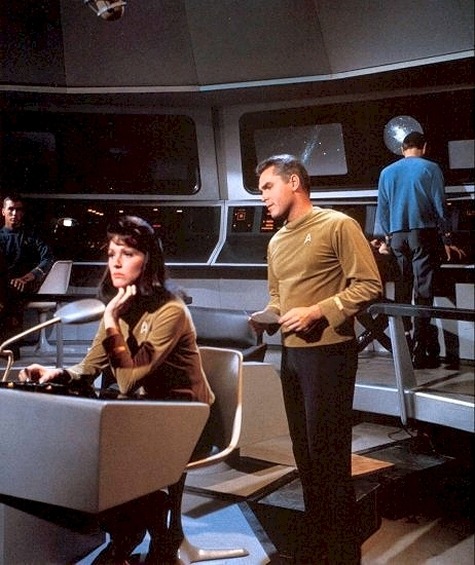


 Steve Prestegard.com: The Presteblog