Today is the 50th anniversary of perhaps the worst tornado outbreak that, unlike nearly all of them, involved Wisconsin.
Weather forecasting was considerably different in those days. The first reported tornado, near Tipton, Iowa, was reported not by the National Weather Service, nor by law enforcement, but by a radio reporter, whose station, WMT in Cedar Rapids, had a surplus aircraft radar it used for weather coverage. That gave WMT something that the NWS office in Waterloo did not have.
There were no tornado watches that day. That’s because tornado watches didn’t exist. To summarize what is found in more detail in Mike Smith’s excellent Warnings: Between the end of World War II and 1950, what then was called the U.S. Weather Bureau wouldn’t even use the word “tornado” because its “leadership” felt people would panic if they heard the T-word. The NWS started issuing what it called “tornado forecasts” in 1950, but the Federal Communications Commission banned their on-air use for four years for the same reasons. (For those who think government incompetence is a recent development: It’s not.) The Weather Bureau issued “severe storms forecasts” that were probably too large in land area and too unspecific to be useful.
Not every NWS office had radar, and those that did were using surplus World War II plane radar units. Warnings (known then as a “tornado alert”) that were issued were sent to radio and TV stations (all of which were staffed by the weekend people, at least until the seriousness of the situation became apparent) by teletype. You can type faster than teletype speed. That, jammed telephone lines in (reporting the 47 tornadoes, most likely more than once each) and out (warning about said tornadoes), the fact a lot of people were at churches (including one where the tornado was recorded) because it was Palm Sunday or outside because it was a warm day (which means they weren’t at home or work where they could get warnings, such as they were, from radio or TV), and public unfamiliarity with the terms used are blamed for the high number of deaths. (The South Bend Weather Bureau office had so many tornado reports that it issued a tornado warning for every county in its forecast area.)
There were five tornadoes in Wisconsin that day. The strongest, an F2 that went from between Lake Mills and Jefferson to Watertown, killed three people (in two cars that went flying in the wind on what was U.S. 16, now Wisconsin 16) and injured 28. The longest, an F1 that started at the Illinois state line and went through Monroe and Evansville around 2 p.m, injured 40 people. The three other tornadoes — from Williams Bay into Lake Geneva, one in Crawford County, and another in Walworth County — resulted in no injuries.
The unfortunate reality of disasters is they instruct what to do and not do.
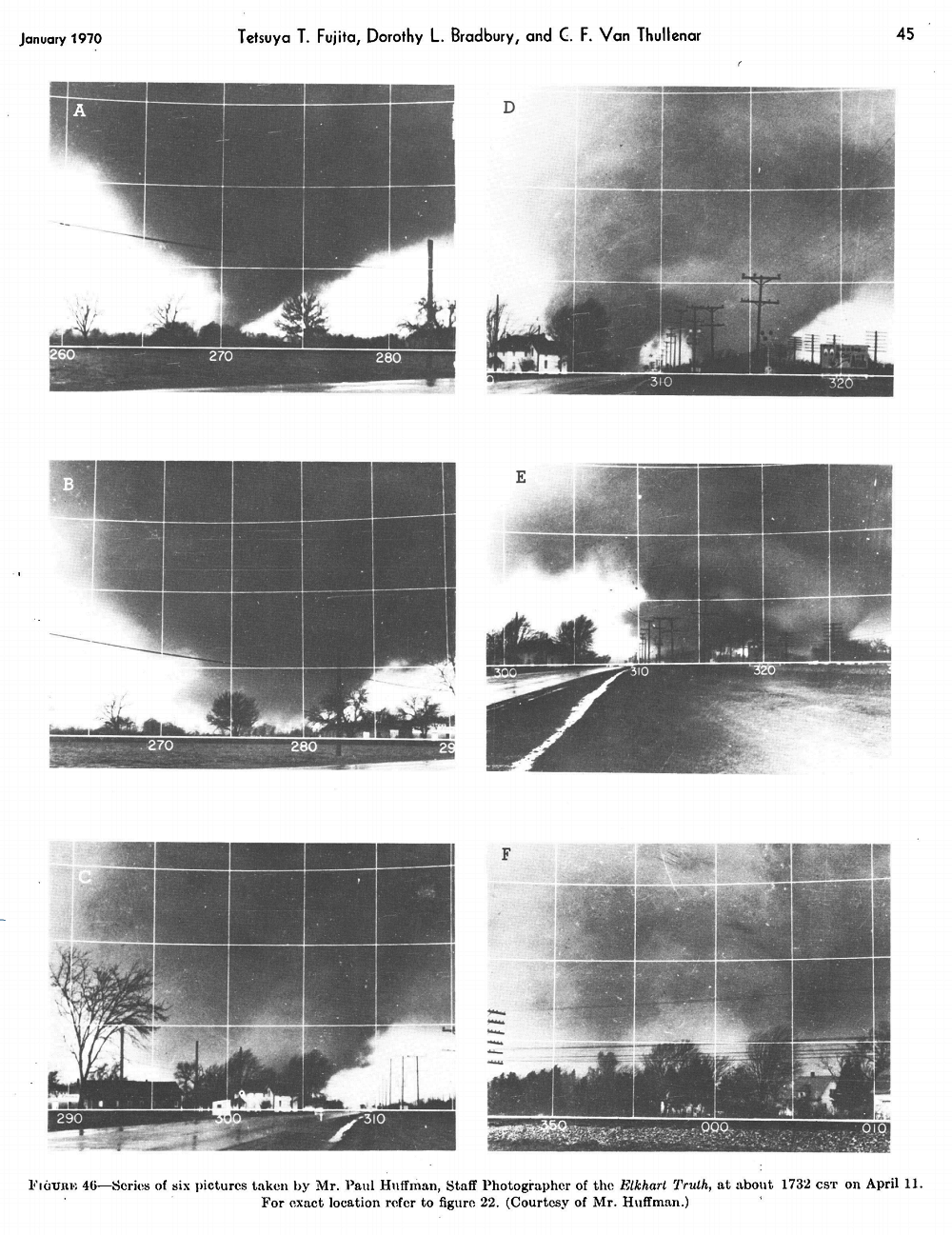
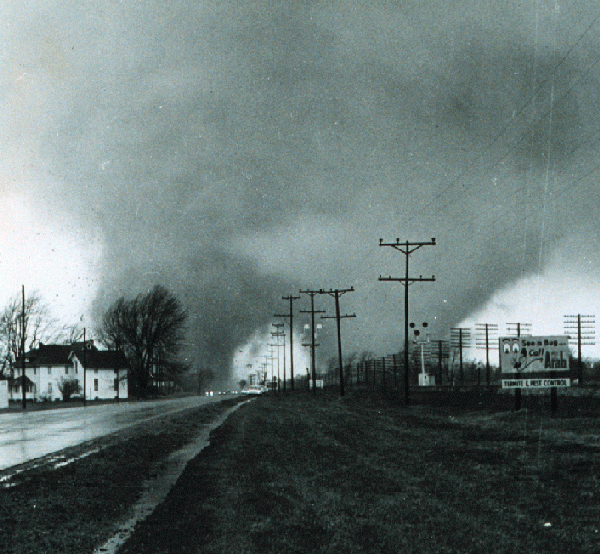
The difficulty of getting out warnings led to improved communications among NWS offices and, within a few years, the development of NOAA Weather Radio. (That in turn got a big push after the April 3, 1974 outbreak.) Study of damage showed how tornadoes cause damage, as well as the best and worst places to be if a tornado finds you.
 Steve Prestegard.com: The Presteblog
Leave a comment