The National Weather Service calls it the “Super Outbreak.” The “Gone with the Wind” of tornado documentaries calls it …
Perhaps everything you need to know about how bad this day was comes from two sentences in U.S. Tornadoes:
Perhaps the most staggering fact from the 1974 outbreak was the amount of F4 and F5 tornadoes; an incredible 30 (23 F4s and 7 F5s). The 1974 outbreak featured 30 violent tornadoes in less than one day when the national average is only about 7 per year.
Or perhaps from this fact: The National Weather Service office at Louisville’s airport had to evacuate to the basement due to the tornado that hit the airport. Six hours later, the Huntsville, Ala., NWS office also evacuated due to a tornado.
Or this: The old 55-word-per-minute teletype machines fell more than an hour behind reporting tornado warnings, which means that some areas heard about their tornado warnings after they expired. Because of that, my favorite online meteorologist Mike Smith reports, the teletypes were upgraded to 300 words per minute and automatically prioritized tornado warnings.
This map (or this interactive map) shows the tornadoes of the day, starting with tornado number one near Joliet, Ill., and ending with tornado number 148 near Lenoir, N.C.:

This map shows the tornadoes by severity and deaths caused:

Put the two maps together, and you get …

One of the tornadoes in northwest Alabama was indicated by radar as traveling northeast at 120 mph.
A number of websites commemorate this day’s tornadoes, from the perspective of Cincinnati (where the tornado sirens were used for a tornado warning, as opposed to a drill, for the first time in 17 years), Louisville, Xenia, Ohio (which had the largest death toll, 33), and Huntsville, Ala. There was a website to chronicle the entire day, April31974.com, but it appears to have gone with the wind, so to speak.
As often happens, the Day of the Killer Tornadoes generated significant weather forecasting improvements, besides the teletype upgrades. For one thing, the lack of quality reporting on TV and radio stations prompted the federal government to vastly expand NOAA Weather Radio. It also helped push improvements in weather radar, given that forecasters were using, believe it or not, surplus World War II aircraft radar to try to track tornadoes:
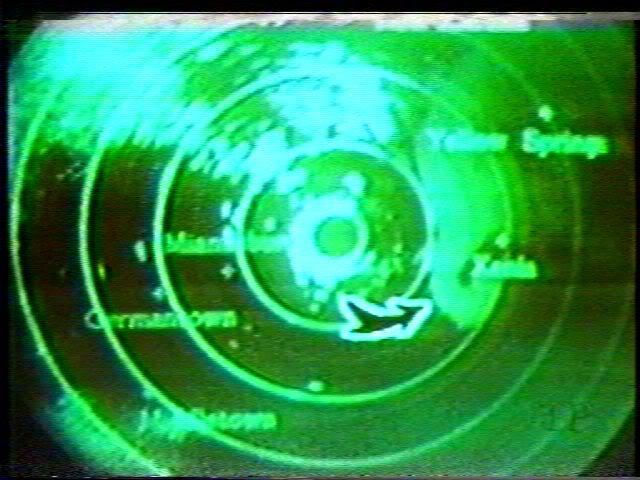
(The arrow was added afterward.)
(All of this and more is chronicled in Smith’s Warnings: The True Story of How Science Tamed the Weather, available from an Amazon.com webpage near you. Smith also notes a potentially bad tornado threat today, west of the devastated 1974 areas.)
This tornado outbreak got only as close to Wisconsin as the first tornado and a tornado watch in Lake Michigan east of Milwaukee. Eighteen days later, however, Wisconsin had its own much smaller, though still deadly, tornado outbreak:
This tornado near Oshkosh injured 35 people. A tornado that traveled from east of Beaver Dam through Lomira, Plymouth and Howards Grove killed two people and injured 18.
 Steve Prestegard.com: The Presteblog
Leave a comment