One of the first Milwaukee Brewers I can remember, first baseman George Scott, died Monday.

Scott was arguably the first Brewers star. He came up with the Boston Red Sox …
then was traded to Milwaukee before the 1972 season. He was a teammate of an 18-year-old shortstop, Robin Yount, and career home run leader Henry Aaron for Aaron’s final two seasons.
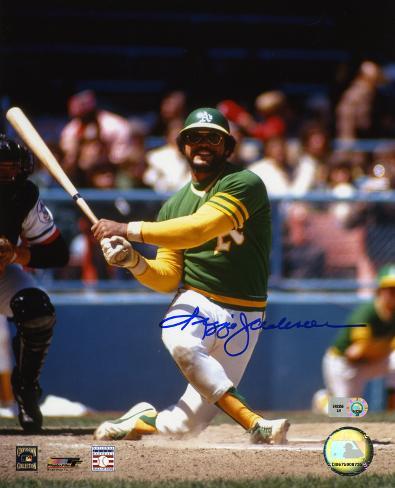
Scott generated national notice by leading the American League in runs batted in and tying for the lead in home runs with Reggie Jackson in 1975.
The Hardball Times remembers Scott fondly, beginning with a necklace he wore:
When a curious reporter asked him to identify the material that comprised the necklace, Scott answered matter-of-factly, “Second basemen’s teeth.” Whatever the actual composition of the necklace, the jewelry made the feared slugger that much more intimidating when he strolled to the plate or delivered a rolling block on a middle infielder.
Much like his contemporary, Dick Allen, Scott wore a helmet while playing first base for most of his career. Scott began wearing the helmet because of the idiotic behavior of some fans on the road who threw hard objects his way. Rather than take any additional chances, Scott ditched the usual soft cap for a hard helmet. He continued the practice, both at home and away, for the rest of his career.
The helmet and the necklace were ever-present during games in the 1970s, but Scott had another unusual fashion habit that trademarked his pre-game workouts. During his second stint with the Red Sox, Scott wore a rubberized suit in an attempt to lose some of the weight near his midsection. As Don Zimmer revealed in the first of his two books with New York sportswriter Bill Madden, Scott managed to sweat off a few pounds during each workout, but by the time the start of the game rolled around, Boomer seemed to have gained all of the weight back. Whatever he tried, he just couldn’t rid himself of the excess poundage.
Scott’s weight, helmet, and necklace tended to distract from one other important consideration: He was a very, very good player. Amazingly agile for a man his size, Scott’s quickness, footwork, and soft hands made him arguably the best defensive first baseman of the late 1960s and early 1970s. (Perhaps only the Dodgers’ Wes Parker was better.) At the plate, Scott had “light tower” power. When he connected, his ferocious swing and sheer strength produced an array of tape measure home runs. …
The 1968 season saw Scott begin the year in a deep and mysterious slump from which he could not recover that summer. He batted a meager .171 with three home runs in 124 games. It was a lost season, but Scott bounced back to put up decent numbers in each of the next three seasons. A 24-home run campaign in 1971 had some thinking that Scott would remain in Boston for years, but the Red Sox decided to take advantage of his growing trade value and turn him in for some speed and pitching. The Sox packaged Scott with outfielders Billy Conigliaro and Joe Lahoud, catcher Don Pavletich, and pitchers Jim Lonborg and Ken Brett, sending them to the Brewers for 30/30 outfielder Tommy Harper, right-handers Lew Krausse and Marty Pattin, and minor league outfielder Pat Skrable.
The massive 10-player deal took Scott away from friendly Fenway Park and into the relatively unfamiliar environ of County Stadium. Though he hit only seven home runs in Milwaukee that summer, he put up a better OPS at home than he did on the road. For the entire season, Scott hit 20 home runs while adding the surprising dimension of 16 stolen bases. He remained a solid player, earning MVP votes and winning a Gold Glove in each of his first three seasons with the Brewers. In 1973, he batted a career-high .306 while actually increasing his power output.
In 1975, Scott’s bat exploded. Reaching career highs with 36 home runs and 109 RBIs, Boomer tied Reggie Jackson for the league lead in the former category and captured the league crown in the latter. He also paced all league hitters in total bases. With his violent, all-out swing and raw power, Scott emerged as the most feared right-handed hitter in the American League.
After a downturn in 1976, the Brewers decided to cut bait with their 32-year-old slugger. The Red Sox, looking for another right-handed slugger, thought it was a good time to bring back their former first baseman. They sent the left-handed hitting Cecil Cooper to the Brewers for Scott and veteran outfielder Bernie Carbo.
Enormously popular in Boston, Scott enjoyed a happy homecoming with the Red Sox. He blasted 33 home runs and slugged an even .500. Scott helped the Red Sox win 97 games, but Boston ran second to the eventual world champions in New York. …
As fine a player as Scott was, he had even great impact as one of the game’s most colorful characters of the 1970s. Friendly and outgoing, Scott happily chatted with fans and regularly signed autographs at the ballpark. Willing to talk after both wins and losses, he readily provided quotes to members of the media, whether in Boston or Milwaukee. He even developed his own terminology, referring to home runs as “taters.” (Other players, like Reggie Jackson, caught on and began to talk about hitting taters, too.) Scott also had a nickname for the dark first baseman’s mitt that he used, calling it “Black Beauty.”
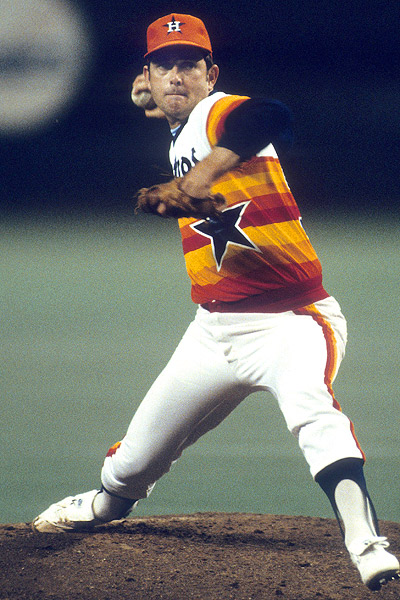
Scott played in the first Brewers game I ever saw, against California (now the Los Angeles Angels of Anaheim, or something like that) and pitcher Nolan Ryan June 14, 1975. Aaron homered, the game ended on a 4–6–3 double play, and the Brewers won 6–4. (And Aaron waved at me after the game, thus cementing his place as my favorite baseball player of all time.)
Boston sportswriter Leigh Montville remembers Scott’s two Red Sox stints:
He was a sweetheart. That was what he was, this one-time leader of the American League in home runs and runs batted in, winner of eight Gold Gloves, who died on Monday, sick and old before his time at 69 in Greenville, Miss. There were pieces of Babe Ruth and Josh Gibson in him, mixed with pieces of Jackie Gleason and Falstaff and, I don’t know, maybe Louis Armstrong and maybe your father’s brother, the big guy who comes to the house and makes everybody laugh for the entire evening.
He moved through his nine seasons in Boston, 14 in the major leagues, with thunder and charm. As soon as he arrived at Fenway Park in the summer of 1966, he dropped the word “tater” into the baseball lexicon as a better word for “home run” and promised to make so much money that he would be “driving an Oldsmobile with a Cadillac hitched up behind.” How could anyone not fall in love with a ballplayer like this?
He had a squeaky, different voice for a big man, memorable from the first time you heard it. He boasted in that voice. He pouted. He laughed. He complained. The voice made you smile, no matter what the words were. …
In baseball, his rookie season was a fine window to his future. He led the American League with 152 strikeouts. He also led the league in grounding into double plays with 25. Oh, wait a minute, he also hit 27 home runs and drove in 90 runs. Switched from third base to first, a position so new to him he had to find a glove to play it, he became a stylist, a dancer, a vacuum cleaner around the bag. He was selected to the All-Star team, first year at the position, and named that new glove “Black Beauty.”
A strikeout or a homer. That was George Scott’s modus operandi at the plate. The fielding was his constant. …
He would have two stints in Boston, traded to the Milwaukee Brewers in 1972, traded back to the Red Sox in 1977 for two more years, then part of a third. The 1975 season was his statistical best, as he led the league with 36 taters, 109 RBIs. He would finish his career with 271 taters, a .268 batting average, numbers that probably should have been better, could have been better, but at least were real. He probably never lifted a weight during his career, certainly never ingested a steroid. He was a big man doing big man things.
He was natural. He was clean. He was fun.
“Is it true that you once hit a ball onto the Massachusetts Turnpike?” a Boston radio host asked the Boomer last year, talking about the highway that runs well behind the left field wall at Fenway.
“I don’t know,” that voice replied, last time I heard it. “But I hit some that were going in that direction.”
Scott was one of the players who personified ’70s baseball. Jim Bouton, Seattle Pilots pitcher and author of Ball Four, wrote that as of 1969 the baseball establishment’s idea of color was a player’s wearing his cap at a “jaunty angle.” By the time Scott arrived in Milwaukee, baseball had Afros (even among white players), creative facial hair (see the photo), creative accessorizing (see Scott’s necklace) and jerseys ranging from Cleveland’s blood red (which made first baseman Boog Powell look like a giant tomato) to Oakland’s kelly green to Houston’s “tequila sunrise” multiple colors.
The Brewers traded Scott back to the Red Sox in exchange for a left-handed-hitting first baseman who couldn’t seem to get into the Sox lineup regularly. That would be Cecil Cooper. That trade worked out well for the Brewers.
Scott was fondly remembered in Milwaukee, though, to being honored with his own bobblehead:

 Steve Prestegard.com: The Presteblog

Leave a comment