Wis U.P. North’s Paul Socha certainly gets your attention by his headline:
Getting Fair Trials In Wisconsin May Become A Thing Of The Past
Seems some judges in Wisconsin having a predetermined opinion and showing their bias means little in our judicial courts today.
Gannett Wisconsin Newspapers committed a flagrant act of journalism by reporting that the signers of petitions supporting the recall of Gov. Scott Walker include 29 circuit court judges from 16 counties.
The signers include — surprise! — Dane County Circuit Judge David Flanagan, who overturned the state’s voter ID law earlier this month. (For now. The chances this will end up in the state Supreme Court are as good as the sun’s rising in the east tomorrow.)
This appears to be a flagrant abuse of this line from the Wisconsin Code of Judicial Conduct. which by the way is in state statutes …
No judge or candidate for judicial office or judge-elect may … participate in the affairs, caucuses, promotions, platforms, endorsements, conventions, or activities of a political party or of a candidate for partisan office.
… as well as, reports Gannett, the code’s “general admonitions to avoid ‘the appearance of impropriety in all of the judge’s activities.’”
Signing a petition against the holder of a partisan office with the intent of having that person removed from office certainly seems to fit within the banned activities listed in that paragraph and unquestionably violates the “appearance of impropriety” standard. That’s not just my opinion, that’s the opinion of Marquette University Law School Prof. Janine Geske:
“I believe the judges had the right to sign the petition, but it creates a problem with the appearance of impartiality if and when they may be called upon to decide any issues involving the governor or the Republican party,” Geske said in an email. “We are in a highly politically charged time when many citizens have lost confidence in our governmental bodies. It is critical that judges do everything they can to demonstrate that the judiciary remains independent of the other two branches and will remain free of political influence.” …
Professor Richard Painter of the University of Minnesota Law School questioned why judges would expose themselves to criticism and a potential perception of bias by signing the recall petition, though he acknowledged there might be wiggle room within the judicial code allowing judges to sign.
“State judges often have to decide cases where the governor is a party to a case, less often where state legislators are a party to a case. Sometimes judges have to rule on close elections,” said Painter, who served as chief ethics lawyer in President George W. Bush’s administration and has written a book on ethics reform in American government. “For judges to be getting involved in the question of whether the governor ought to be recalled I think is highly inappropriate. Whether it violates an ethics rule or not in Wisconsin, I think it’s very inappropriate.”
Two Brown County judges engage in reasoning that one would think they would boot out of their own courtrooms if they heard these arguments from lawyers:
The judges who signed the petition made two basic arguments — that signing the petition was merely supporting the electorate’s right to vote, and that the recall petition supports neither a specific candidate nor a political party and is allowable.
‘”I concluded that by signing a recall petition I wasn’t advocating for a particular party, I was advocating for the recall process, which I thought was completely separate and apart,” said Brown County Judge Mark Warpinski. “I didn’t do it lightly. I certainly considered this a very important issue, but in the final analysis I felt that my right to sign a petition didn’t implicate any of the ethical considerations that I knew of.”
Brown County Judge Don Zuidmulder called criticism of judges signing the petition “the beating of the partisan drum.”
“I viewed this simply as a question of whether we should have an election,” Zuidmulder said. “I’m in favor of elections any time, any place.”
Warpinski’s argument is specious in that the electorate’s right to vote comes in regularly scheduled elections, the next of which, in the case of the governor, is in 2014. Zuidmulder’s accusation is just off-the-charts arrogant, and makes one wonder how he’d feel about a recall attempt of himself.
Warpinski’s and Zuidmulder’s judicial colleague got it right:
“When you sign up for this job, to some extent you compromise your ability to express your own political beliefs one way or the other,” said Brown County Judge Marc Hammer. “Some judges don’t think it’s a political statement to sign a recall petition. I just really wasn’t comfortable in doing so. I think if you’re asked to judge the conduct of others, you need to be mindful of what your conduct is.”
The story adds that “The state Supreme Court issued an advisory opinion in 2001 saying judges are allowed to sign nominating petitions so long as the petition language only supports putting the candidate on the ballot and does not imply an endorsement.”
I’m not a lawyer, and I don’t play one on TV, but I would argue that the Supremes got it wrong in 2001. Signing a nominating petition means you believe that person should be on the ballot, which is in fact an endorsement, even though it doesn’t mean you’re voting for that person. Avoiding the “appearance of impropriety” would seem to allow judges to vote, and nothing else.
The revelations about the Not Impartial 29 also demonstrate the changing nature of democracy in today’s Internet age. I assume some of the signers signed without realizing the chance that their signatures would become public information. In a state with a long tradition of open government — including in the judges’ courtrooms — that turns out to have been an incorrect assumption on the signers’ part. (For instance, UW System spokesman David Giroux, who better hope he doesn’t run into a particularly vindictive Republican state legislator, lest his position disappear in the 2013–15 state budget.)
Those who disagree with this analysis should ask themselves this question: Would it be improper for judges to sign petitions for the recall of Democratic Secretary of State Douglas La Follette? (Assuming anyone figures out what La Follette does other than run for other office, that is.) The answer is: Of course it would be improper.
Socha asks:
If the day ever comes and you would stand before one of these 29 judges, would it be a fair trial? Would you be found guilty even before the court case even begins? These judges are just following their liberal beliefs, they can do anything they want at anytime they want! So much for judicial ethics.
That’s a good question to ask if one of those 29 judges is deciding a case (more likely civil than criminal, because the court system has more civil cases than criminal cases) in which the plaintiff or defendant is a known Republican or conservative. At minimum his or her lawyer should have a recusal request form handy. And for those who equate judges with arch arrogance (a UW journalism instructor once told us that judges have a “God complex” when on the bench), those beliefs have gotten 29 examples of validation.
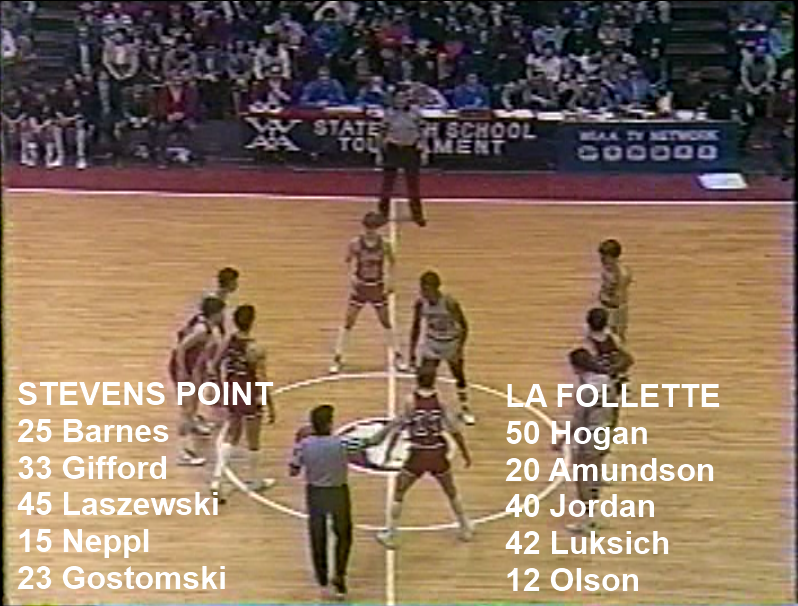
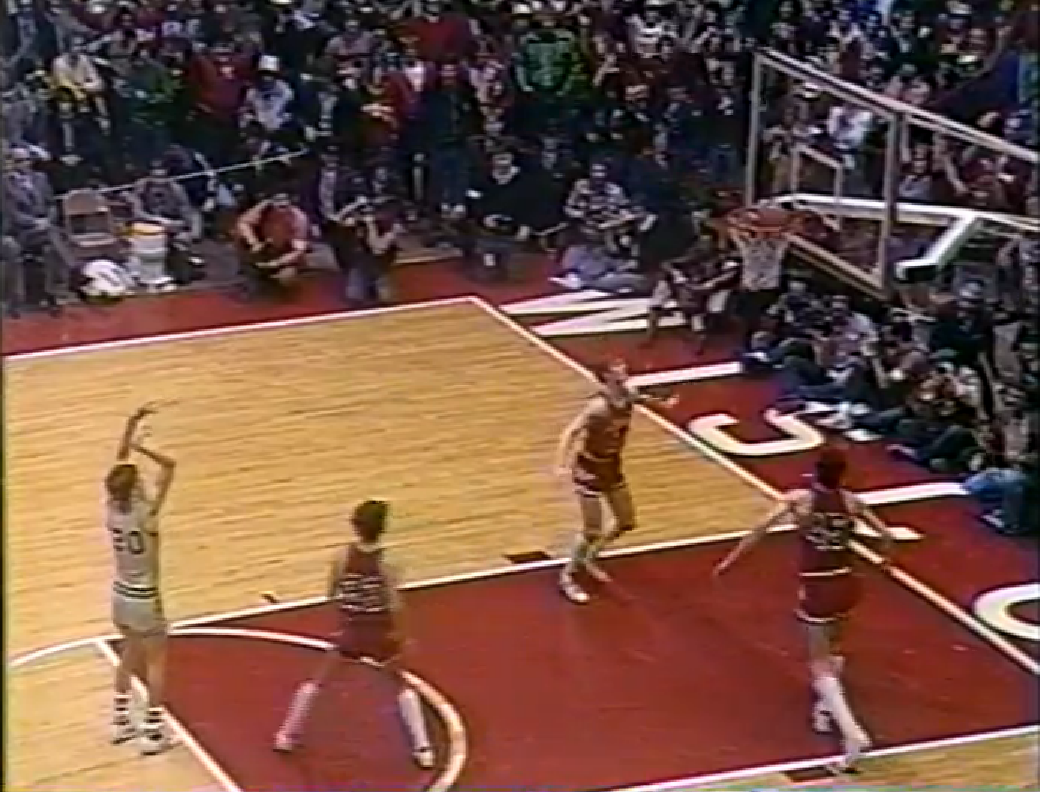
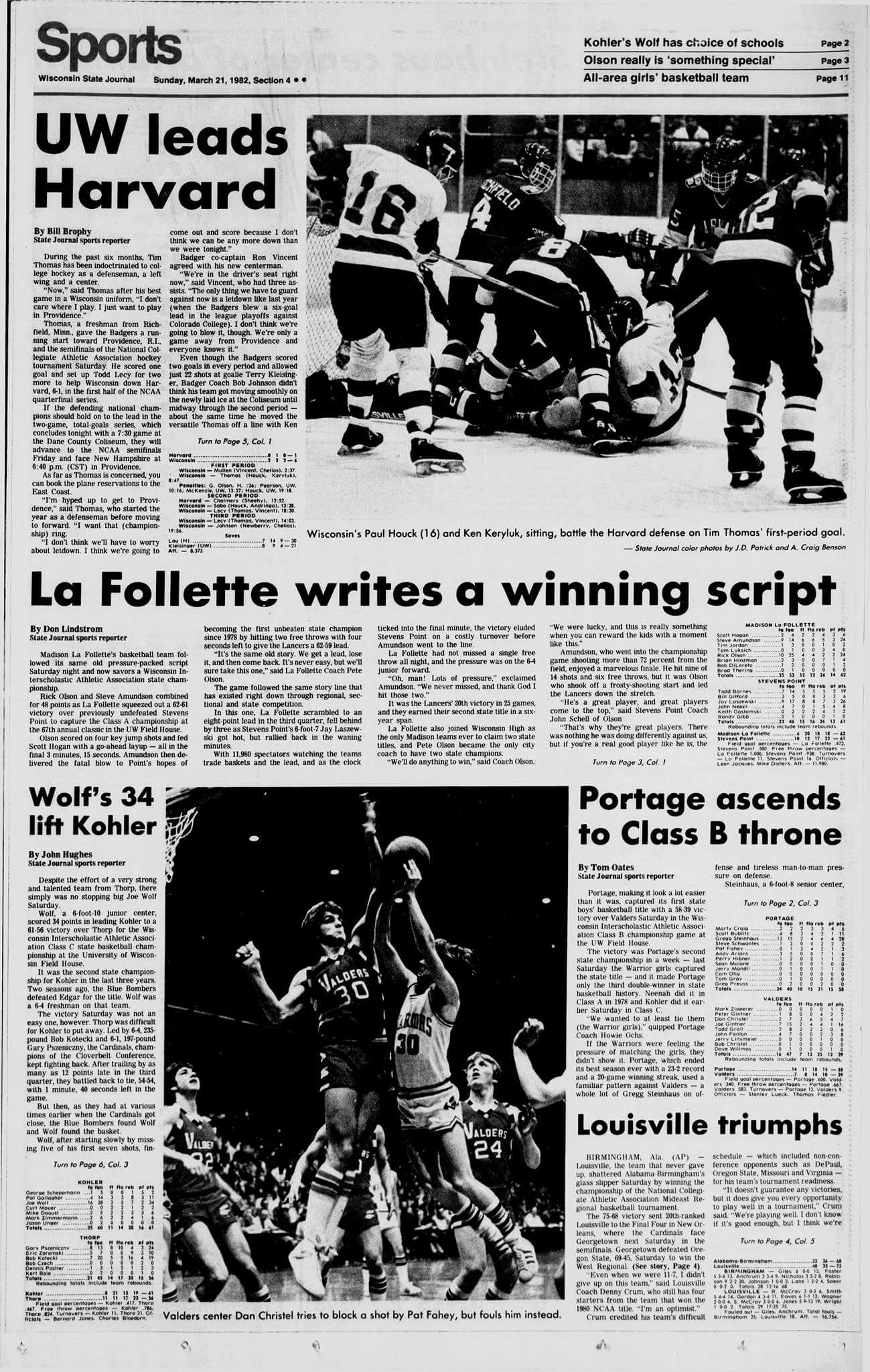
At 7:35 p.m., La Follette tipped off against Stevens Point for the WIAA Class A boys basketball championship, before a packed UW Fieldhouse and a statewide television audience.
I played in this game. Trumpet, to be precise.
This was during a period in my life when it seemed as though all was right with the world, even though I probably didn’t appreciate that at the time. I was doing well (though not well enough according to my parents) in school, specifically enjoying three classes, Wind Ensemble, Journalism and Political Science. I was making the grand sum of $3.35 per hour busing tables at Bridgeman’s Ice Cream Parlour and Restaurant for 15 or so hours each week. That earned me enough money to put gas in the 1975 Chevrolet Caprice my mother and I shared, and go out on dates with my first girlfriend.
La Follette in the early 1980s was known as a basketball school. The Lancers won their first state championship in 1977, when they proved the adage that how you finish the season is much more important than how you start. La Follette had finished the regular season 10–8, with more than their share of close losses among those eight losses. But thanks to seemingly never missing shots from the field, the Lancers defeated Milwaukee Tech 55–48, Neenah 46–43 and Eau Claire Memorial 65–48 to win their first state title, setting state tournament records for shooting in the process.
Three years later, La Follette went back to state, led by Craig Anderson, who ended up playing basketball at Iowa. La Follette beat Oak Creek 59–54 but lost to Big Eight archrival Janesville Craig 60–52 in the semifinals. (La Follette and Craig split their two regular-season games, with the Lancers winning at La Follette on two free throws with five seconds left.)
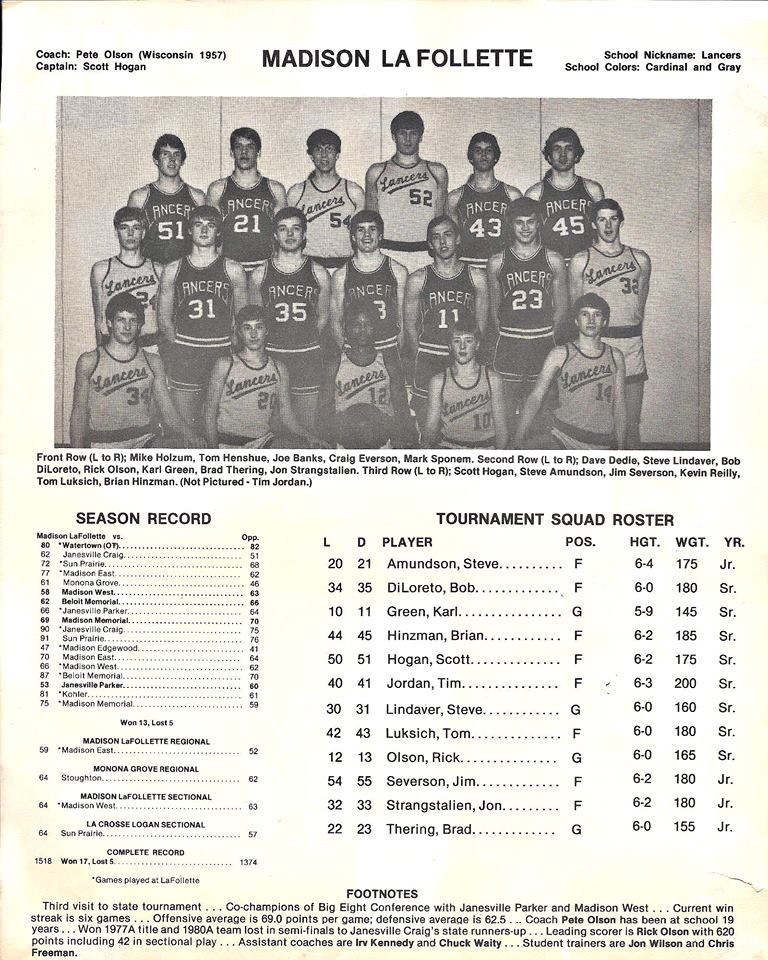
Two years later, La Follette was part of a three-way tie for first place in the Big Eight Conference. (Which now has 10 schools but the same name, but never mind that.) The 1981–82 Lancers featured players I knew, some former boys volleyball teammates of mine. (I played basketball at La Follette for a few weeks as a freshman until I figured out that basketball wasn’t my sport. I played volleyball for two years until I figured out that wasn’t my sport either.)
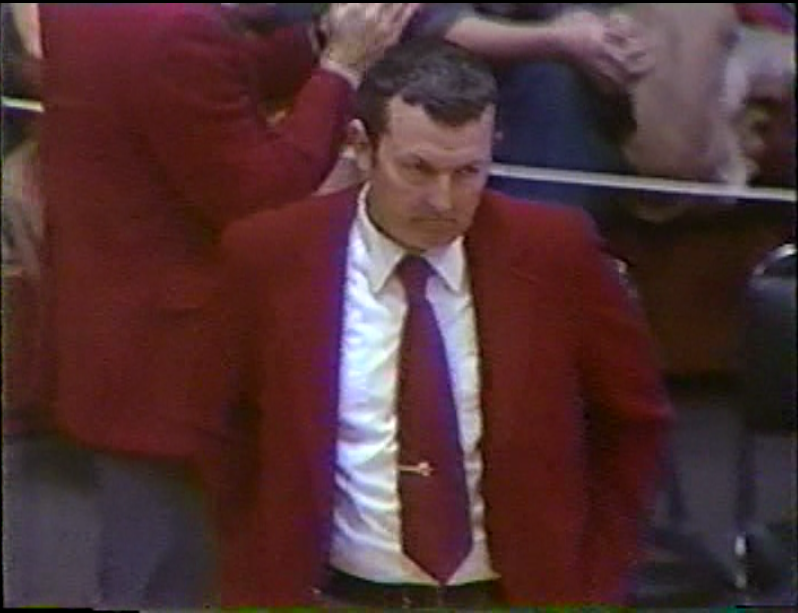
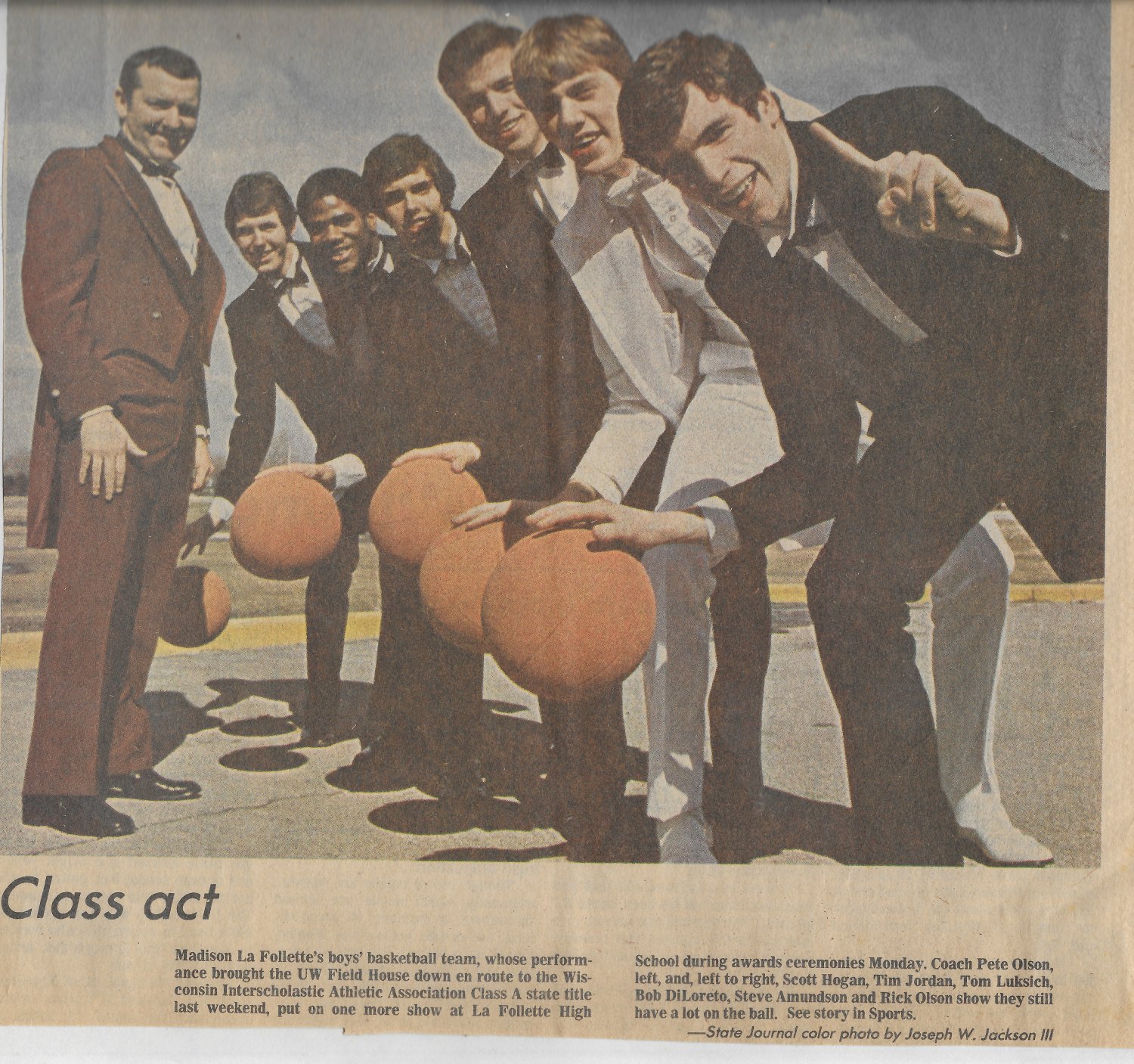
Upon seeing this photo of Coach Pete Olson, one of my sons asked why he was mad. I had to tell him that this was pretty much the way he always looked.
The team was coached by La Follette’s original boys basketball coach, Pete Olson, who is held in such high regard today that he has his own Facebook page, though he probably doesn’t know he has his own Facebook page. (For Olson to know about Facebook would require that he first be dragged off whatever lake he’s fishing.)
The Lancers won their first regional game easily, then had to endure a nailbiting 64–62 win over Stoughton in a game I couldn’t go to because I had to work. Since high school games weren’t on the radio in Madison, I didn’t find out the result until fans from the game started coming in and remarked what a great game it was.
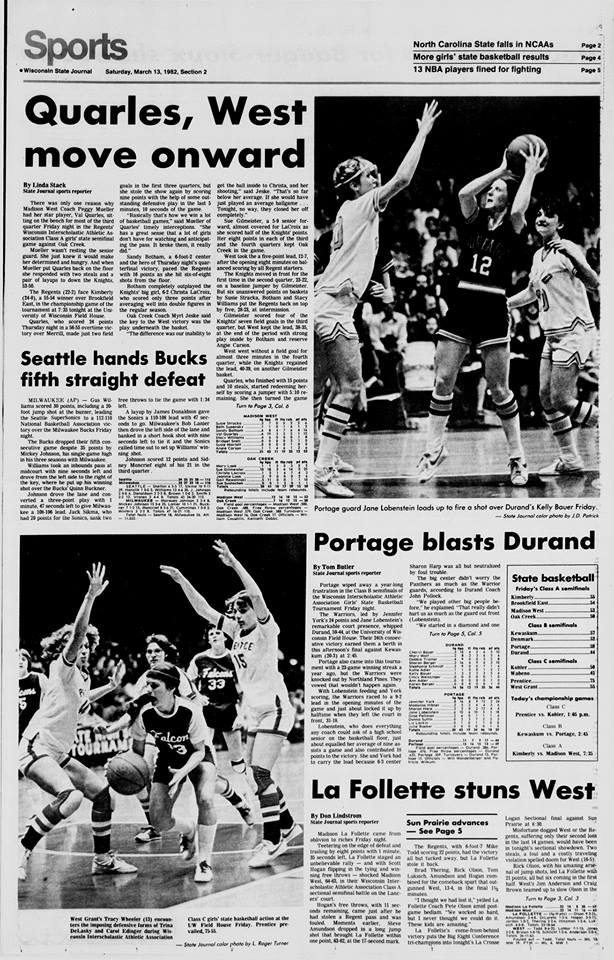
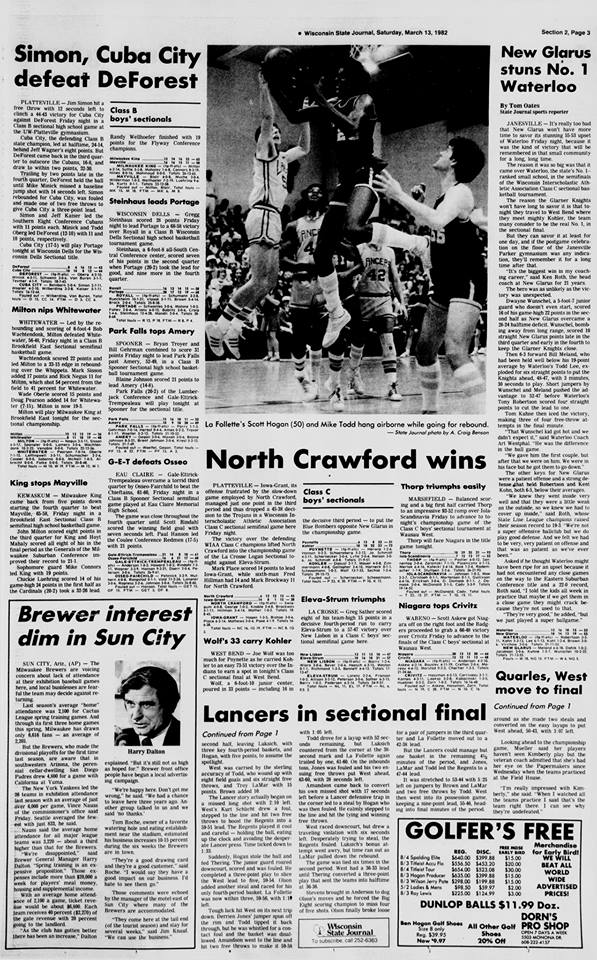
That nailbiting experience didn’t compare to what happened six days later, with La Follette hosting West in a sectional semifinal. Looking up the Wisconsin State Journal story on the game revealed my incomplete memory of the game. I had thought all these years that La Follette had trailed by nine points with 2:30 remaining and scored the last 10 points to win. The truth was more harrowing — La Follette trailed 59–51 with 90 seconds left. In the era before the three-point shot, that’s a four-possession lead unless you can compel your opponent to foul you while you hit a basket.
Helpfully, a three-point play by fellow Class of ’83 member Brad Thering cut the lead to 59–54. Rick Olson, over whom college basketball coaches were salivating because of his shooting range that started in the parking lot outside the gym, stole a pass and scored to cut the lead to 59–56. Right in front of the La Follette band, then, a West basket was disallowed for a foul on the rebound. Two more free throws by former La Follette White freshman teammate Steve Amundson cut the lead to 59–58.
By this time, the noise in the gym, which started incredibly loud, was in danger of knocking all the stuff on the walls, including the 1977 state championship megaplaque, off the walls. People were actually crying in the gym from the intensity of the moment, seconds from having your season end or getting a chance to go to state. The La Follette’s band’s contribution to the scene was frantically playing the school fight song (an original creation of La Follette’s first band director) and “You’ve Said It All,” the unofficial ban on which magically disappeared for the postseason. Our band director, who never got excited for games and saved his yelling for his band (as with all band directors), was barking at an official he apparently knew.
Mike Todd, who led West with 22 points, and La Follette’s Tom Luksich traded jumpers to set the score at 61–60. Derrien Jones hit two free throws to push West’s lead to 63–60, before Amundson rebounded his own miss to cut the lead to 63–62 with 17 seconds left. Then Scott Hogan (who had the same piano teacher with me) stole the ball and was fouled with 11 seconds left.
The people who seemed least bothered by all this were the La Follette players. Olson had specific rules for his team — short (by ’80s standards) hair, wear hats outside, and be in bed early. He also wanted his players to play on an even keel. There were none of the histrionics you see in high school games today upon big plays or fouls being called on incredulous players.
So as the walls in the gym were bowing outward from the pressure inside, Hogan stepped up to the free throw line, his career 11 seconds away from ending. Just when you thought the gym couldn’t get any louder, Hogan hit his first free throw to tie the game. Just when you thought the gym couldn’t get any louder, Hogan hit the second free throw to give La Follette the 64–63 lead. Five seconds later, a West player was called for traveling.
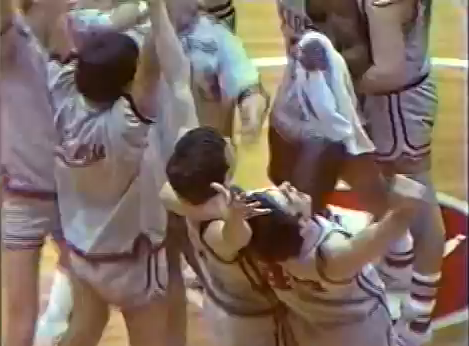
The fact that Luksich missed a free throw a few seconds later was academic because West had no time to do more than heave the ball in the general direction of the other basket. I doubt anyone heard the buzzer, because the floor instantly filled with screaming, celebrating La Follette fans (including one trumpet player who jumped onto the floor and then had to fight to get back into the band to, you know, play), dancing around dejected West players, whose season and in several cases high school careers ended abruptly.
The scene was wild enough for Don Lindstrom, a Wisconsin State Journal sportswriter who had previously covered approximately 11 million basketball games, to comment thereupon:
“I thought we had lost it,” yelled La Follette Coach Pete Olson amid postgame bedlam. “We worked so hard but I never thought we could do it. These kids are amazing.”
I saw Olson (who was my gym teacher that semester and my freshman year — the first teacher to ever give me an A for gym because he rewarded effort, so I decided to give effort) not long after the game. It was the first time I had ever seen him smile.
The sectional final game against Big Eight rival Sun Prairie the next night wasn’t as exciting or as well played. (And again not witnessed by me — damn work.) But La Follette beat Sun Prairie to get its third state berth in six seasons, and the second in my time at La Follette.
I remember looking at the state tournament bracket and thinking that things were working perfectly, and in more ways than one. In those days, the Class A quarterfinals were Thursday afternoon and evening, with the winners playing in the semifinals the next afternoon or evening. So the La Follette band headed to the Fieldhouse for the second afternoon quarterfinal against Milwaukee North, after the first quarterfinal between Brown Deer and Lake Geneva Badger. That meant no school Thursday afternoon, which meant my difficult algebra-trigonometry assignment due Thursday afternoon would be due Friday instead. (In 1980, because La Follette played in the evening session, we didn’t miss any school to go to the games, though Thursday and Friday ended with pep rallies instead of classes.)
La Follette beat Milwaukee North 65–61, which postponed the algebra-trig assignment to Monday. I thought that La Follette had lucked out as well because Brown Deer, which seemed like the better team in their quarterfinal, lost to Badger 50–48. Whether my assessment was right or not, that’s how it worked out, because the Lancers beat the Badger Badgers (really) 62–57 to go to the state championship.
On the other side of the bracket was undefeated and number-one-ranked Stevens Point, which beat South Milwaukee 51–43 Thursday night and then, while an ice storm raged outside, beat Shawano 39–38 Friday night. I watched that game on TV, which was interrupted in the middle of the frantic fourth quarter by the dramatic announcement that roads were so bad that fans should not try to head back to Stevens Point that night.
The next morning, members of the La Follette baseball teams, who were having preseason practice, were running through the hallways of La Follette when to their surprise they reached the Commons and found it full of basketball fans … from Stevens Point.
The Fieldhouse wasn’t usually full for the Class A championship game because it was just one game, not two (which means only two teams’ fans, not four, were at the game), and because Milwaukee teams had won the previous three Class A titles, and even then Milwaukee teams did not draw well. On this night, the Fieldhouse was filled to capacity.
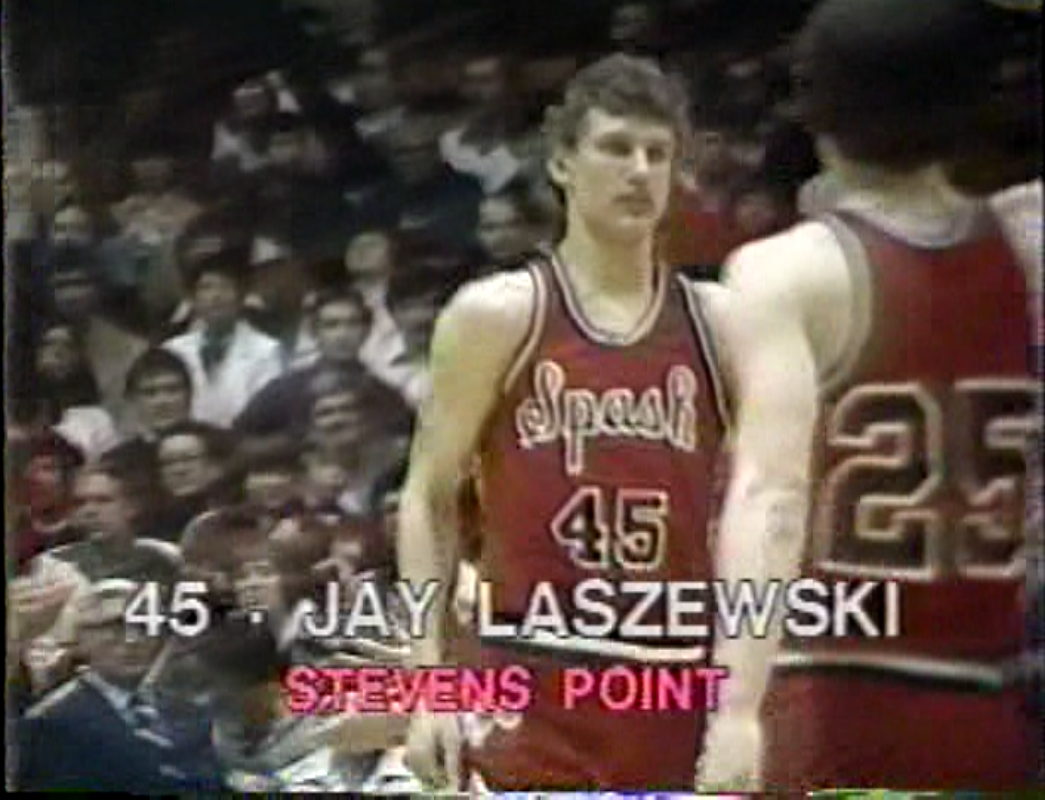
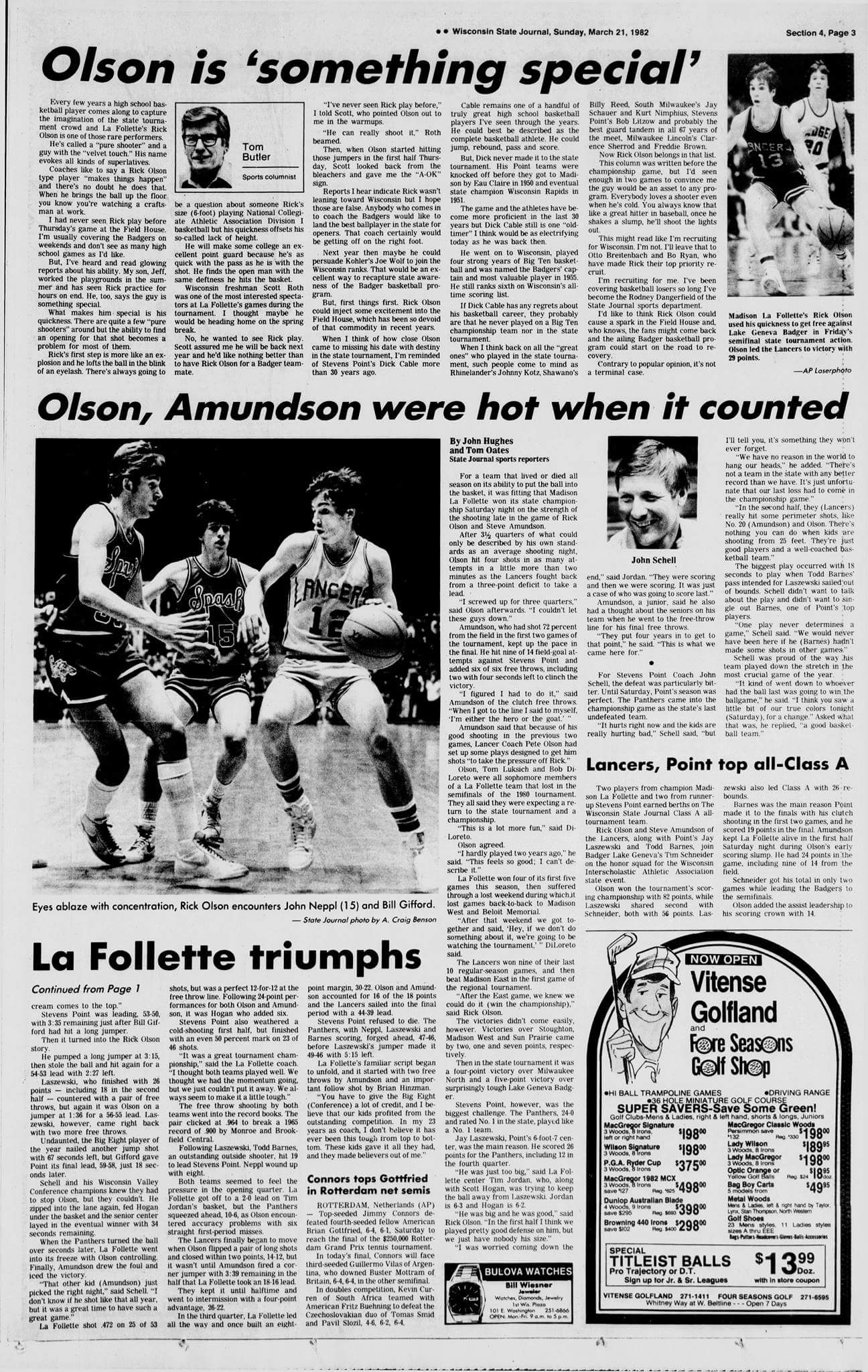
This was one of those rare occasions for which no media hype was necessary — the season-long number-one-ranked team against a team that featured the state’s best player, Rick Olson, who was unrelated to his coach. Olson was one of three Lancers who would play Division I sports; he went to Wisconsin, as did Tim Jordan to play basketball, while Amundson played at Western Michigan. Stevens Point’s Jay Laszewski joined Olson at Wisconsin.
Not only was it a media-hype-unneeded game, it was an exceedingly well played game. Without a three-point shot, both teams ran their offense but didn’t merely sit on the basketball. Defense wasn’t as physical as it is now, which makes the game more watchable.
The other thing that stands out is the game’s remarkable free throw shooting. La Follette was 12 of 12 from the foul line. Stevens Point was 15 of 16. (And the TV color commentator said “And we should break the thumbs of the player who missed it, right?”, to which his partner, Marsh Shapiro, also owner of the Nitty Gritty bar, replied dubiously, “if you say so.”)
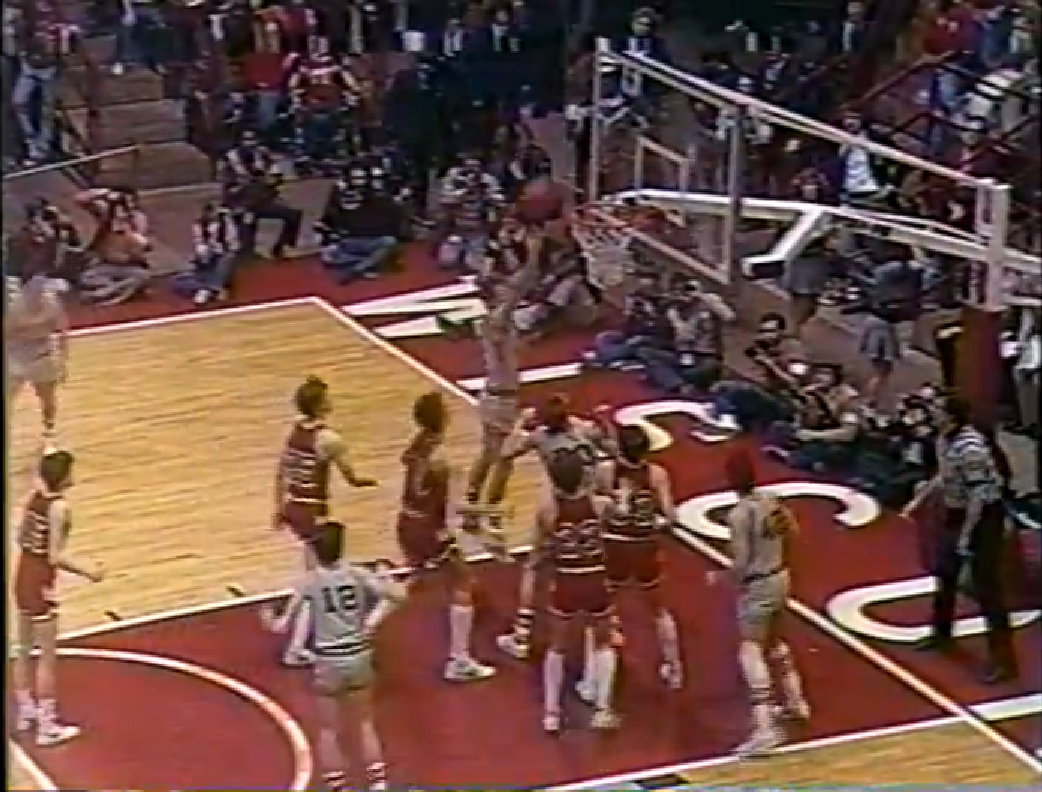
La Follette led at the half and after three quarters, and then Stevens Point took the lead early in the fourth quarter. I don’t know why we should have been surprised given the game eight days earlier, but the fourth quarter was like one long heart attack as Stevens Point’s lead shifted between one and three points. The band alternated among playing, cheering intensely, and riding the roller coaster of good things and bad things happening on the floor.
After an Olson steal, La Follette tried to call time out while Olson was draining a wing jumper to give the Lancers a 54–53 lead with 2:26 left. (I’m guessing coach Olson was OK with not having the time out called when he wanted it.) Laszewski hit two free throws with 1:55 left to put SPASH up 55–54. Olson hit another to put La Follette up 56–55 with 90 seconds left. Two more Laszewski free throws put Point back up 57–56. Olson drained another long jumper, the last of his 24 points, to put the Lancers back up 58–57 just before the one-minute mark. Bill Gifford hit a jumper to put SPASH up 59–58 with 45 seconds left.
Remember Scott Hogan, who hit the two free throws to win the sectional final? Olson drove the lane but instead of shooting fed Hogan underneath, and the last two points of his career put La Follette back up 60–59 with 30 seconds left. And then with 18 seconds left, Stevens Point’s Todd Barnes threw a pass over Laszewski, giving La Follette the ball and the lead.
Olson dribbled the ball and then passed to Amundson, who was fouled with 4 seconds left.
Amundson hit his two free throws, the last of his 24 points. The final basket at the buzzer left La Follette up 62–61 and lit up the opposite end of the Fieldhouse.
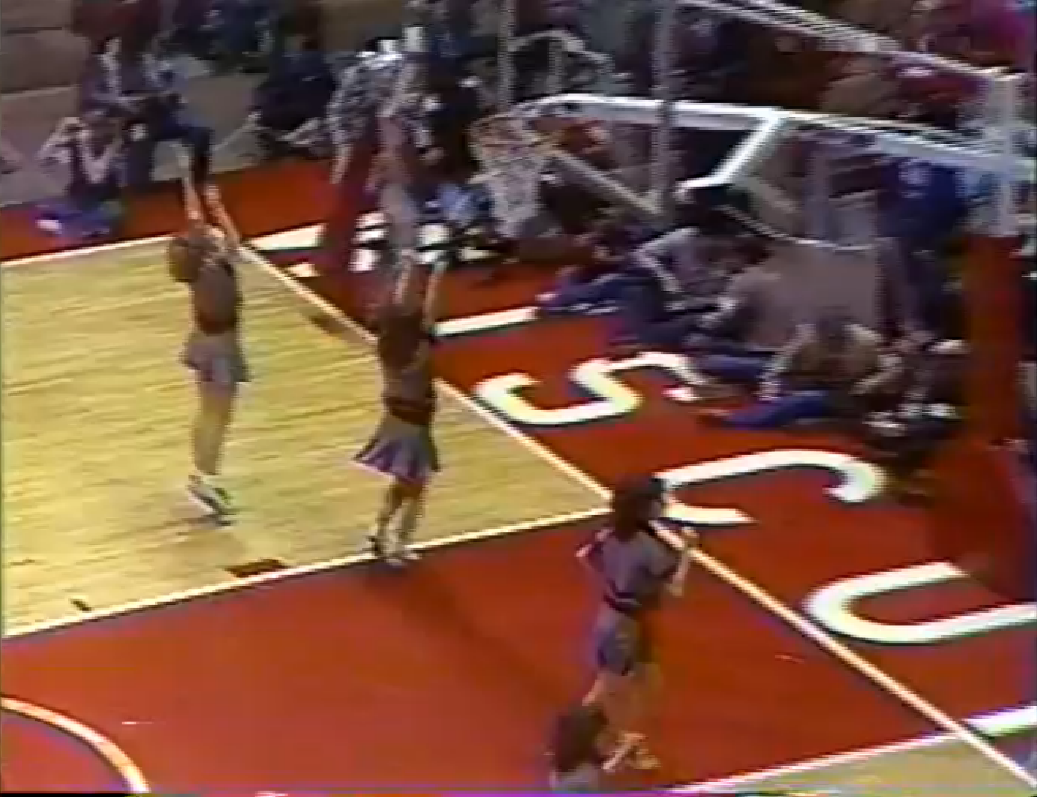
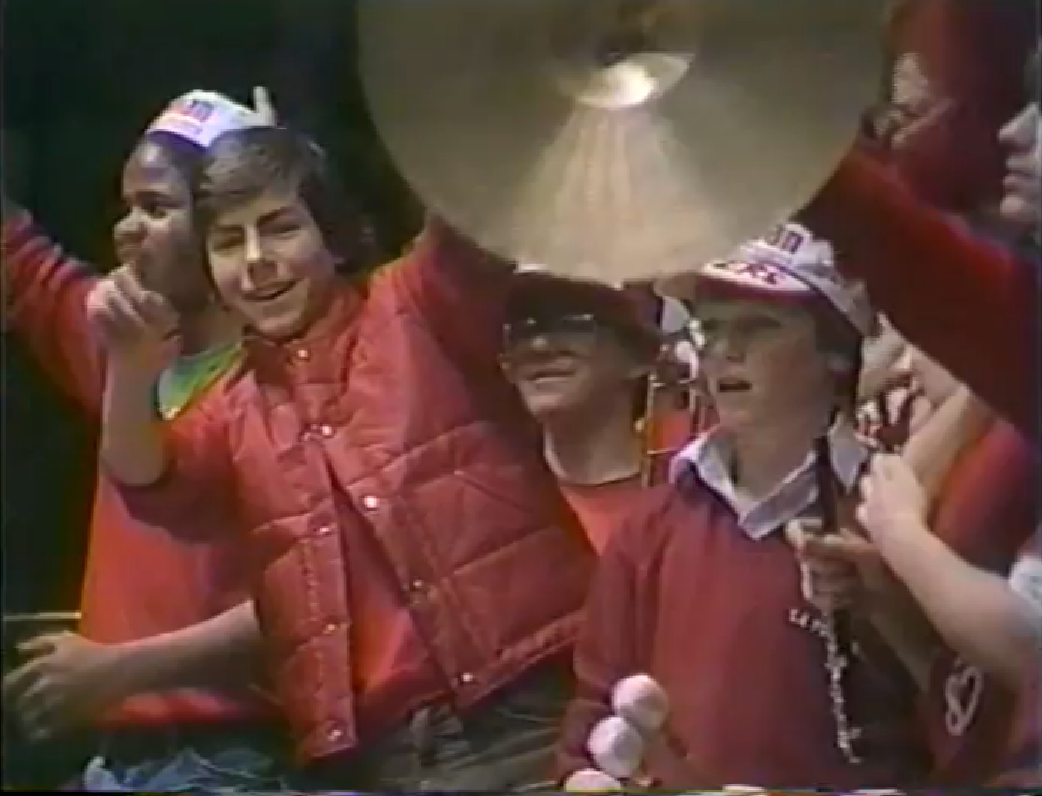
The win obviously belonged to the players, since they had practiced for four months and played to get there. Their photos are on the west wall of the La Follette gym. And yet the rest of us felt like we’d contributed too, including the cheerleaders …
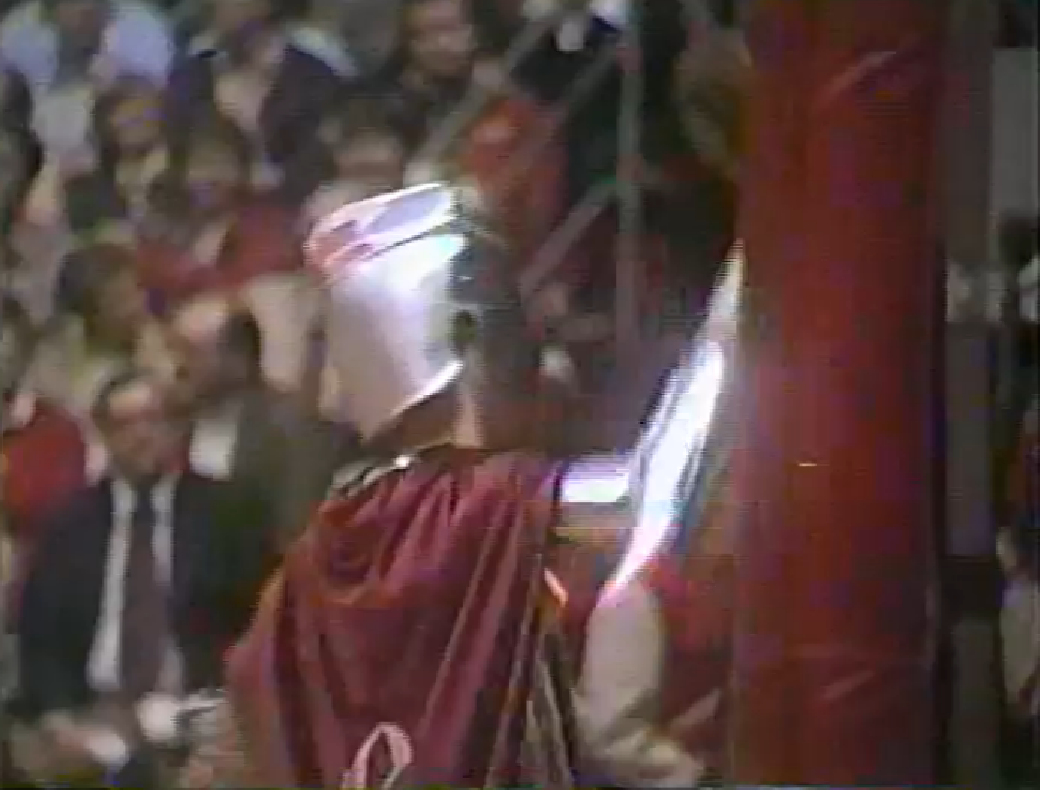
Sir Lawrence Lancer, nickname not Fighting Bob.
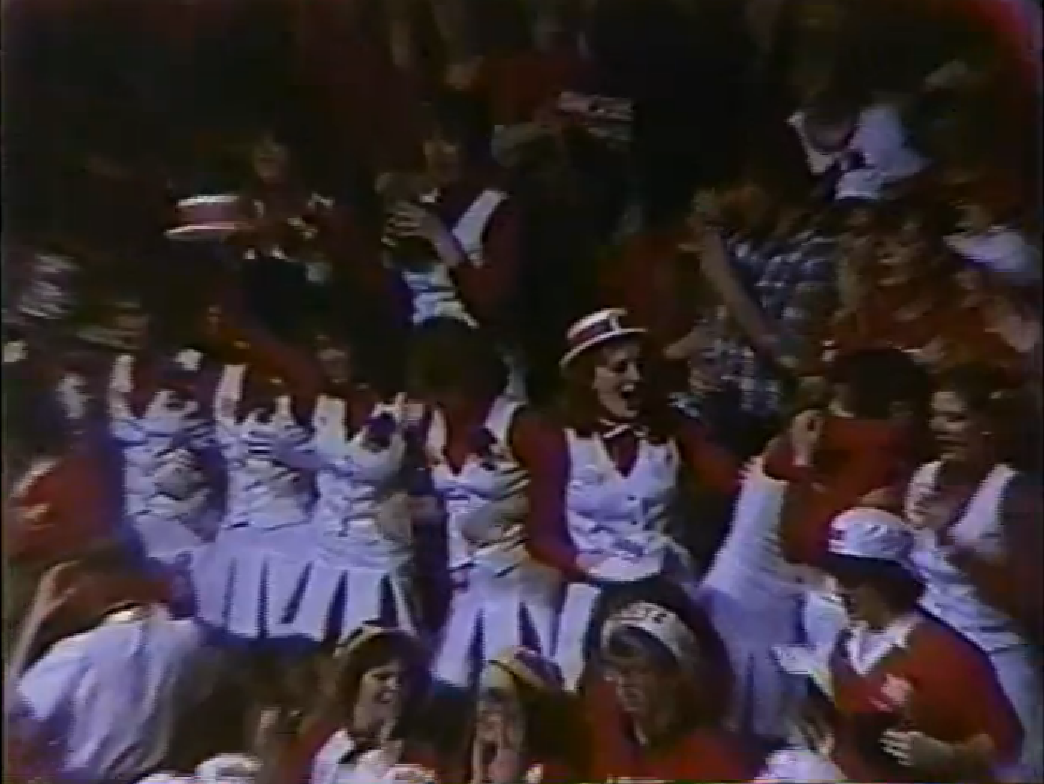
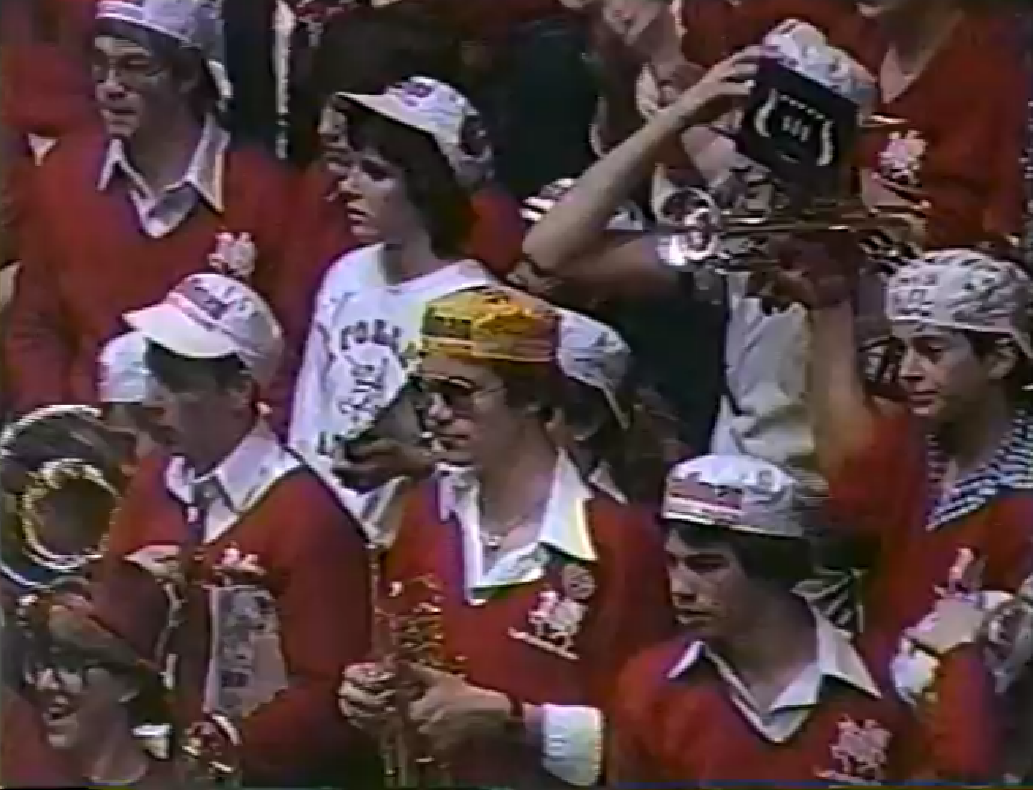
… and of course the band:
Band sweater? Check. Paint hat (a La Follette tradition since the ’77 state team)? Check. Sunglasses at night? Check. Thirty years later, you’re reading the writing of this La Follette Band trumpet player.
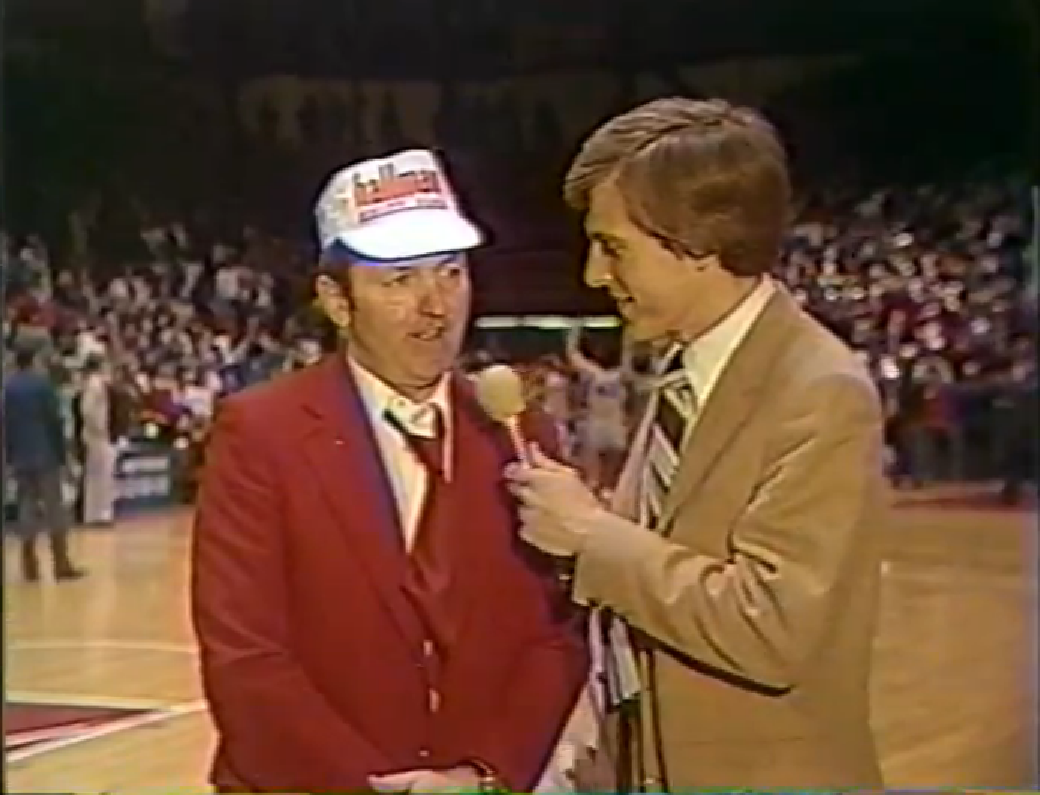
After the game, Olson (interviewed by Ken Syke) allowed as to how winning state was “darn close” to the thrill of catching a 24-pound muskie. “We aren’t that good, but we certainly made a lot of believers here anyway this week … because we’re so competitive and because our kids work so hard. It’s really something when you can reward kids for this kind of hard work.”
Olson also tweaked Shapiro in a question about La Follette’s staying in the man-to-man defense by replying that the Lancers did play some zone — “Shapiro must have told you that because I don’t think he can recognize a zone from a man-to-man.” To that, Shapiro replied “He’ll never get a 40-pound muskie on that lake of his in Boulder” Junction.
The game was followed by a wild impromptu celebration in the La Follette Commons, where the stranded Stevens Point fans had stayed one night earlier. That was followed by a party at my girlfriend’s house. That was followed by a more formal celebration the following Monday afternoon, pushing back the dreaded algebra-trig assignment to Tuesday, one week after it was due.
The La Follette band moved from playing at state to our Wind Ensemble tour to Chicago. (About Wind Ensemble tours, all I’ll say: What happens on tour stays on tour.) Those of us La Follette juniors who went to St. Dennis Catholic Church got confirmed shortly thereafter, followed by the happy teenage ritual that is the Junior Prom. La Follette seniors, including most of the team and my girlfriend, graduated. It was a full semester, to say the least.
I wonder if Pete Olson and his players and assistant coaches realized the impact they had on the rest of their school. Coming from a high school of 2,000, I can say that I knew most of the players, but I wasn’t friends with any of them. A school the size of La Follette has room for plenty of groups; mine was the band, followed by those who worked on the student newspaper, the Lance. (Which, as you can imagine, covered state very well, thank you. It was a good semester to be the sports editor.) But with all our separate interests, for one week, most La Follette students had one thing in mind, and you’re reading the culmination of it 30 years later.
In the years since this, I’ve announced the games of two state champion football teams here in Ripon, covered three other state champion teams, and covered other teams that got to state. Being in the media, you’re an outsider, of course, although if you’re the local media you’re an invited outsider.
Stevens Point players and fans have different memories of this game, of course. And yet they discovered, and I later discovered, that as painful as losing at state is, it’s not the worst postseason game to lose. The worst postseason game to lose is the game before the state tournament (and I’ve covered those too), because everything you’ve done and accomplished fell tantalizingly short of getting to every player’s goal, the state tournament, whether in Madison or anywhere else. Losing at state beats not getting to state.
I’ve witnessed how a school that gets to state — particularly a small high school — goes all out at state, and not just the players. And it always gives me fond memories of the days when it seemed as my entire life depended on the outcome of a game I was playing in. Playing trumpet, that is.
The number one single today in 1961 was based on the Italian song “Return to Sorrento”:
Today in 1964, the Beatles appeared on the BBC’s “Ready Steady Go!”
During the show, Billboard magazine presented an award for the Beatles’ having the top three singles of that week.
Today in 1968, Eric Clapton, Neil Young, Richie Furay and Jim Messina were all arrested by Los Angeles police not for possession of …
… but for being at a place where marijuana use was suspected.
Clapton was acquitted; the others paid fines.
Two wedding anniversaries today: John Lennon and Yoko Ono in 1969 …
… and David and Angela Bowie in 1970:
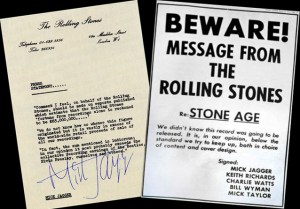
Today in 1971, the Rolling Stones paid for this ad in British music publications:
The number one single today in 1971, sung by a singer who had died five months earlier:
The number one British single today in 1973:
Today in 1977, Lou Reed was banned from appearing at the Palladium in London because of his punk image.
Today in 1978, a 28-year-old man held up the office of Asylum Records in New York, demanding to see either Jackson Browne or the Eagles so he could ask them to fund his trucking company.
The man was told none were in the office, so he surrendered.
The number one single today in 1982:
Birthdays begin with Jerry Reed:
Jimmie Vaughan of the Fabulous Thunderbirds:
Carl Palmer played drums for Emerson Lake & Palmer and Asia:
Richard Drummie of Go West:
Slim Jim Phantom played drums for the Stray Cats:
Alex Kapranos of Franz Ferdinand:
One death of note today in 1991: Conor Clapton, Eric’s 4-year-old son:
 Steve Prestegard.com: The Presteblog